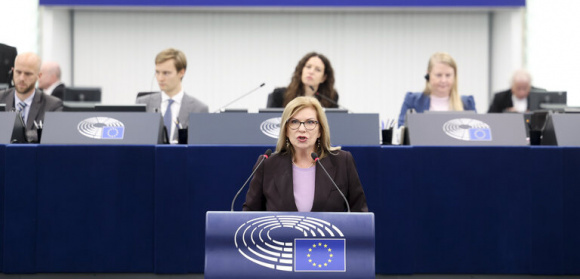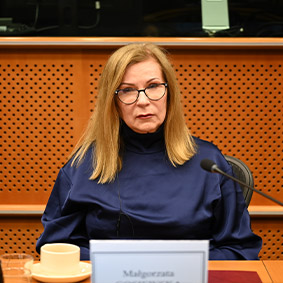
MEP Mularczyk have submitted an amendment to the EU Budget voted next week during the plenary session in Strasbourg, calling for the creation of a fund to provide financial, medical and care support for the survivor of WW2 who are still alive today, to strengthen the EU's efforts concerning historical memory and offering redress to victims who have been ignored for decades.
Mularczyk notes, that over the past 14 years, Members of the European Parliament have authored more than twenty parliamentary questions to the European Commission on the subject of compensation for the victims of German aggression during the Second World War. In these parliamentary questions, a few recurring themes consistently appear, these include: the victims’ lack of access to pursuing their claims through the courts, the Federal Republic of Germany's reluctance to engage in dialogue on the matter, the absence of adequate international mechanisms in the face of Germany’s invocation of state immunity clauses, and the European Commission's unwillingness to address the above issues.
Over the years, successive commissioners have avoided naming the German state directly, replacing the word “Germany” with “Nazis”. Providing evasive responses to ECR MEP Arkadiusz Mularczyk's questions on this matter, the Commissioner for Democracy, Justice, Rule of Law and Consumer Protection, Michael McGrath, has taken this even further. The currently used euphemism is the phrase “totalitarian regimes”. This term erases any remaining historical or geographic references conveyed by the term “Nazis”. MEP Mularczyk notes, that in all the Commission’s responses he have examined, the word “Germany” does not appear even once.
"That notwithstanding, the most crucial problem from the point of view of the victims of German aggression and occupation is the unwillingness of the European Commission, represented here by Commissioner McGrath, to take a position on the clear injustice toward the victims and descendants of the victims of the greatest war crimes in the history of humanity. This is despite Commissioner McGrath’s claim that preserving the memory of the atrocities committed by totalitarian regimes strengthens the European Union’s commitment to respect for democracy and fundamental rights.", ECR MEP said.
Due to the Commission's approach, that addressing the atrocities and crimes committed by totalitarian regimes falls within the competence of the Member States, and it cannot intervene in matters that go beyond the scope of the Treaties despite the effects of those atrocities and crimes affecting EU citizens today, EU citizens are stuck in a legal and political limbo. "No access to the courts or redress despite the EC being built on the ashes of the conflict that caused their distress and the EU's policy of transitional justice that favours non-EU conflict victims over EU citizens who are victims of conflict.", Polish MEP said.
Therefore, MEP Mularczyk have submitted an amendment to the EU Budget calling for the creation of a fund to provide financial, medical and care support for the survivor of WW2 who are still alive today, to strengthen the EU's efforts concerning historical memory and offering redress to victims who have been ignored for decades.
MEP Mularczyk said: "Germany has ignored Polish victims of WW2 for too long - simply waiting for the problem to literally die away. The EU cannot in good conscience allow this to happen and should do what it can to offer support."