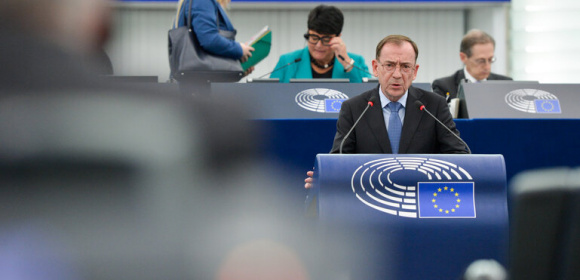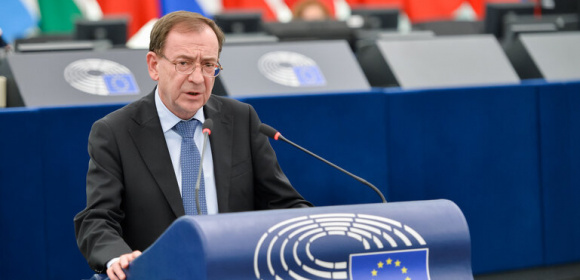
Following the conclusion of the trilogue negotiations on the EU Anti-Corruption Directive, PiS MEP Mariusz Kamiński, the shadow rapporteur for the draft, assessed the agreement reached as “a solution far removed from the promises and expectations of Europeans.”
Kamiński—the founder and first head of the Central Anti-Corruption Bureau—emphasized that in many areas, the text of the directive represents a retreat from international standards set by the UN, the Council of Europe, and the OECD. At the same time, it fails to address the corruption scandals that have recently undermined citizens’ trust in EU institutions.
“Europeans were promised a breakthrough. Meanwhile, the result of the negotiations is a document filled with slogans rather than concrete solutions. Parliament, the Commission, and the Council have once again settled for a ‘business as usual’ approach, introducing provisions that already exist in national criminal codes. This text will not effectively strengthen the fight against corruption—including within EU institutions,” Kamiński emphasized.
The ECR shadow rapporteur noted that, despite earlier announcements, the agreement lacked binding transparency rules for commissioners, MEPs, and the highest-ranking EU officials. He pointed out that proposals regarding mandatory financial disclosure statements, increased transparency in lobbying, restrictions on the “revolving door,” safeguards against conflicts of interest, and independent oversight mechanisms, among others, had been removed.
Kamiński noted that following the Qatargate scandal and new allegations against Commissioner Reynders and the former leadership of the EEAS, Europeans had expected concrete measures to strengthen the integrity of EU institutions.
“Instead of strengthening transparency, the EU has decided to exempt itself from basic obligations. It will be difficult to explain this to the public,” the PiS politician said.
The MEP pointed out that many provisions are based on vague concepts, such as “undue influence” or “undue advantage,” which, in his view, create uncertainty rather than clear standards. In key articles, mandatory implementation of the provisions has been replaced with optional provisions.
“Instead of upward harmonization, the directive harmonizes downward—to the lowest standards in the EU, which is exactly the opposite of what citizens expect,” he noted.
Kamiński also emphasized that the document does not require the establishment of specialized, independent anti-corruption bodies, in accordance with the obligations under the United Nations Convention against Corruption and the standards of the Council of Europe and GRECO.
He said that the final compromise allows member states to delegate anti-corruption tasks to regular police units, without additional safeguards against political pressure.
“How can we effectively fight corruption in the 21st century without specialization? This runs counter to international standards and deprives countries of effective tools,” he said.
The MEP pointed out that this approach sends the wrong signal to countries that are dismantling independent anti-corruption institutions, as well as to EU-aspiring nations such as Ukraine, where Brussels requires the maintenance of strong, specialized agencies.
He added that the agreement also relaxes regulations regarding the punishment of EU companies for bribing foreign officials. Treating jurisdiction as optional and allowing low, flat-rate fines—according to Kamiński—will create conditions for “forum shopping” and weaken the global position of European companies.
“This will encourage companies to seek out the most favorable jurisdictions and leave Europe lagging behind global standards,” he said.
“This outcome of the trilogue marks a political retreat at a time when Europe needed determination and credibility. When it was time to act, the institutions backed down. The EU has abandoned its ambitions,” Kamiński concluded, adding that the directive will not close the loopholes exposed by Qatargate nor will it strengthen the European anti-corruption system.
The text of the directive will now go to the European Parliament and the Council for formal approval.