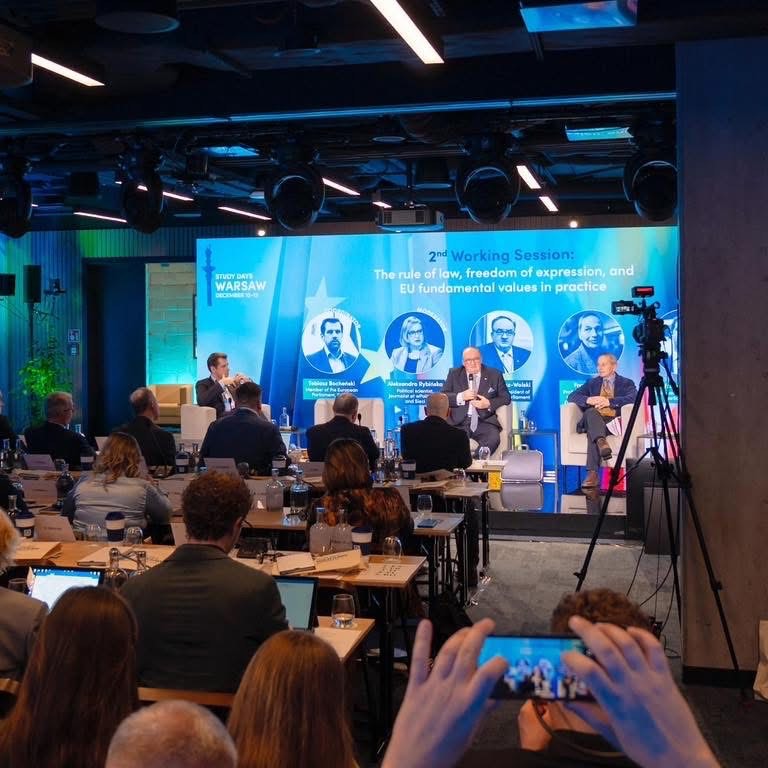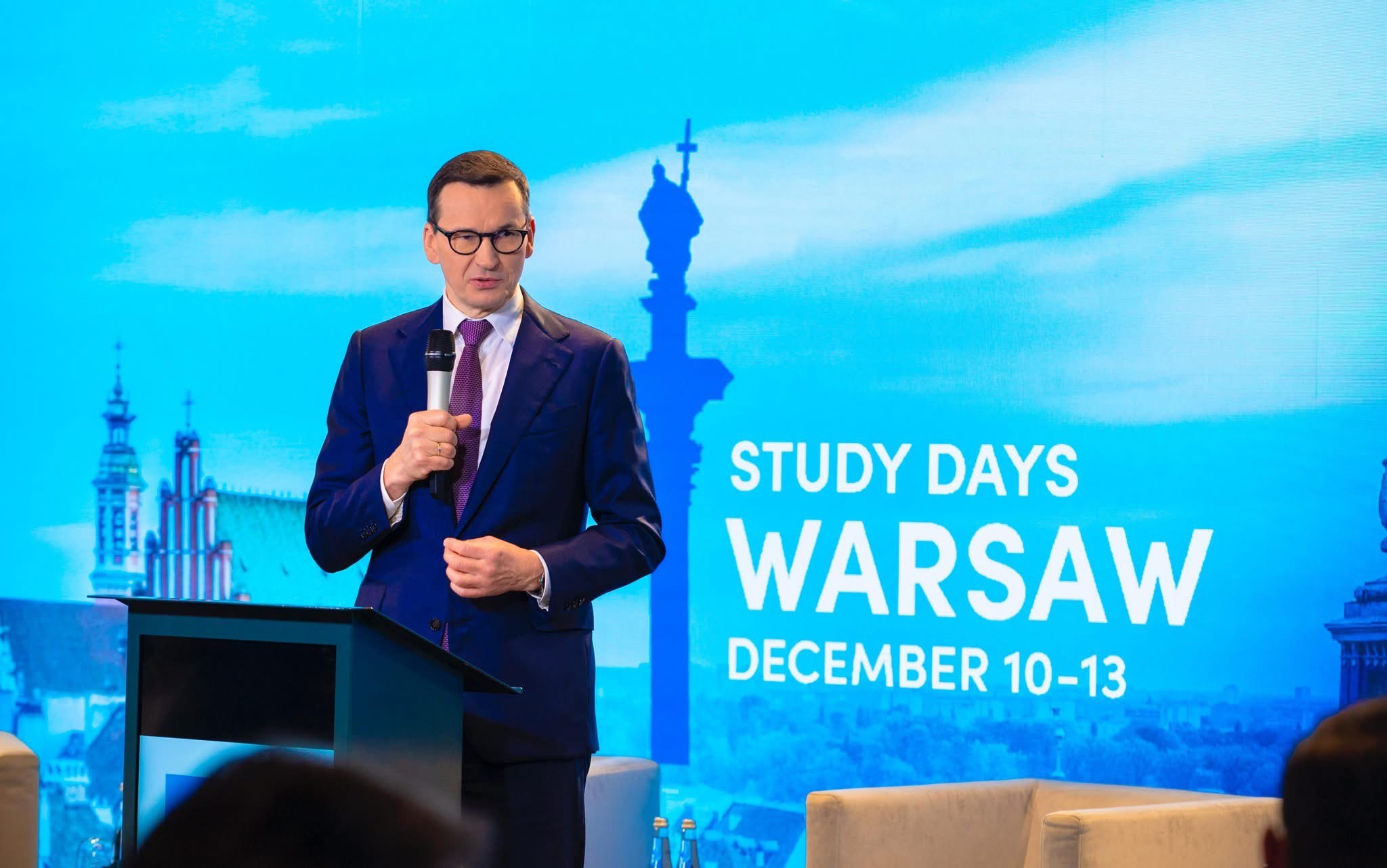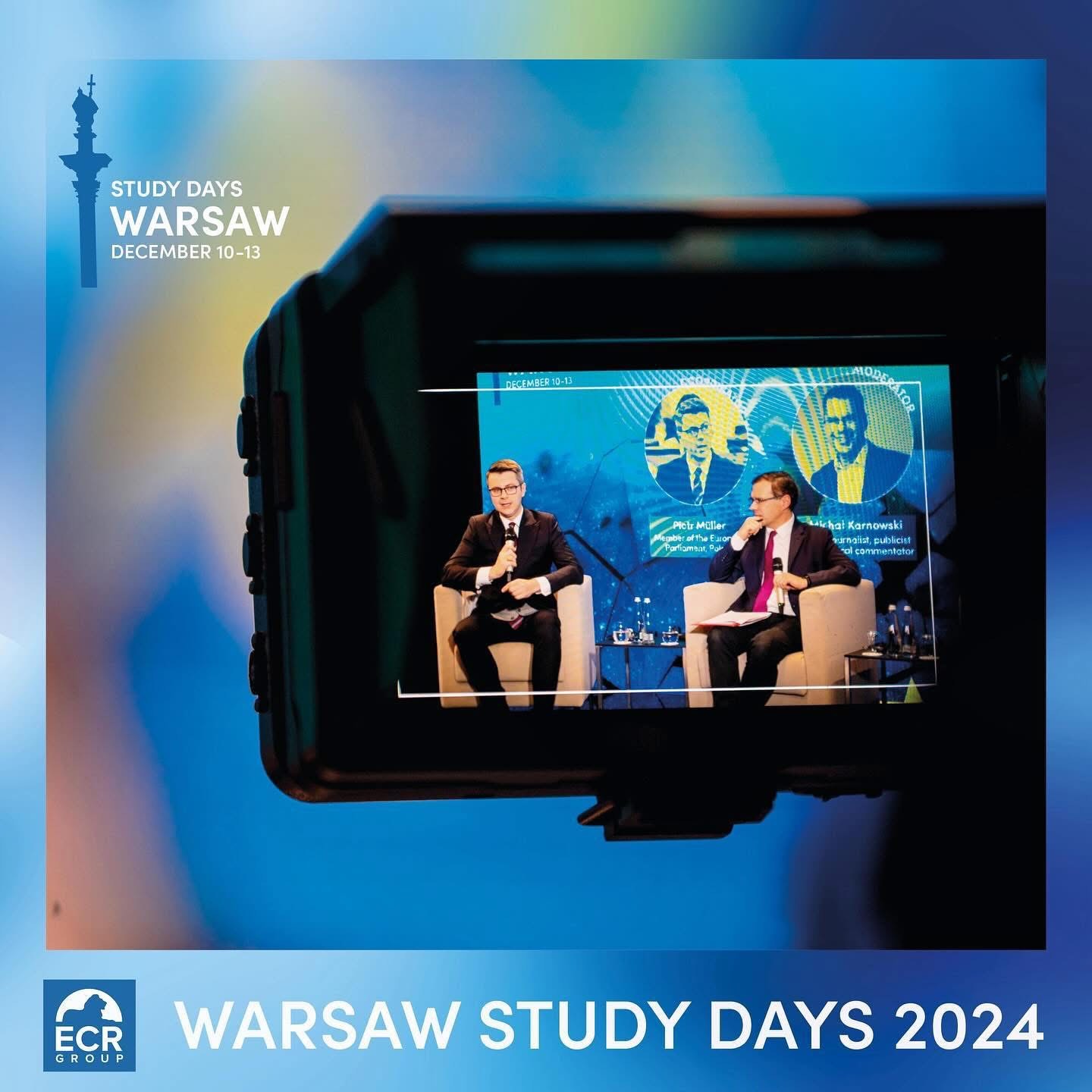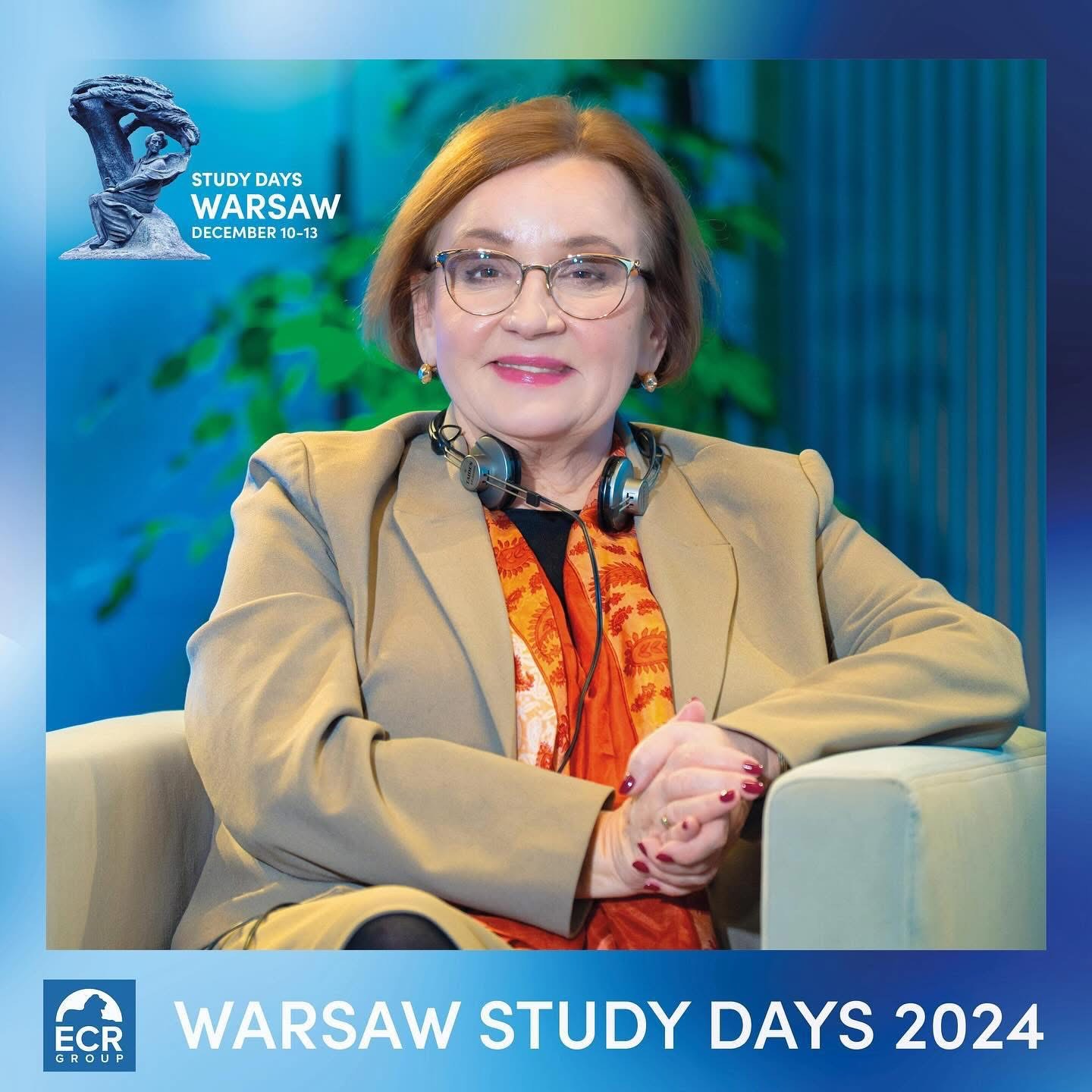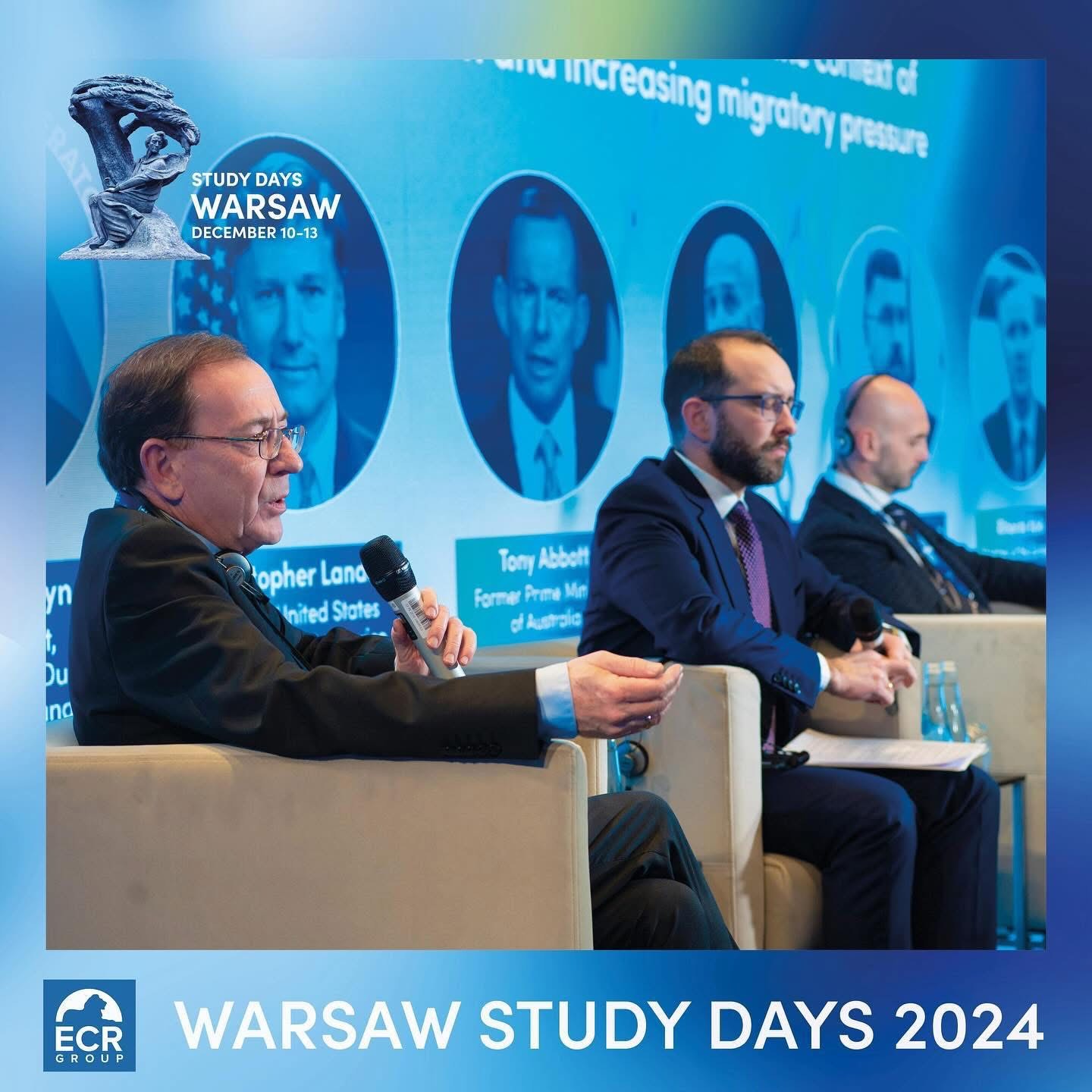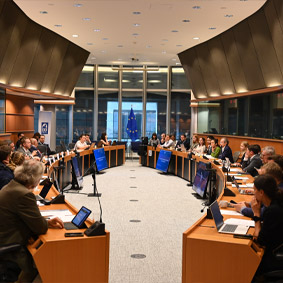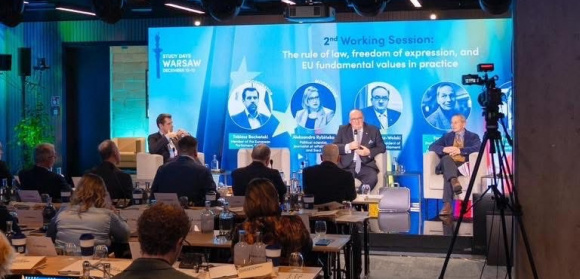
From December 10–13, the ECR Group’s Study Days were held in the Polish capital, providing an opportunity to discuss current issues on the EU agenda. During seven working sessions, ECR MEPs, together with invited experts, discussed the most important and urgent challenges currently facing Poland and the European Union. Former Polish Prime Minister Mateusz Morawiecki also delivered a speech on the state of the European Union.
Topics discussed included: the rule of law in relation to freedom of speech and the EU’s fundamental values, the European Green Deal and the situation of farmers, the protection of external borders in the context of migration being used as a tool of hybrid warfare and growing migratory pressure, the competitiveness of the European economy, the need for modern transportation infrastructure in new EU member states, as exemplified by the Central Communication Port (CPK), freedom on the Internet, the European social model, and the role of the family.
“We will fight for an EU that returns to its fundamentals and delivers common-sense solutions, one that prioritizes cooperation and works for taxpayers across the Union. I am glad that we share a common stance in our approach!” said ECR Group Co-Chair Nicola Procaccini as he opened the meeting.
During the panel on the rule of law, participants conducted an in-depth analysis of the dangerous trend toward the politicization of the rule of law and discussed urgent threats to freedom of speech and fundamental European values. They noted that while references to fundamental rights and values in Europe are enshrined in the EU treaties, their true source lies in Western culture and civilization. They noted that it is the EU institutions, not the member states, that are responsible for violations of the rule of law and that it is the institutions that should focus on upholding the treaties. It was also pointed out that there is a normative crisis in the European Union and that “the mainstream is not entirely sure what values the European Union truly represents today.”
When discussing the Green Deal and its disastrous consequences for the European agricultural sector, MEPs emphasized that Europe’s prosperity and security “cannot be sacrificed in the name of green ideology.” They noted that agriculture is becoming less and less profitable, and that recent crises and misguided decisions by the European Union—such as the disastrous agreement with Mercosur—have only exacerbated this situation. In this context, they stressed the need to reverse course and safeguard the interests of European farmers, because—as they put it—“they are the ones fighting for us and our food security.” They also emphasized the need to maintain a more holistic approach and to make fundamental changes to the Green Deal.
In the discussion on migration, they emphasized the need to stem the uncontrolled wave of illegal migration through strict control of the European Union’s external border and cooperation with migrants’ countries of origin and transit regarding returns and readmission, as well as the establishment of reception centers outside the. The participants in the study days concluded that this is “the only way to guarantee sovereignty, peace, true solidarity, and the prosperity of our nations.” They also discussed how migrants are being exploited by dictatorships, such as Russia and Belarus, as weapons in a hybrid war against Europe, to which the EU must respond firmly. They also recalled that since 2015, Europe has shown its weakness in dealing with the migration crisis, and that Poland’s firm response and defense of its borders—contrary to the European Commission’s recommendations—were met with sharp criticism at the time. The MEPs said that Europe must become a “fortress” in the positive sense of the word: a place where people, cultures, and values are protected. As they noted, the Convention Relating to the Status of Refugees was drafted decades ago, before anyone could have imagined that migration would be used as a weapon, and “a new era calls for a new interpretation.”
In the section devoted to the competitiveness of the European economy, the starting point for the discussion was the growing gap between the EU and U.S. economies. The participants pointed out that—despite the mistakes made by the Biden administration—the U.S. is pulling ahead of the EU economically. This is due to excessive bureaucracy, overregulation, and the “madness” of the green transition, which has led to a drastic increase in energy prices—and energy is absolutely critical to the functioning of modern technologies. Using AI as an example, it was demonstrated just how much these two factors hinder economic growth, innovation, and the adoption of new technologies in the EU. It was pointed out that a complete paradigm shift is necessary, and that Brussels must be stopped in its pursuit of political emancipation at the expense of member states; unleashing the potential of intellectual capital, innovation, and entrepreneurship requires a strong push toward deregulation.
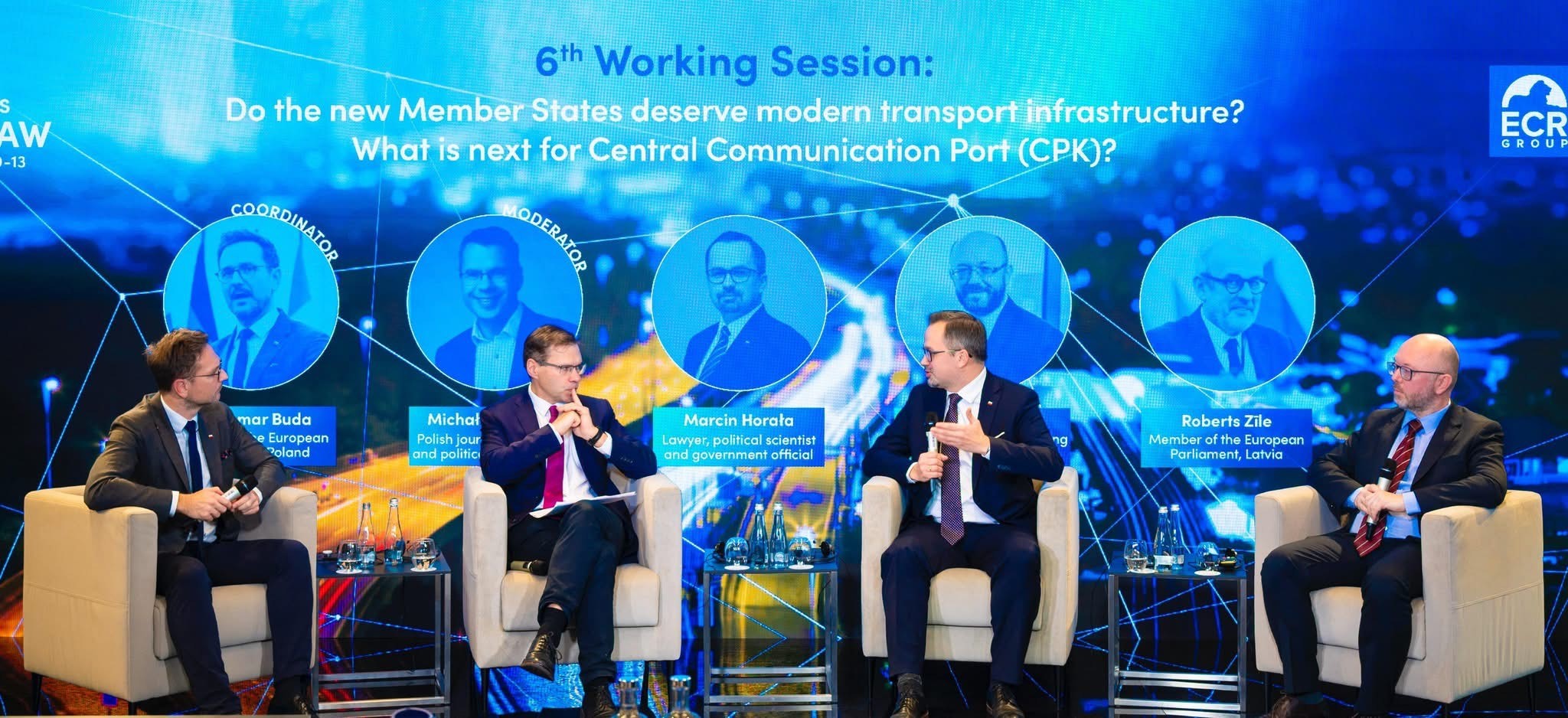
On the topic of modern infrastructure and the future of the Central Transportation Hub in Poland, the panelists emphasized that transportation infrastructure must serve broad segments of society by offering modern, high-quality connections while collaborating with domestic manufacturers. They noted that the transportation hub in Baranów should serve the entire region, not just Warsaw, and that achieving transportation self-sufficiency across Europe must be a priority.
They also discussed Poland’s strategic location, which is crucial for connecting Ukraine and ensuring the region’s security. It was further emphasized that greater funding should be sought in the EU budget before the end of the 2027 financial period, and problems were highlighted in the implementation of transportation projects due to growing bureaucratic and environmental requirements. It was noted that this particularly affects Central European countries, which have a lot of catching up to do and whose development is being hindered.
During the panel on internet freedom, the panelists noted that the digital revolution “has connected us like never before, empowered individuals, given a voice to the voiceless, and created economic opportunities that transcend borders.” At the same time, they noted that alongside these benefits, there are undeniable challenges related to the spread of illegal content, opaque algorithms, and serious threats to children online. In response, the European Commission is undertaking a series of initiatives that, in turn, significantly restrict online freedom—platforms are becoming gatekeepers not for their users, but for administrations and institutions that seem more interested in managing narratives than in fostering open dialogue. Participants in the Study Days emphasized that unless this approach changes, the Internet—intended to be a space for liberation and innovation—will soon be transformed into a system that undermines the very freedoms it was meant to strengthen. MEPs also recognized threats to the very existence of certain political parties. They noted that for many of these parties—especially those outside the mainstream—the Internet is the only way to reach voters, and that monitoring access to specific publications under the guise of controlling illegal content will significantly impact their ability to exist as political forces. They emphasized that “the way forward cannot be one of excess, where fear drives decisions and individual rights are sacrificed on the altar of security.” They also emphasized the need to focus on proportionality, transparency, and trust, noting that these are the three principles that must guide us as we face the challenges of the digital age.
During the debate on the European social model, the panelists considered whether there is still a place for the family within it. They unequivocally stated that the family is the foundation of society and our culture, and that the future of Europe depends on the future of the family. As an example of measures supporting families, they cited the changes introduced in Poland under the Law and Justice government, which created favorable conditions for families and made their situation more stable. They also drew attention to current threats to families—the economic crisis and Europe’s declining competitiveness, which is causing it to cease being a safe place for families, as well as gender ideology. They further highlighted the demographic crisis and the problem of an aging society. As examples of feasible solutions that could help alleviate these problems, they cited a comprehensive social policy and an appropriate demographic strategy.