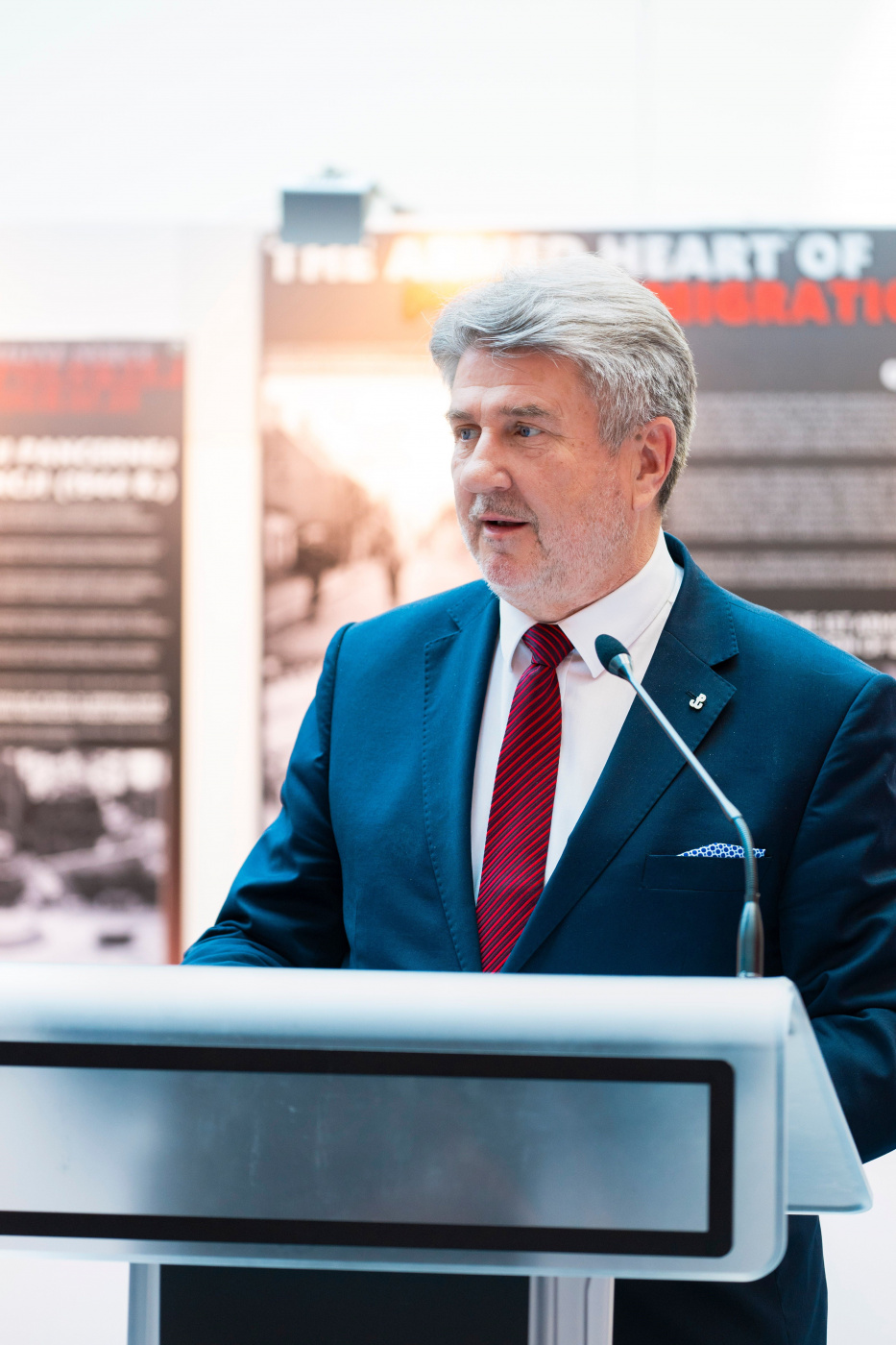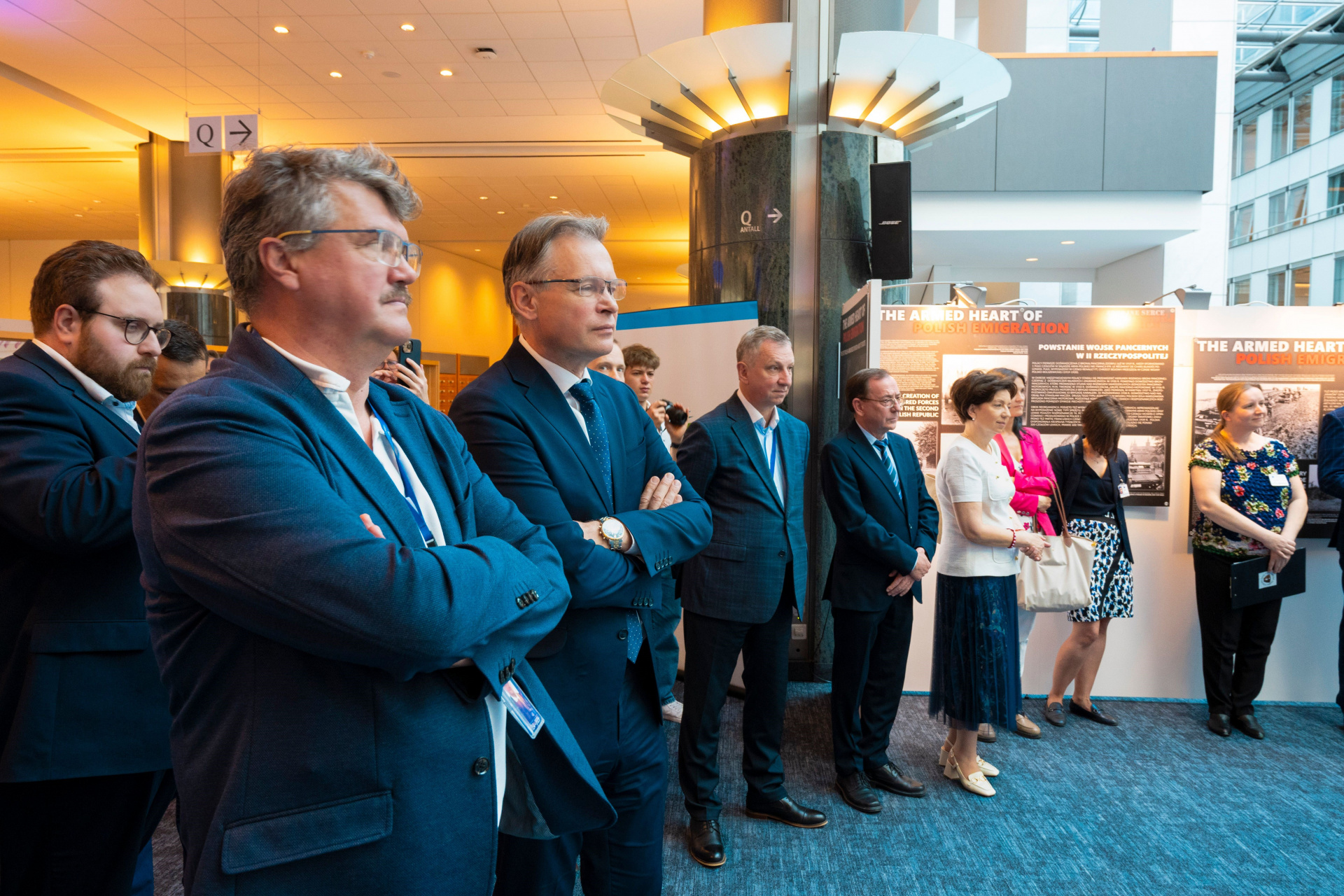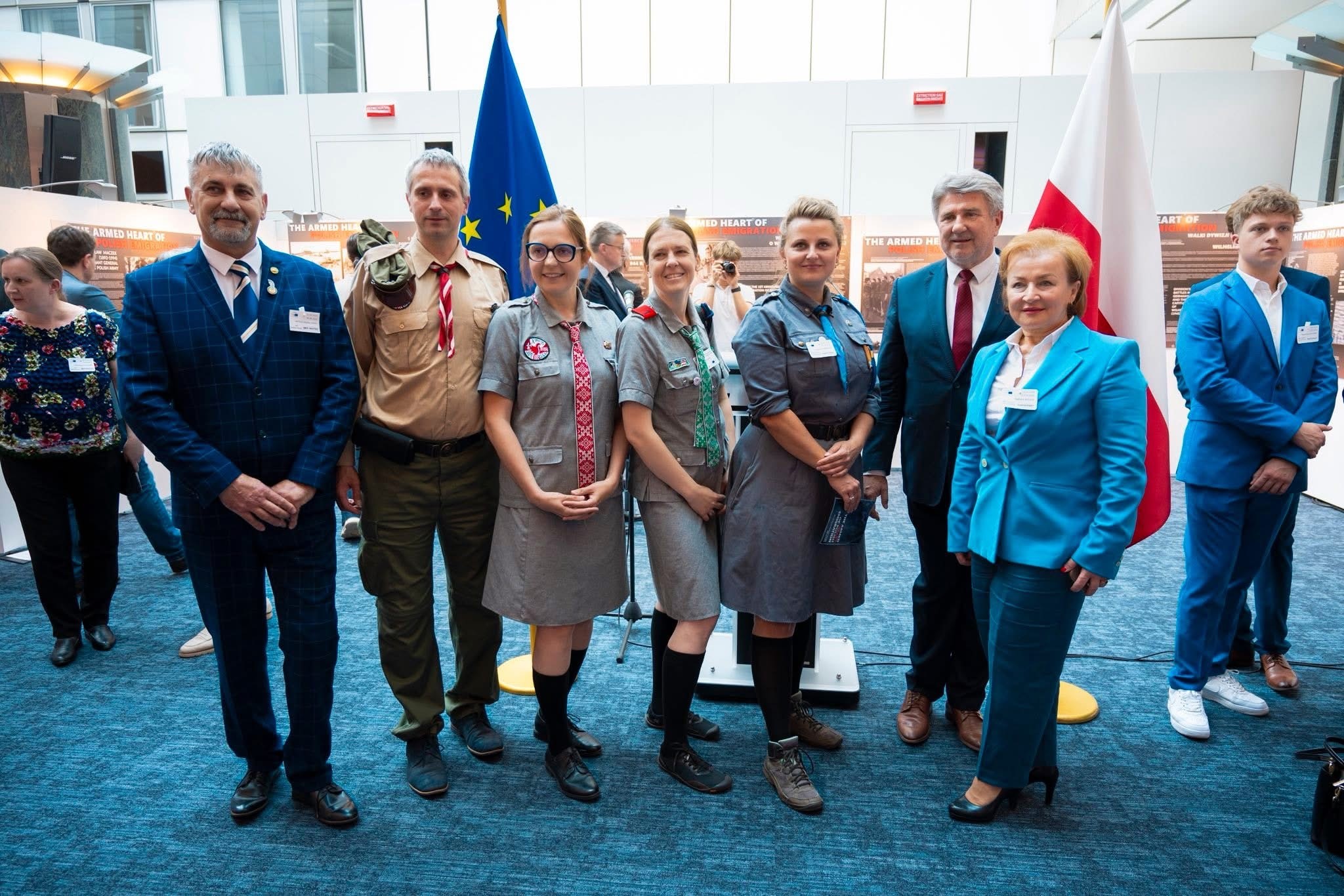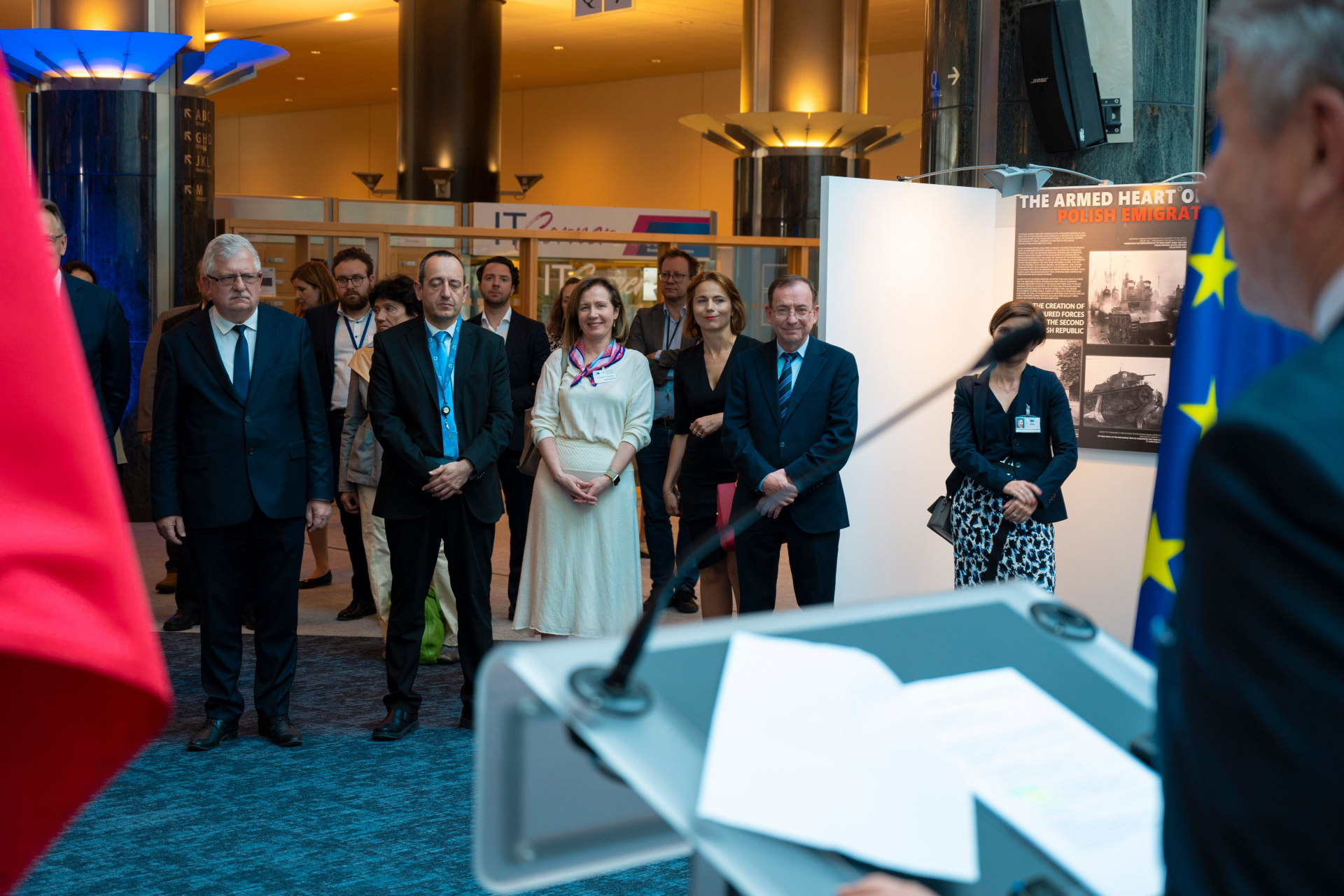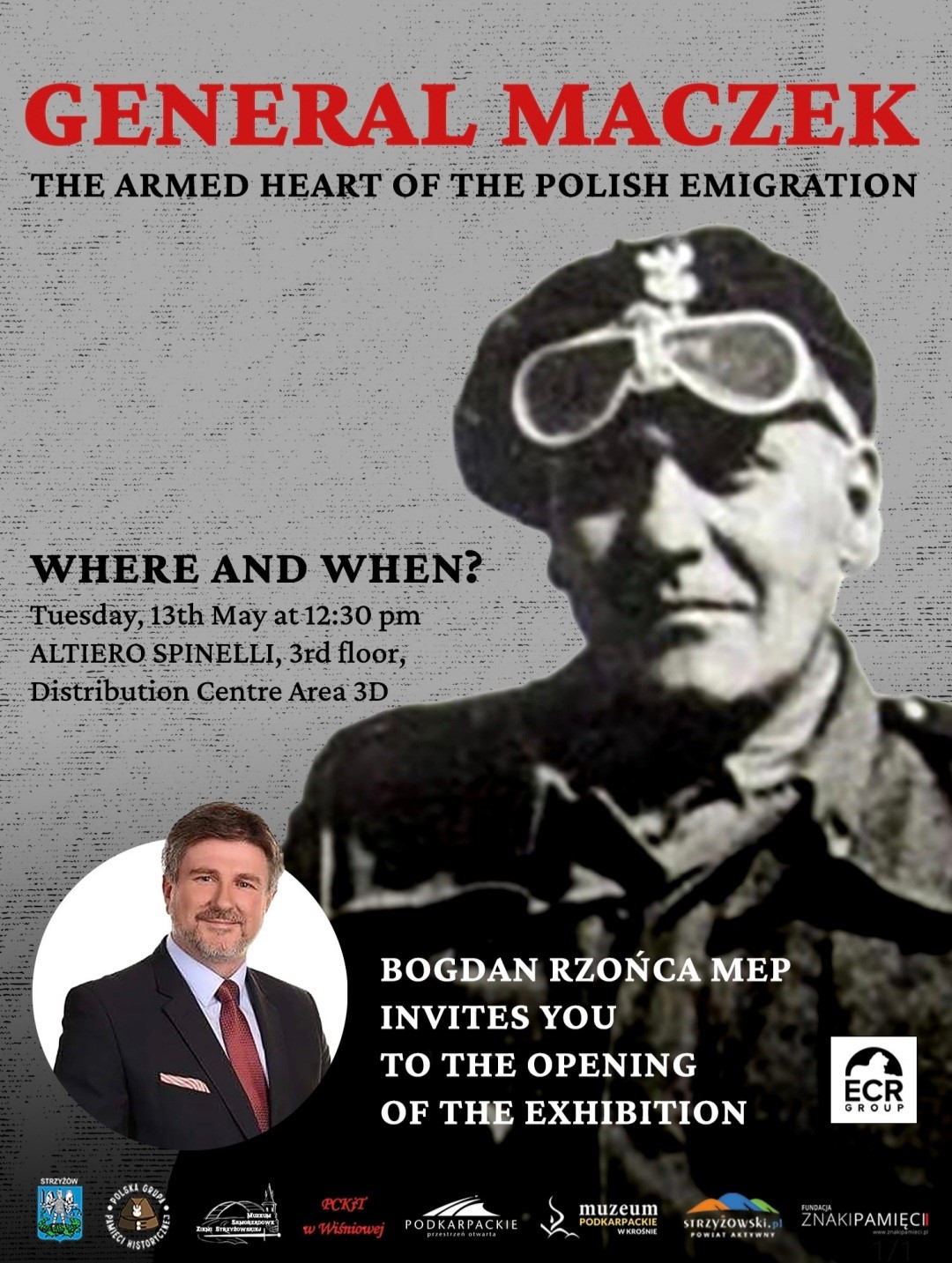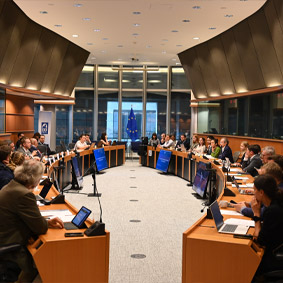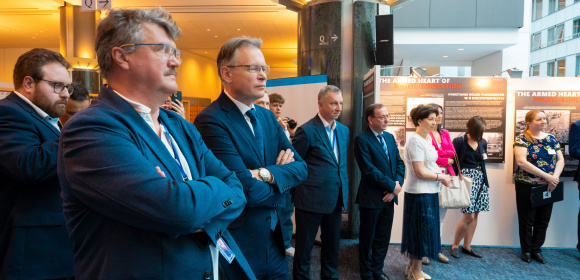
Today, an exhibition titled “General Maczek: The Military Heart of the Polish Diaspora,” dedicated to the history of the legendary Polish commander from World War II and his soldiers, opened at the European Parliament in Brussels.
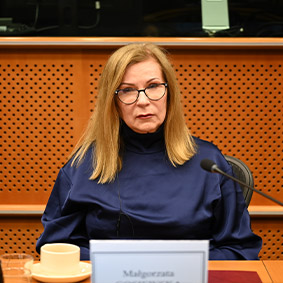
The event, initiated by PiS MEP Bogdan Rzońca, attendees included, among others, Polish Sejm Member Kazimierz Gołojuch, Deputy Marshal of the Podkarpackie Voivodeship Anna Huk, the exhibition’s originator—Witold Gudyś, president of the Polish Historical Memory Group—as well as its co-authors Dr. Aneta Hoffmann, Krzysztof Hoffmann, and Dr. Mirosław Surdej—as well as representatives of the Polish diaspora and a large gathering of MEPs.
In his opening remarks, Bogdan Rzońca presented a profile of the Polish commander, noting that Stanisław Maczek was a major general in the Polish Army, a pioneer of Polish armored forces, a recipient of the Order of the White Eagle, and a “hero of many nations,” also commemorated in France, Belgium, and the Netherlands. As the MEP explained, the aim of the exhibition is to commemorate and raise awareness of the history of one of the most important military formations of the Second Polish Republic, which was commanded by this outstanding man. He noted that Maczek’s unit fought in three campaigns—the September 1939 campaign as the 10th Brigade, the French campaign of 1940 as the 10th Motorized Brigade, and as the 1st Armored Division in the battles along the liberation front, which began in August 1944 in France, and ended in May 1945 in Germany.
“We also want to showcase in the European Parliament the fates of soldiers who fought in the ranks of the Polish Army on the Western Front, and shed light on their history after the end of hostilities, when they were not able to return to a free homeland,” —said the event’s organizer. As Rzońca added, the exhibition also aims to provide—especially to the younger generation—concrete knowledge about Polish history, in particular the activities of the 1st Armored Division and its heroic struggle to regain independence, which had been lost once again in 1939.
The exhibition will be on view at the European Parliament through Friday, May 16.