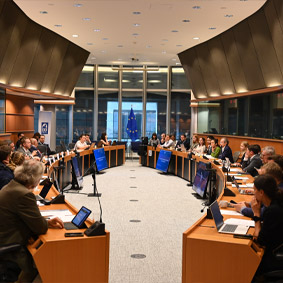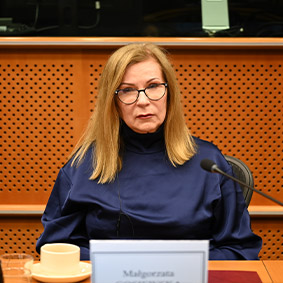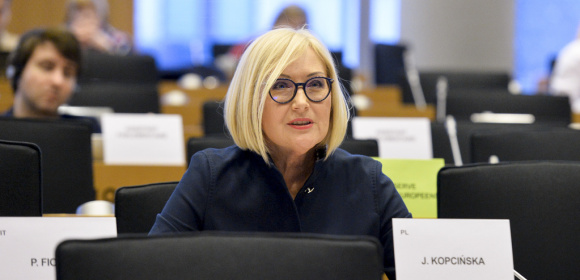
In Brussels, during a meeting of the European Parliament’s Committee on the Environment, Public Health, and Food Safety (ENVI), a hearing was held for Pamela Rendi-Wagner, the candidate for the position of Executive Director of the European Centre for Disease Prevention and Control (ECDC). As the European Parliament’s liaison for the ECDC, PiS MEP Joanna Kopcińska took the floor.
Joanna Kopcińska noted that Pamela Rendi-Wagner’s previous roles as Director General for Public Health and Director for Medicines at the Austrian Ministry of Health, where her responsibilities included pandemic preparedness and vaccination programs, as well as her scientific expertise in the epidemiology of infectious diseases and vaccines, clearly demonstrate her extensive expertise.
The MEP recalled that in 2022, as the EP rapporteur, she led efforts to strengthen the ECDC’s mandate in response to the COVID-19 pandemic. She noted that the ECDC report turned out to be the most consensus-driven proposal in the entire European Health Union package. “The work encompassed, among other things, the identification of new areas for joint action by the ECDC, as a result of which the agency was entrusted with significantly greater responsibility, participating in providing concrete support to member states, countering and preventing infectious disease threats, developing crisis preparedness, and preparing response plans,” the Polish politician stated. She added that she had also participated in efforts and dialogue regarding global health security.
Joanna Kopcińska asked the candidate for the position of ECDC Director how she plans to use the expanded mandate of the ECDC Regulation to improve the level of support for EU/EEA member states in preventing infectious disease threats. She also asked how Pamela Rendi-Wagner plans to continue the ECDC’s role in enhancing European preparedness for emergencies and to expand the ECDC’s involvement in the EU’s international cooperation efforts. She further inquired how these efforts would contribute to the implementation of the 2024–2026 program document and the 2024 work program.
The Polish politician also referred to the Eu4Health program, specifically the debate that took place during the last meeting of the ENVI Committee in Strasbourg regarding the European Council’s decision to reduce the program’s budget by 1 billion euros. As she noted, this news placed all members of Parliament involved in public health policy in a difficult situation. “Given the joint participation of the ECDC and Eu4Health in projects supporting national and regional health programs, does the ECDC have a preliminary assessment of how the reduction in the ECDC program might affect the scope of the agency’s programmatic activities, both in terms of quality and quantity?” Kopcińska asked in this context.
Nominated on February 20, 2024, to serve as the next director of the ECDC for the 2024–2029 term, Dr. Pamela Rendi-Wagner addressed the extension of the ECDC’s mandate and stated that it was a consequence of the conclusions drawn from the regulation on cross-border health threats. “We will support member states in improving preparedness and surveillance, because during the pandemic we realized how important data is. We are also improving cooperation between Member States and institutions, including on the international stage,” Rendi-Wagner said, outlining the ECDC’s plans for the upcoming term. She highlighted the need for new tools not only in the face of upcoming pandemics—which may become more frequent in the future—but also to study new pathogens, antimicrobial resistance, and vaccine-preventable diseases.
“I will continue and deepen the international cooperation we need when it comes to climate change, which acts as a catalyst for infectious disease outbreaks,” she said. She also emphasized the need for cooperation with other CDC centers regarding disease control abroad in the U.S., Canada, and Africa.
The Austrian politician also addressed the reduction in health funding in the EU budget. “I am aware of the cuts amounting to 1 billion euros, but the EU’s health budget of 5 billion was one of the largest health funds in recent decades,” she commented. She added that the ECDC’s budget had increased from approximately 50 million to over 90 million euros during the pandemic.