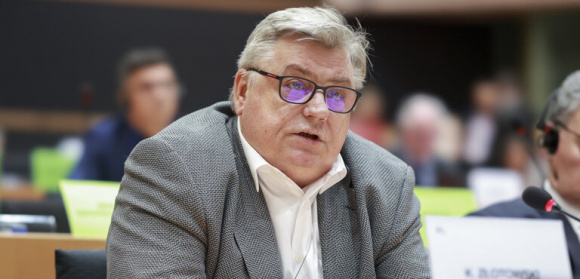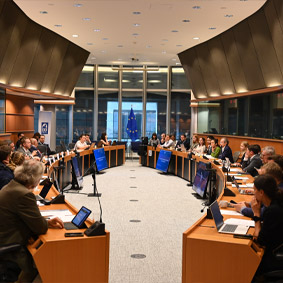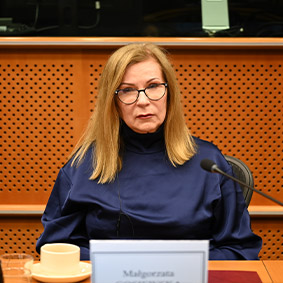
Today, during a meeting of the European Parliament’s Committee on the Internal Market and Consumer Protection (IMCO), an exchange of views took place with Maroš Šefčovič, the Commissioner for Trade and Economic Security. Speaking on behalf of the ECR Group, PiS MEP Piotr Müller raised questions regarding state aid for the construction of a nuclear power plant in Poland and the revision of ETS-2.
Referring to the European Commission’s approval of state aid for the construction of a nuclear power plant in Poland, Piotr Müller said that there are worrying signs that this approval is contingent on further trade-related talks with the United States. “And it would be very troubling news if the Polish nuclear power plant were held hostage to EU-U.S. talks on other trade matters,” stated the PiS politician.
In light of this, Müller asked Commissioner Šefčovič whether he knew when approval would be granted for Poland to disburse state aid so that the Polish nuclear power plant, being built by American companies, could begin construction.
The PiS politician also asked about the revision of ETS-2. “Because that, too, is a factor that limits our trade,” Müller said, explaining that he was referring to additional taxes that are set to take effect in 2027. “Will the European Commission, however, consider withdrawing these excessive taxes, which would limit our trade opportunities?” the MEP asked.
Maroš Šefčovič stated, regarding state aid and trade talks with the United States, that “there is no connection between them.” However, he was unable to answer the question about the Commission’s approval of the nuclear power plant in Poland. He added that he does not know the exact timeline for a decision on state aid, “because this falls under the purview of Vice-President Ribera, who makes independent decisions in this area.”
Speaking about ETS-2, the Slovak commissioner said that the regulations regarding the new taxes are in effect and “there are no additional plans to address this issue in any way.”