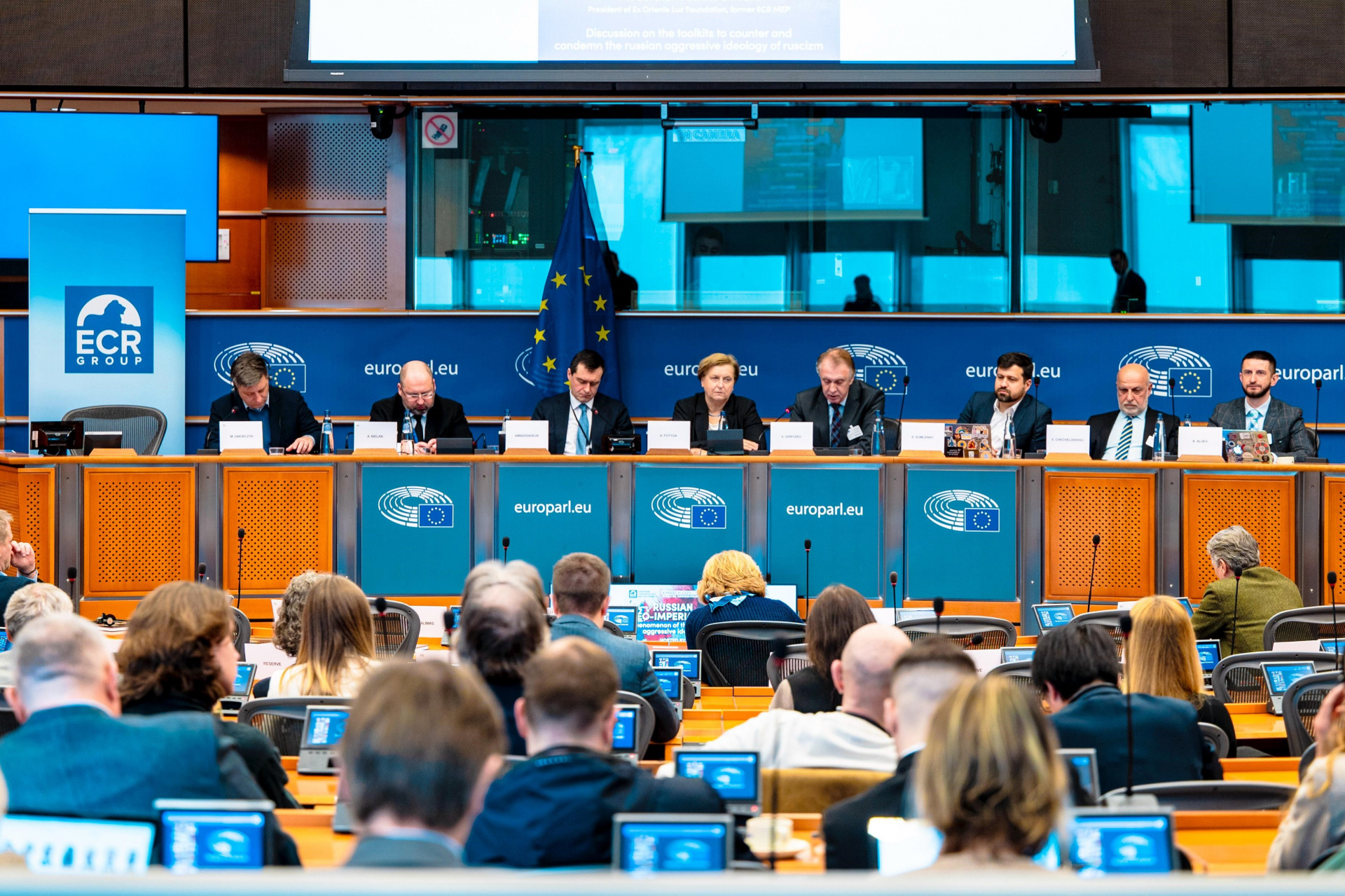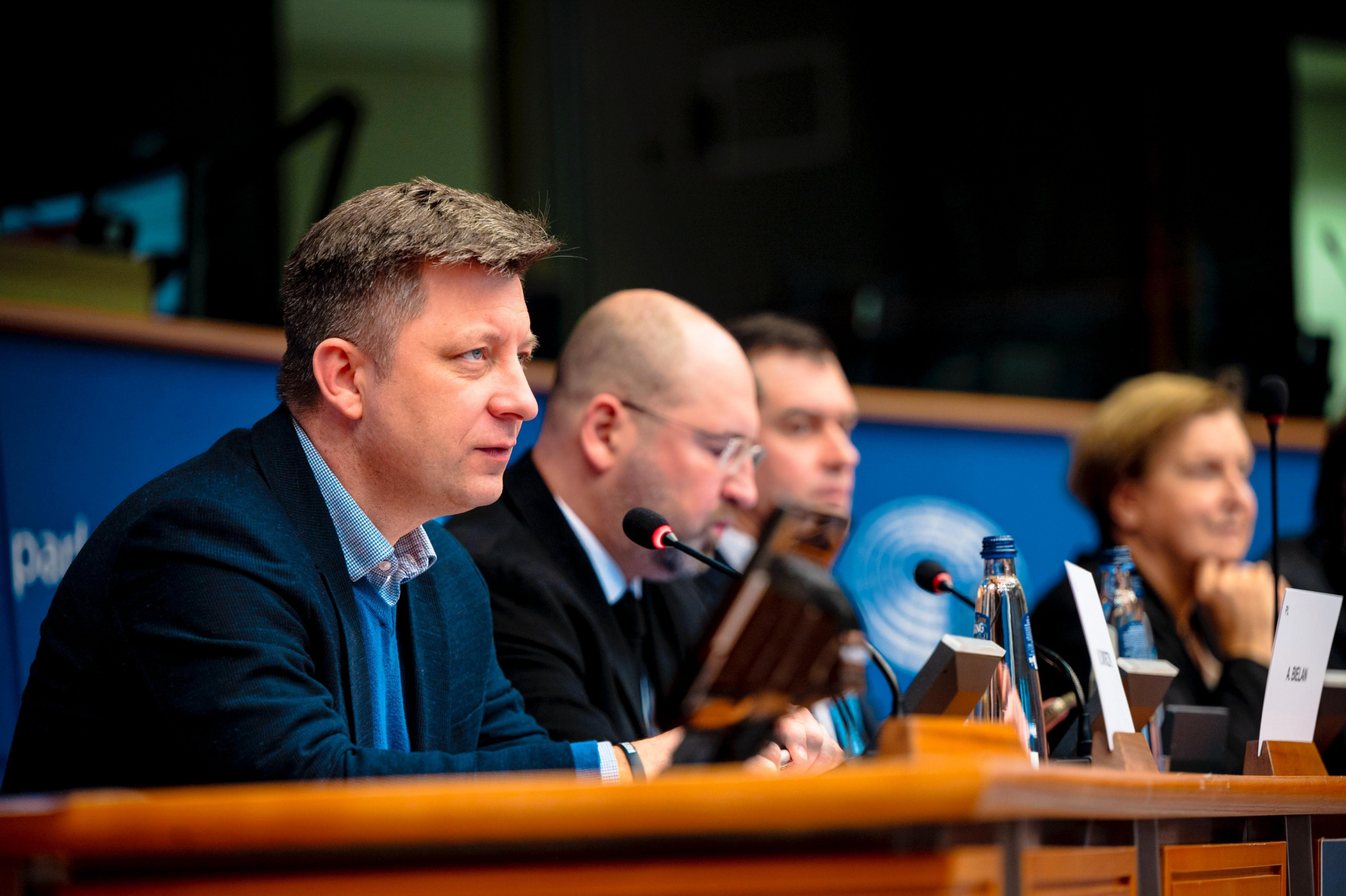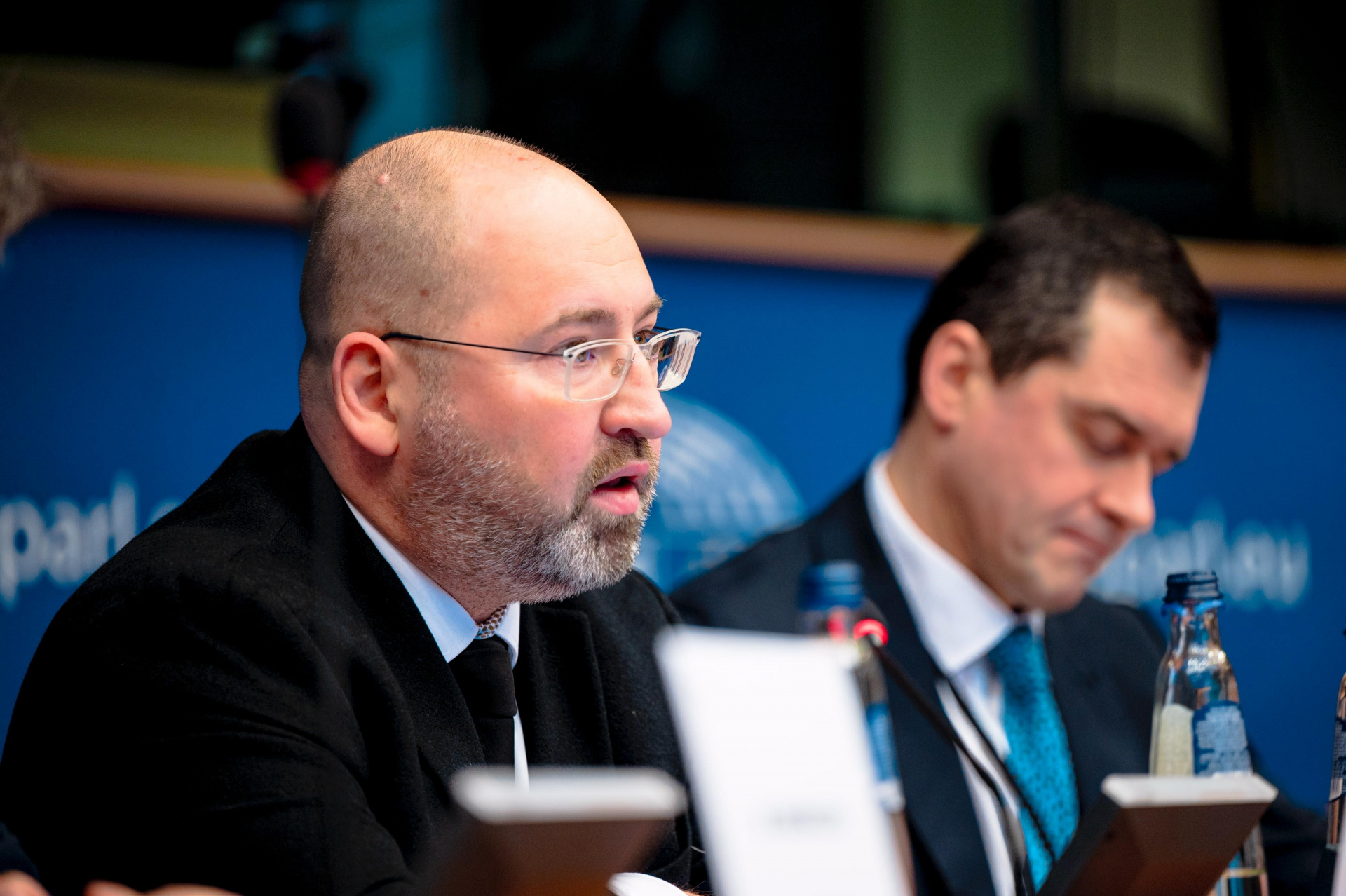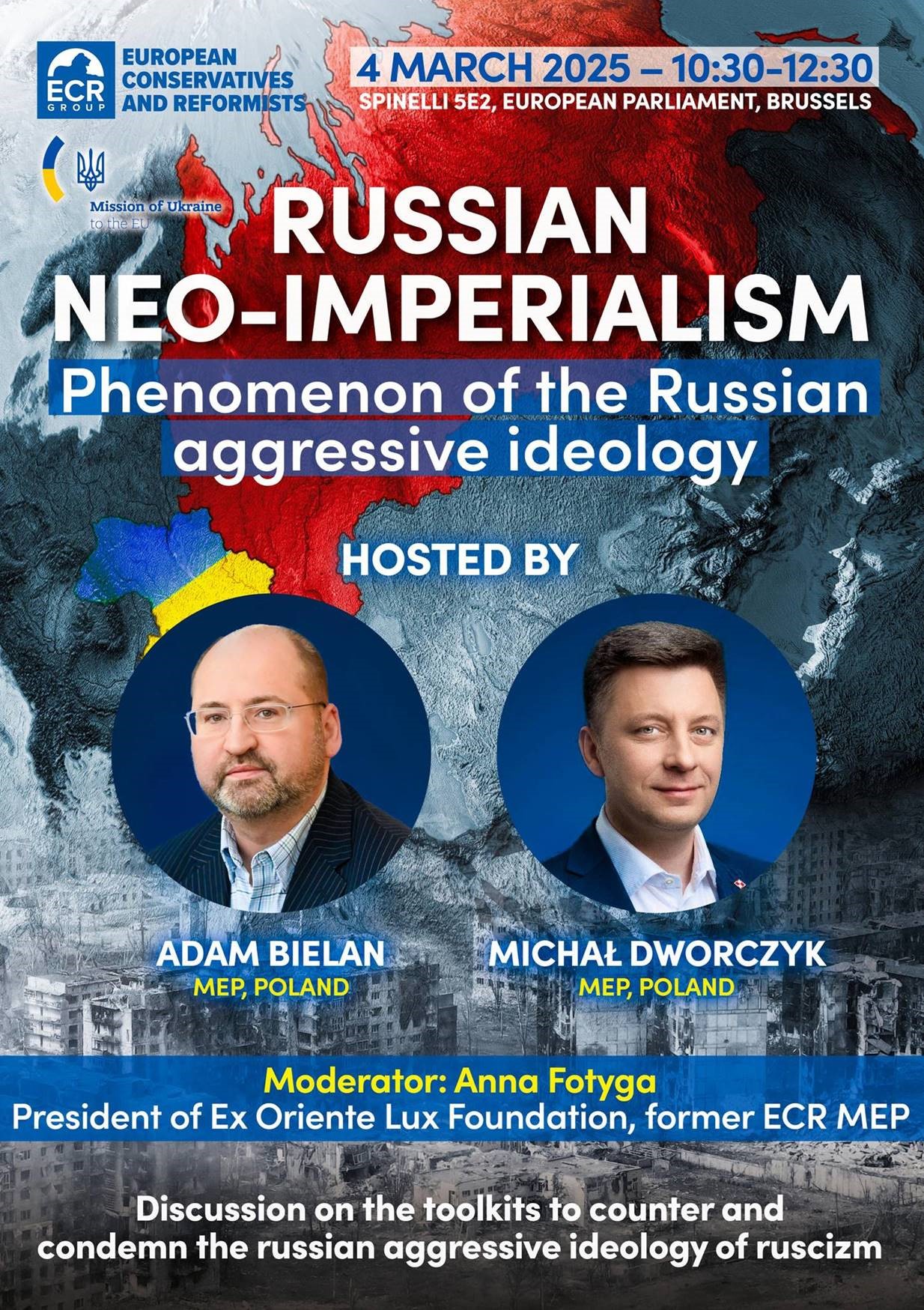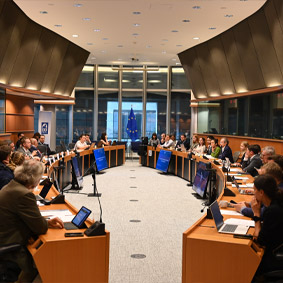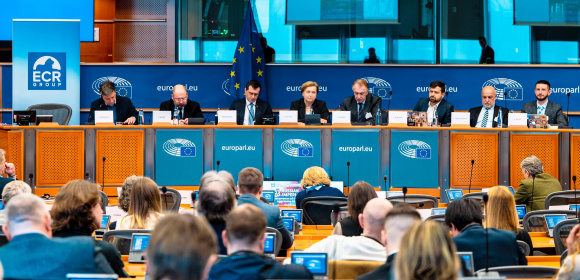
A conference titled “Russian Neo-Imperialism: The Phenomenon of Aggressive Russian Ideology,” organized by PiS MEPs Adam Bielan and Michał Dworczyk in cooperation with the Mission of Ukraine to the EU. The event addressed the ideological foundations of “Rashism” — an ideology built on expansionism, militarism, and ultranationalism — as well as its role in fueling Russian external aggression and international strategies to counter this phenomenon.
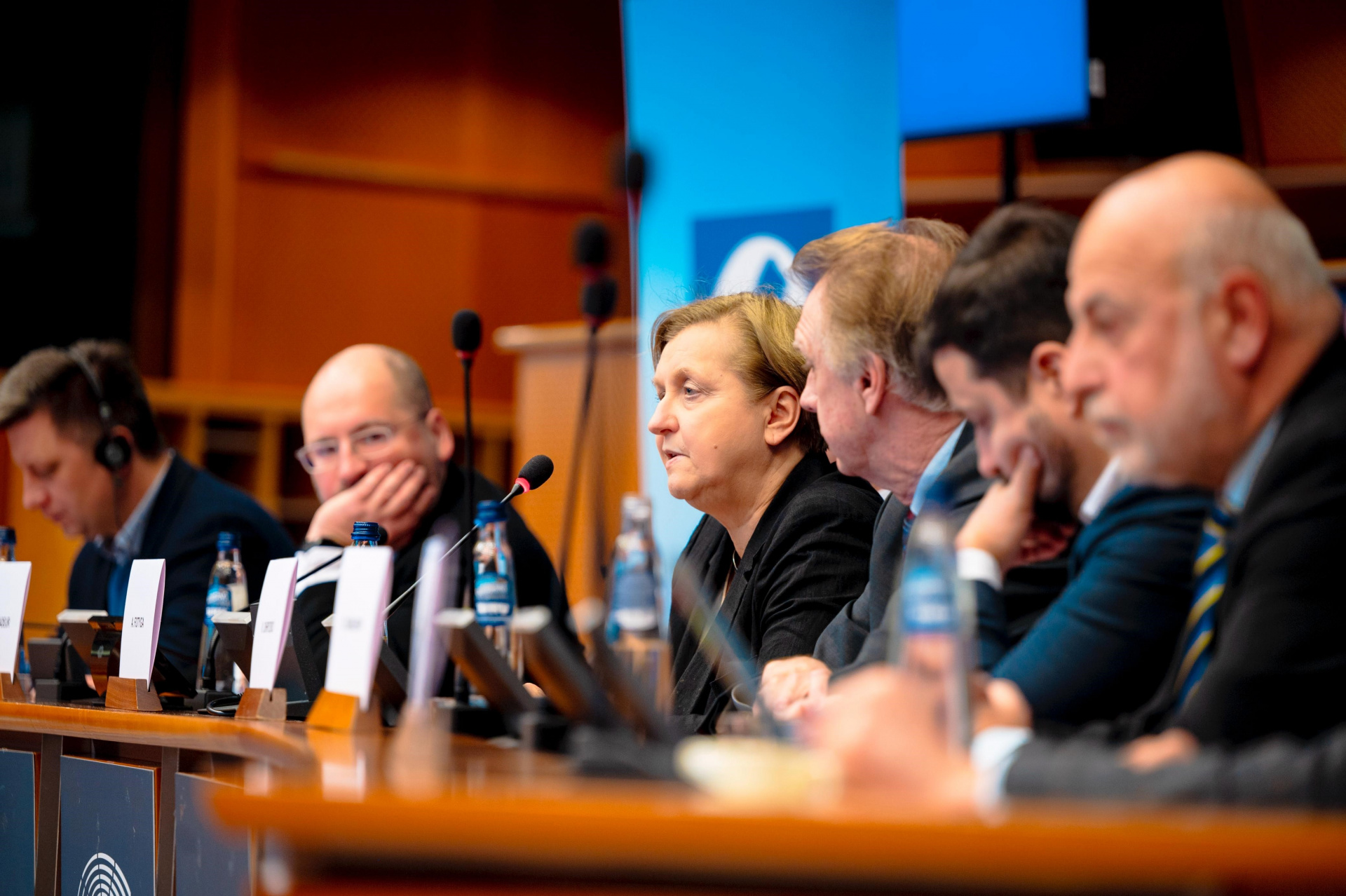
The event featured Volodymyr Ohryzko—director of the Center for Russian Studies and former Minister of Foreign Affairs of Ukraine— Valeriy Chechelashvili—former Secretary General of the Organization for Democracy and Development (GUAM) and former Deputy Minister of Foreign Affairs of Georgia, Sergey Sumlenny—director of the European Resilience Initiative Center; and Alim Aliev—deputy director of the Ukrainian Institute—was moderated by Anna Fotyga, president of the Ex Oriente Lux Foundation, former Minister of Foreign Affairs of Poland, and former Member of the European Parliament.
A book titled “Multidimensional Racism” was also presented during the conference.
Adam Bielan emphasized that the issue of Russian neo-imperialism is extremely urgent and must be addressed, “because its impact is already being felt in Europe.” He noted that Ukraine is its first victim since the 2008 attack on Georgia. “As we know, the geopolitical situation, fueled by aggressive imperialism originating primarily from Russia, is dramatic,” —added the PiS MEP, noting that for over two decades the Kremlin has systematically pursued its expansionist ideology, rooted in historical revisionism, ultra-nationalism, and authoritarianism. As he stated, this ideology—which Ukrainians refer to as “Rashism”—is not merely a theoretical construct, but another chapter in history, the end of which Fukuyama had predicted. “It is an aggressive, state-sponsored doctrine that manifests itself in wars, occupations, human rights violations, and systematic attacks on the rules-based order of international cooperation. It is the foundation upon which Russia justifies its actions—from the annexation of Crimea, the war in Donbas, and the full-scale invasion of Ukraine, to threats and destabilization efforts in Europe and beyond,” — explained Bielan, pointing to the severe consequences for the security of EU countries, but above all to the “enormous impact on human life, mental and physical health, freedom, and justice.”
“We, in the European Parliament, bear the responsibility —we must not only condemn Russian neo-imperialism, as we have done on countless occasions, but also actively counter it and support a geopolitical order in which aggression is not a viable solution. We must continue to support Ukraine’s struggle for its sovereignty and freedom. We must strengthen the resilience of European nations against hybrid threats and respond openly and appropriately to these attacks. This is possible only through a joint effort,” said the PiS MEP, emphasizing the importance of cooperation across political, institutional, and national divides to dismantle the Kremlin’s ideological and geopolitical ambitions. “The European Union was founded on the principles of peace, democracy, and the rule of law. Putin’s Russia poses a direct challenge to these values. A lack of decisive and effective action risks a repeat of history’s darkest lessons,” Bielan warned.
“Our commitment to Ukraine must remain unwavering and be backed not only by words but also by long-term military, economic, and humanitarian aid. Today, we must work together to ensure that there is no place for Russia’s aggressive ideology in the future of Europe and the world,” the Polish politician emphasized.
Michał Dworczyk noted that Russian imperialism has centuries-old traditions, which Central and Eastern Europe—and Poland in particular—has experienced many times. He pointed out that the effects of Russia’s imperial policy extend not only to the geopolitical sphere—that is, territory—but are also strongly focused on destroying the identities of nations and their cultures. “We have experienced this during every period of subjugation: during the Partitions, in the communist era, and today we are witnessing it in Ukraine, primarily in the territories occupied by the Russian Federation,” the PiS MEP recalled.
The Polish politician also pointed to the threats posed by Russia’s modern methods of waging hybrid warfare. In this context, he highlighted the issues of disinformation and the distortion of history through the use of the media and mass communication, which enable Russia to pursue its imperial policy in an entirely new dimension.
“In light of the challenges facing Europe, addressing this issue and sharing our experience—that of Poles and other nations who have experienced Russian imperialism firsthand—is extremely important for exposing its mechanisms and the threats associated with it,” —the MEP emphasized.
H.E. Vsevolod Chentsov, Head of the Mission of Ukraine to the EU, said: “The root cause of the war in Ukraine? Russian imperialism. It is a tool of the mafia-like regime in Moscow, used to secure its power. We should never be ashamed to speak the truth—or to call war crimes by their proper name.”
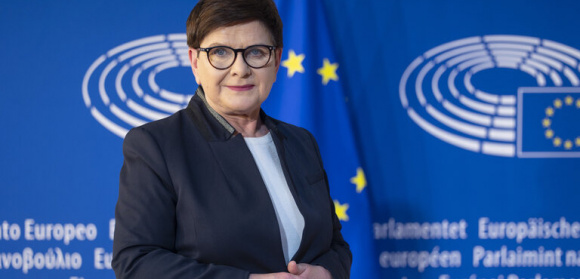
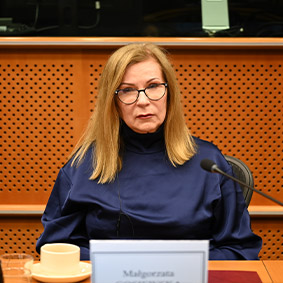
Anna Fotyga, president of the Ex Oriente Lux Foundation and a former ECR MEP, emphasized that “we must listen to those who have suffered under Russian oppression—Ukrainians, Georgians, and Crimean Tatars. “Their voices matter,” she added. At the same time, she noted that history has shown that although the U.S. can sometimes be a “difficult ally,” it remains the EU’s most important partner—especially when it comes to the freedom of nations. “No other nation has a deeper understanding of freedom,” she emphasized.
Volodymyr Ohryzko, former Minister of Foreign Affairs of Ukraine, stated that to understand Russia’s ideology, we must see it for what it is: a doctrine of supremacy, imperialism, and oppression. “It is based on the idea that Russia is a ‘chosen nation,’ surrounded by enemies, with the right to dominate others,” he explained.
He also noted that the idea of fascism is alive and well in Russia, where “lying is acceptable, treaties mean nothing, there are slaves at home and barbarians abroad,” and wherever Russian speakers live, Moscow claims the right to intervene.
Valery Chechelashvili, former Secretary General of GUAM and former Deputy Minister of Foreign Affairs of Georgia, noted in turn that “Russian neo-imperialism is not just about Putin.” “It is deeply rooted in Russian political thinking. Moscow has always viewed the former Soviet states as its own domain. It’s about rebuilding the Soviet Union 2.0. And without Ukraine, this project is impossible,” he stated.
Sergey Sumlenny, head of the European Center for Resilience Initiatives, said that colonized, non-Russian ethnic groups are paying the highest price for Russia’s war in Ukraine. “For generations, Moscow’s rulers have pursued the same imperialist policy. We must listen to the voices of those oppressed under Russian rule—and finally see Russia without illusions,” he added.
Alim Aliiev, deputy director of the Ukrainian Institute, spoke about the situation of the Crimean Tatars, who, despite having been persecuted for centuries, “are resisting the erasure of their culture and identity.” “Their future can only exist in a free Ukraine,” he emphasized.