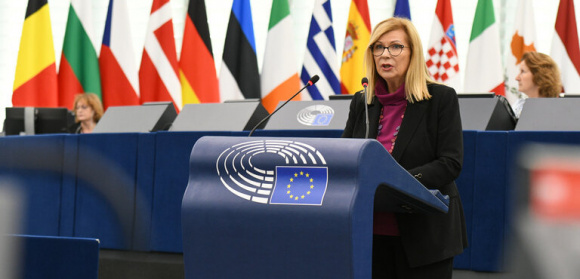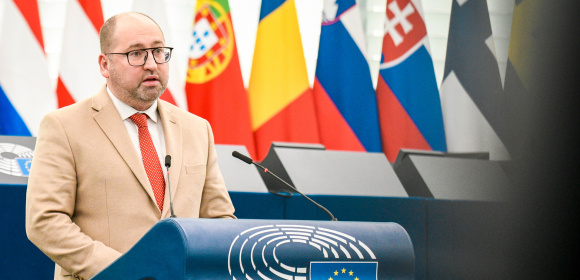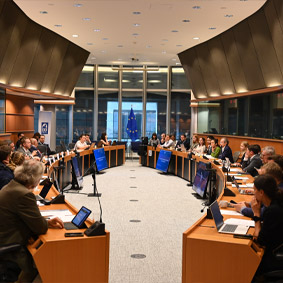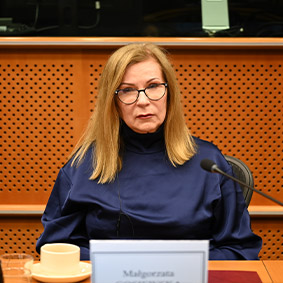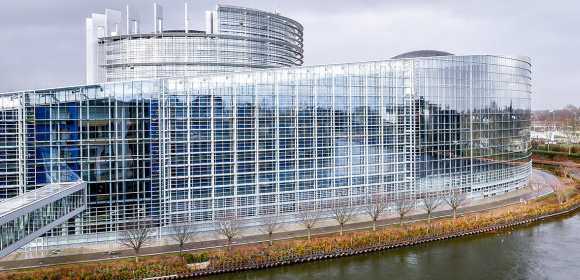
Today in Strasbourg, on the third day of the European Parliament’s session, a debate took place titled “Digital Markets, the Digital Euro, Digital Identities: Economic Incentives or a Step Toward a Dystopia.” PiS MEPs Piotr Müller and Marlena Maląg spoke during the discussion.
Piotr Müller emphasized that he is an enthusiast of all digital solutions that can facilitate the functioning of the economy, public institutions, and all social activities. “However, I am opposed to any solutions that would involve an element of coercion,” the MEP added, noting that one such concept is, among others, the introduction of digital currency as the sole means of payment.
“This is something that would, in effect, result in a complete lack of privacy and a complete lack of any concept of social freedom,” noted the PiS politician, emphasizing that the ECR Group strongly opposes such coercion.
“We support making digital public services more accessible, but we oppose, for example, them becoming the sole gateway to using the Internet,” Müller said, recalling that proposals had been made to end anonymous access to the Internet through the mandatory digital identity. “We must say a clear ‘no’ to such ideas,” he emphasized.
“However, we must make use of all new technologies so that Europe can develop economically and take advantage of the opportunities offered by, for example, artificial intelligence,” the PiS politician noted.
Piotr Müller also raised the issue of citizens’ right to have data stored by state registries deleted. “It cannot be the case that the state forces people to retain personal data for many years when it is not necessary,” the PiS MEP argued.
Marlena Maląg stated that the digital euro “is not a response to citizens’ needs, but a political tool.” As she noted, Europeans already have access to fast and secure payments, and a digital currency does not solve any real problem—instead, it creates new ones.
According to the PiS MEP, this therefore serves only the ECB and the European Commission. “It is they, not the member states, who will gain new powers,” she noted.
She explained that the digital euro would mean the centralization of finances in the hands of institutions detached from national interests, and that the ECB would become a “super-bank”: the issuer, the operator, and, in practice, the owner of citizens’ data.
“This is a blow to national sovereignty,” stated Marlena Maląg, pointing out that countries will lose influence over their own banking systems and monetary policies in favor of a digital infrastructure managed from Brussels and Frankfurt.
“Do we want decisions about our economy to be made outside our borders?” asked the PiS politician.
Marlena Maląg argued that the digital euro is not only a threat to citizens’ freedoms and the independence of member states, but also a real risk of surveillance. “Under the pretext of security and ‘progress,’ EU institutions are in fact establishing control over our finances,” she stated.