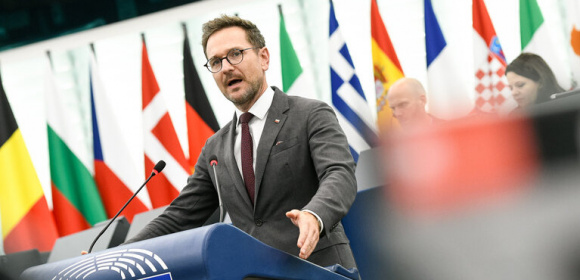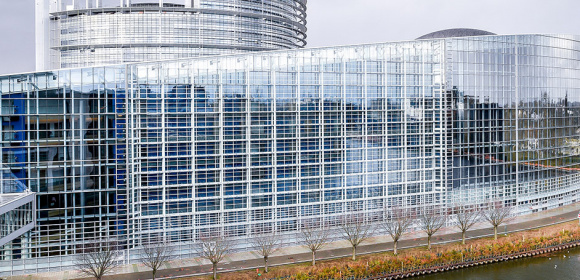
Today in Strasbourg, during the European Parliament’s plenary session, a discussion took place on the report on the implementation of the Recovery and Resilience Facility. Speaking on behalf of the ECR Group, PiS MEPs Bogdan Rzońca, Marlena Maląg, and Jacek Ozdoba took the floor during the discussion.
Bogdan Rzońca stated that “the grand experiment with borrowed money known as the National Recovery Plan has failed.” “The European Commission put on a show. It gave money to those it liked and withheld it from those it didn’t like,” he added. The PiS MEP also pointed out that it is now clear that the National Recovery Plan has led to significant debt for the European Union and has failed to restore the EU’s competitiveness vis-à-vis the United States or China. According to the MEP, the European Public Prosecutor’s Office should also examine the European Commission’s decisions to withhold funds from certain countries.
“And what about Poland? Donald Tusk’s government is boasting that it has unlocked the National Recovery Plan, that there is money. What is there to boast about here? That Polish MEPs voted in favor of resolutions to deny local governments, investors, and companies funding for roads? That the European Commission suspended funding for hospitals in Poland? That patients suffered as a result? That the EC didn’t provide funds for the modernization of power grids and we now have more expensive electricity?” Rzońca asked, adding: “You can’t operate this way—the EU must be a Europe of homelands, nations, and solidarity,” he emphasized.
Marlena Maląg stated that the European Court of Auditors’ reports on the implementation of the Recovery and Resilience Facility “reveal nothing new,” but confirm suspicions that the instrument is ineffective, poorly managed, costly, and being implemented slowly. The PiS MEP noted that the milestones are uneven, and the Commission’s impartiality “raises doubts.” “One could venture to say that some of the funds were most likely spent inefficiently,” the Polish politician believes. Marlena Maląg stated that the RRF will cost over 200 billion euros, with repayments alone consuming up to 20 percent of the future EU budget. She pointed out that, in practice, this means fewer funds for agriculture and cohesion policy. “In my view, the new budget model is an attempt by the Commission to hide the fact that the costs of this structure will be borne by ordinary citizens, farmers, and regions,” – stated the PiS MEP, adding that “rather than rebuilding Europe, the RRF has served to strengthen the Commission’s power, which has turned subsidies into a tool to pressure ‘uncooperative’ governments.”
“This experiment has failed. All that remains are the bills and questions about effectiveness—who will pay for the Commission’s mistakes?” the MEP asked.
Jacek Ozdoba noted that financial resources and the National Recovery Plans had become instruments for influencing national policies. As an example, he cited a statement by German politician Karatina Barley, who spoke of “financially starving” Poland. “And unfortunately, that’s exactly what happened—despite the economic crisis and the war in Ukraine, hospitals and other institutions didn’t receive any money because that was a political decision,” the politician recalled. Ozdoba called for reflection on why EU member states, such as Poland, were being politically denied funding. “Ursula von der Leyen and Katarina Barley brazenly and arrogantly attempted to influence election results in EU countries by blocking their funding. This is a violation of the law by EU commissioners,” he emphasized.