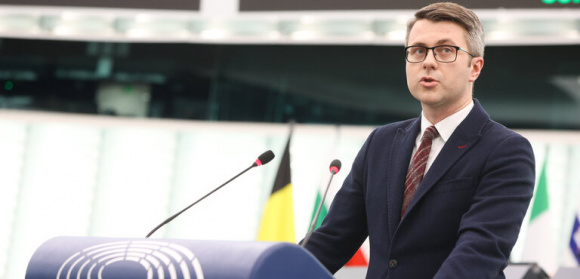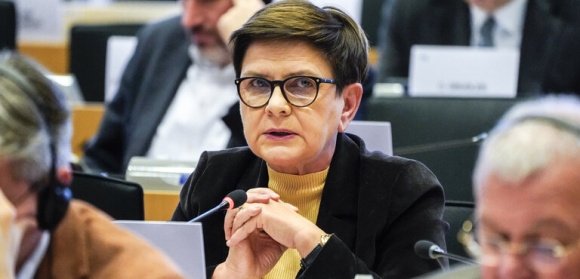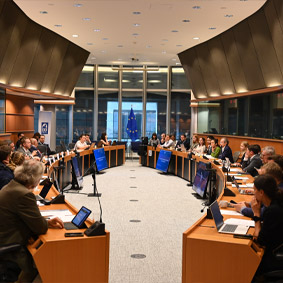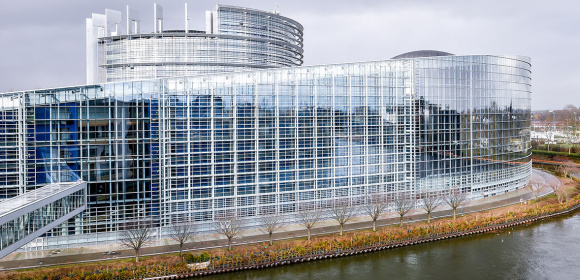
On the third day of hearings for candidates for EU commissioners at the European Parliament in Brussels, MEPs questioned Andrius Kubilius. The Lithuanian candidate for the new Commissioner for Defense and Space was questioned by PiS MEPs Adam Bielan and Beata Szydło.
Adam Bielan, referring to the current situation following the U.S. election won by Donald Trump, recalled that the politician had even threatened to withdraw the U.S. from NATO due to low defense spending by European allies. The MEP asked the Commissioner-designate how he intends to defend the interests of the European defense industry in light of the fact that, on the one hand, protectionism on the part of France and Germany in the defense sector is intensifying, while on the other hand, countries on the eastern flank, such as Lithuania and Poland, are rapidly strengthening their defense capabilities. He also wanted to know how the European Commission intends to reconcile these dynamics with the need to maintain good, cooperative relations with the United States. The MEP also noted that Poland has developed a defense industry that relies on partnerships with third countries, such as the United Kingdom and the United States. “What should the framework of our EDIP cooperation (the EU’s defense industry strategy—ed.) look like so as not to undermine these important partnerships?” he asked the Commissioner-designate.
Andrius Kubilius agreed with the ECR Group coordinator in the European Parliament’s Committee on Foreign Affairs (AFET) that the EU should allocate more funds to the defense industry “not because President Trump demands it, but because of the threats posed by Putin.” He emphasized that he is a strong supporter of the transatlantic alliance and wants close relations with the United States, regardless of who is president and what actions they intend to take. “However, it is clear that our responsibility to defend Europe cannot depend on what is happening in America,” he concluded.
He noted that these efforts have already begun, but some countries are spending more “because they feel this threat much closer to their homes and families, while others are just beginning to make these expenditures.” He reported that before Russia’s invasion of Ukraine, member states’ total spending amounted to 200 billion, and now that figure stands at over 350 billion and is steadily rising.
The Lithuanian politician emphasized that while additional equipment is also needed, we must consider “where we are going to buy this equipment.” “It’s good that Poland is spending huge sums on Korean equipment, but we need to consider how to manage on our own and support our defense industry, because in times of war, having our own weapons will be very important,” stated the candidate for commissioner. “In the member states of the European Union, we need weapons that come with no conditions imposed by companies from third countries regarding their use,” he emphasized.
Beata Szydło noted that one of the tasks of the Commissioner for Defense and Space is to propose measures aimed at reducing barriers to cross-border cooperation and contributing to so-called “specialization.” In this regard, she asked what exactly the European Commission means by the term “specialization.” “Do you agree with Mario Draghi’s proposal that member states should divide up their specializations so that, for example, one country produces tanks while another produces only barrel covers?” the former Polish prime minister asked. Referring to Draghi’s report, the MEP also wanted to know whether member states should be prepared to voluntarily phase out their own industries in order to fit into the specialization map planned in Brussels. She pointed out that, until now, the common demand of the countries of Central and Eastern Europe and the Baltic states had been the development of a European defense industry across the entire Union.
Andrius Kubilius, responding to Beata Szydło’s questions, highlighted the differences in the number of defense platforms between Europe and the U.S. “In Europe, we have 180 different defense platforms, while in the United States there are only 30,” he said. He added that in the 1990s, a process of consolidation and specialization took place in the United States with regard to various components of the defense industry. “The European Union must clearly address the challenge we face, which is the possibility of a military crisis,” the Lithuanian politician stated. He also pointed to the need to consider what NATO’s defense plans actually mean in practice. “We need to understand the urgency of the matter and how important it is for member states to support the implementation of these plans,” Kubilius argued. “Once we know what resources are needed, we will be able to turn to the defense industry and find out who is capable of producing, for example, a specific number of tanks over the next five years,” —he gave this as an example of one way to implement these plans, which will naturally lead the Union toward specialization, rather than being an artificial process.