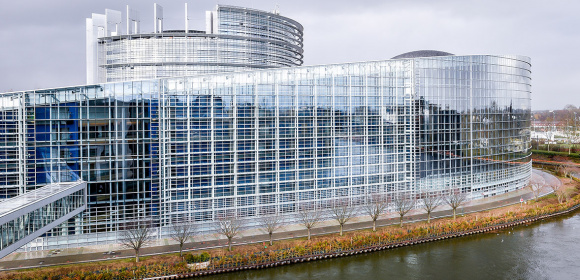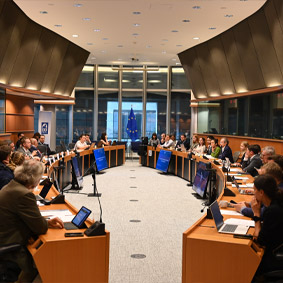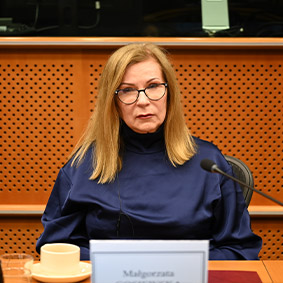
A confirmation hearing for Christoph Hansen, the nominee for the new Commissioner for Agriculture and Food, was held at the European Parliament in Brussels, during which Waldemar Buda and Anna Zalewska, members of the AGRI Committee, spoke.
Waldemar Buda addressed the trade agreement between the EU and Mercosur. “Let’s not delude ourselves that guaranteeing mirror clauses will give us a chance at fair competition. On paper, everything will indeed look wonderful, but ultimately, the European Commission will not have the tools to monitor compliance with the requirements we set in these agreements,” the MEP pointed out. He added that this agreement is clearly detrimental to agriculture and that the Commissioner for Agriculture and Food should take a firm stance on this matter.
The Polish politician stated that he expects the commissioner to move beyond the role of merely representing his own country, as he represents the powerful agricultural sector, which accounts for one-third of the European Union’s budget. “You must be a strong commissioner who will ‘stand his ground’ on many issues in discussions with other commissioners,” Waldemar Buda urged.
The PiS MEP also referred to the Common Agricultural Policy, in which the issue of funding for the next financial framework has not yet been resolved. “We need as much funding as possible, or at least to maintain what we have today in the CAP,” said Waldemar Buda, outlining his expectations for the Luxembourg candidate for commissioner.
Christophe Hansen stated that “in the agreement with Mercosur and in all trade agreements, we should ensure that our products are actually produced within the European Union, and that other products are produced under similar conditions and in compliance with EU criteria.”
He also pointed out that negotiations at the World Trade Organization should take into account the Codex Alimentarius (a collection of internationally accepted food standards, practices, recommendations, and guidelines regarding food safety and quality—Ed.). “It is extremely important to defend an adequate and robust budget for the agricultural and rural sectors,” emphasized the candidate for commissioner, calling on Members of the European Parliament to join forces in the fight for these funds.
“If you become commissioner, I invite you to visit the Polish-Ukrainian border within your first 100 days so you can see for yourself how trade liberalization and European decisions are affecting the Polish and European markets,” said Anna Zalewska. She noted that embittered farmers have taken to the streets, not only because of bureaucracy and mounting burdens, but because their situation is becoming increasingly difficult. She emphasized that dialogue with them is essential, because “this absolutely must change.”
Anna Zalewska also wanted to know how the future commissioner envisions bringing agriculture under the ETS system. She also referred to the agreement with Mercosur, pointing out that the Luxembourgish candidate for commissioner “speaks of signing it with great enthusiasm, as if he had already made the decision.”
The candidate for Commissioner for Agriculture and Food stated that the agreement with Mercosur brings both benefits and challenges. He pointed to the problem of importing meat produced differently than in Europe—for example, in Brazil, where it recently came to light that health inspectors had been corrupt for years— while also noting that, on the other hand, exports from the EU’s agri-food sector bring significant benefits.
“I did not say that I am in favor of the EU Emissions Trading System (EU ETS) in agriculture,” he argued. He also pointed to New Zealand, a country with progressive environmental policies, which has moved away from the ETS system in agriculture. “I believe that the ETS in agriculture is not the right solution, because administratively it would be extremely difficult,” stated the Luxembourg politician. He explained that there are nine million farms in the EU—ranging from half a hectare to thousands of hectares—and that is why it is unfeasible. “Consumers would have to pay for it; food prices would rise because farmers would have to ‘shuffle’ all that paperwork,” he commented.
Christophe Hansen reported that he had visited the Polish-Ukrainian border in February, is familiar with the situation, and is fully aware of it. “We need to analyze autonomous trade mechanisms, identify which ones work and which ones don’t, and draw conclusions from the current situation,” he stated. The commissioner-designate also accepted MEP Anna Zalewska’s invitation to revisit the Polish-Ukrainian border and examine the current problems, not only in agriculture but in trade in general.