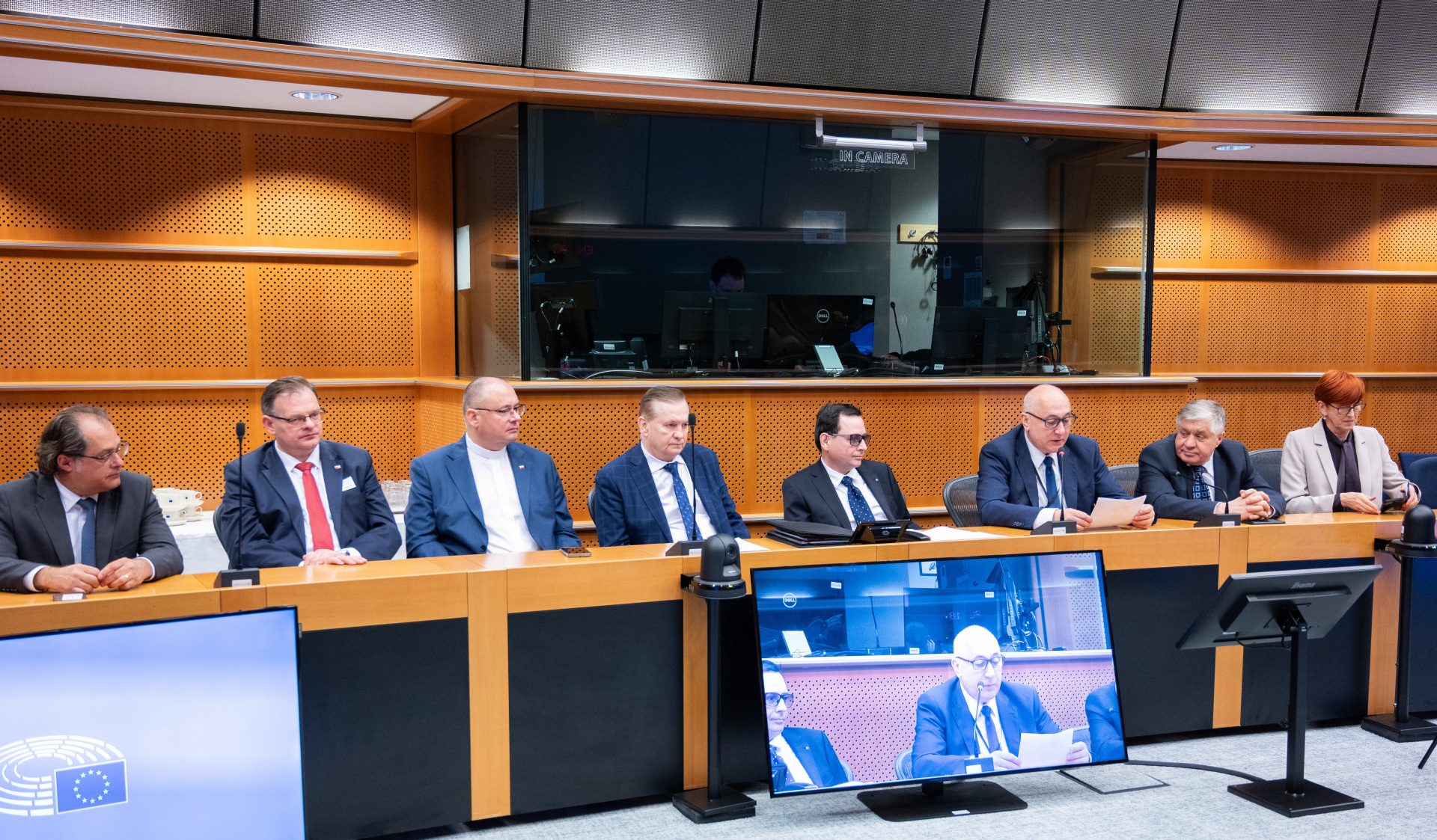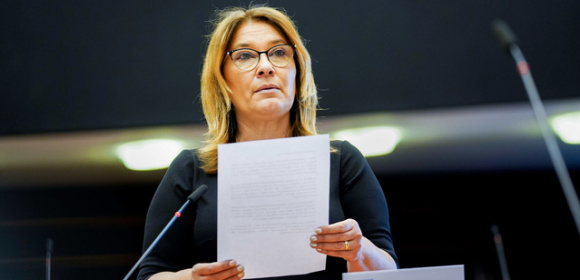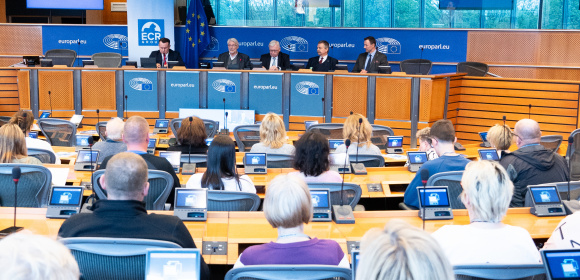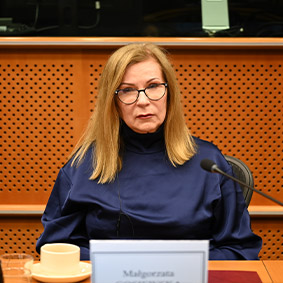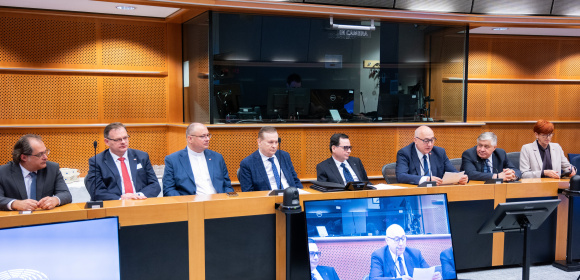
At the initiative of PiS MEP Joachim Brudziński, a public hearing titled “Toward a Europe Resilient to Water Scarcity” was held at the European Parliament in Brussels. The event was attended by Marek Gróbarczyk—former Minister of Maritime Economy and Inland Navigation—Krzysztof Woś—former president of the State Water Management Authority (PGW WP)— Janusz Karp—former director of the Institute of Meteorology and Water Management, Luca Perez—a representative of the European Commission’s Directorate-General for the Environment (DG ENV), and a large number of Members of the European Parliament.
Joachim Brudziński noted that today we must face many challenges related to water resource management in Europe, and in Poland in particular. “We need decisive and comprehensive measures to ensure the preservation of water resources for future generations,”he emphasized. He mentioned that the main challenge we face, in light of the increasingly frequent droughts and floods, is adopting a holistic approach to water resources. “One of the most important elements, which is a priority for us and formed the basis of the Law and Justice government’s actions, is water retention,” the MEP emphasized. He reported that science-based studies to date indicate that we need investments in waterway infrastructure that will increase water retention in Poland from 7.5 percent to at least 15 percent. “Regulating waterways, expanding retention reservoirs, and implementing small-scale retention measures are an indispensable response to the challenges we face,” stated the Polish politician.
“This conference marks the beginning of an important discussion in the European Parliament, because we are all in favor of caring for our planet and ensuring that our children live in a clean environment and drink clean, healthy water, but we cannot destroy the European economy and agriculture or allow the ideological excesses that come with it,” noted the PiS MEP.
Marek Gróbarczyk noted that climate change, which is affecting Europe and the world, has an extremely significant impact on the economy and primarily affects agriculture, which is increasingly struggling with problems arising from this issue. He pointed out that rivers are drying up with increasing frequency today. Citing the drying up of the Po River in Italy as an example, he emphasized that this is a wake-up call to take action on this issue. The former deputy minister of infrastructure, speaking about climate change, also referred to the annual water shortages in Spain, the extremely high temperatures in France, restrictions on inland waterway shipping in Germany, the drying up of Poland’s San River, and the situation where the water level of the Oder River dropped to 10 cm. “On the one hand, this shows how climate change is affecting Europe, and on the other hand, these changes absolutely require us to take action, primarily through legislation,” he stated.
The former minister noted that most countries are not prepared for such phenomena. “These are important issues from the perspective of legal interpretation, which should allow countries to respond appropriately,” he added. Speaking about the entire process of investing EU funds, he noted that EU policies do not permit investments in large-scale water retention projects but instead promote solutions “that certainly will not have a holistic impact on combating water scarcity.” “All environmental measures are important and necessary, but they will not protect Europe—and above all, agriculture—from water scarcity,” he stated.
The Polish politician noted that until the last decade, Poland had not faced problems with such phenomena, but today, for example, the Greater Poland region is extremely vulnerable to water shortages. “In essence, every farm that wants to produce in an organized manner must rely on all kinds of water resources, whether from groundwater or from its own reservoirs, which dry up every year. The broadly understood problem of drought is associated with enormous funds that every state must allocate to such activities, because all forms of compensation resulting from drought are the state’s responsibility,” he said.
Marek Gróbarczyk recalled that last year the Law and Justice government prepared a plan to build nearly 310 retention reservoirs, plus 50,000 km of canals connecting this system, which would create solutions to safeguard Poland against potential water shortages in the years to come. The former minister called for changes to EU legislation that currently prohibits water retention investments in Poland. As an example, he cited the Racibórz reservoir, which could serve as a massive water reservoir, capturing water during the winter and spring months when it is abundant, but due to factors primarily related to legislation, it is currently a dry polder used exclusively for flood control. “The lack of sites capable of retaining water is plunging Poland deeper and deeper into water scarcity, and sites that should naturally be used for retention are not being utilized as such,” he concluded.