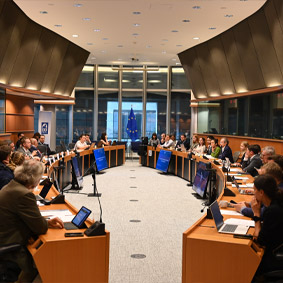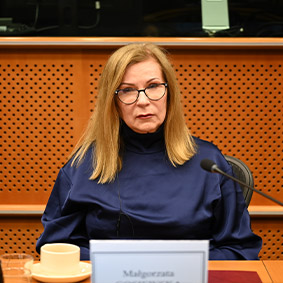
Today in Brussels, members of the Committee on Civil Liberties, Justice, and Home Affairs (LIBE) voted on an opinion drafted by ECR MEP Beata Kempa regarding the implementation of the Treaty’s provisions on EU citizenship. The document was adopted by a large majority.
European Union citizenship was first introduced by the Maastricht Treaty in 1993 and grants a range of rights and privileges to citizens of EU member states, such as the right to move and reside freely within the territory of EU member states, the right to vote and stand for election in local elections and for the European Parliament in their country of residence, and the right to consular protection at any EU embassy or consulate worldwide. Citizens of the Union may not be discriminated against on the basis of their EU citizenship; therefore, they should be treated on an equal footing with citizens of the host country in areas such as education, health care, employment, social benefits, and access to public services. It should be noted that EU citizenship is merely a complement to national citizenship, as is clearly stated in the Treaties.
In her opinion, Beata Kempa focused on several key elements. First and foremost, she highlighted a fundamental constitutional issue: the complementary nature of Union citizenship to national citizenship. In this context, the document emphasized that Union citizenship does not exist in isolation from the citizenship of one of the Member States. “This means that third-country nationals cannot acquire Union citizenship unless they first become citizens of one of the Member States. In turn, matters concerning the acquisition of national citizenship remain within the purview of the Member States, which have exclusive competence in this area,” the MEP emphasized.
Furthermore, the document focuses on ways to potentially strengthen the exercise of existing rights for Union citizens. In this regard, the ECR rapporteur proposed that Member States inform EU citizens who have the right to vote or stand for election about how to exercise their electoral rights and about the specifics of the electoral process. “After all, the participation of EU citizens residing in a Member State of which they are not nationals remains low in some parts of the Union,” noted Kempa.
In addition, the opinion includes references to EU citizens with disabilities. “For such citizens, participating in elections can be even more difficult. I have therefore called on Member States to consider introducing specific accommodations for these citizens, such as voting by proxy, by mail, or even online,” – said the author of the opinion. According to the MEP, leaving these matters in the hands of the member states is the optimal solution, as it allows the proposed measures to be adapted to the actual circumstances in each country.
Finally, the opinion calls on the Council and the Commission to resume work on the regulation on public access to documents, which will ensure greater transparency and allow EU citizens to be better informed, and consequently, greater oversight of the institutions.