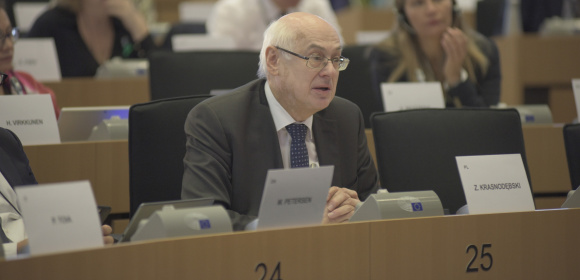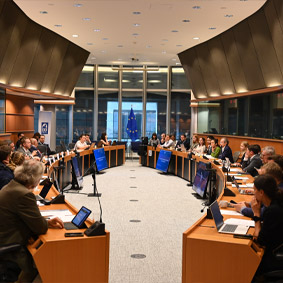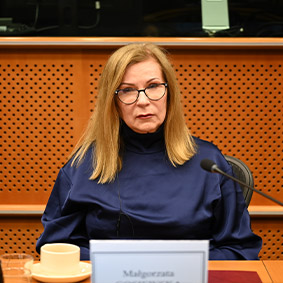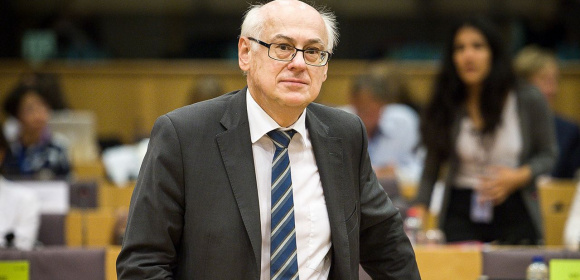
In Brussels, during a meeting of the Committee on Industry, Research, and Energy (ITRE), a structured dialogue took place with the participation of Maroš Šefčovič, Executive Vice-President for the European Green Deal, Interinstitutional Relations, and Foresight. Speaking on behalf of the ECR Group was PiS MEP Zdzisław Krasnodębski.
Professor Krasnodębski asked Maroš Šefčovič about the latest report on the green transition of industry. He inquired about its main conclusions and the planned policy adjustments for the private sector regarding the European Green Deal, particularly the dialogue on the green transition.
The MEP also addressed the issue of affordable energy prices. He noted that this was one of the key issues raised by the industrial sector at the European Energy Forum. He added that this is also a significant issue from the consumers’ perspective. He noted that MEPs are set to vote on an EU reform that will not, however, solve this problem. “How can we improve the competitiveness of European industry without addressing the issue of energy affordability?” the Polish politician asked in this context.
The PiS MEP also raised the issue of proposals for a new approach to public procurement in the European Union, which are intended to take into account companies’ carbon footprints. He asked Commissioner Šefčovič about the cost of these new proposals and their impact on the internal market, taking into account differences in energy mixes, varying shares of fossil fuels, and differences in purchasing power across member states.
Commissioner Šefčovič stated that the best legal framework is being developed in the context of the green transition. “Now is the time for action, in close cooperation with social partners and the industry,” he added. On the topic of energy prices, the Slovak commissioner said that in the future, “we will need to examine the issues of taxes, transfer costs, and electricity transmission.”
He spoke of the need to reform public procurement so that companies with a small carbon footprint, which are environmentally friendly and treat their employees fairly, are rewarded for their work, rather than being penalized in the procurement process, where the cheapest bid from a distant country is selected. “We have incorporated this into our battery regulations and will incorporate it into the wind energy package,” said Šefčovič.