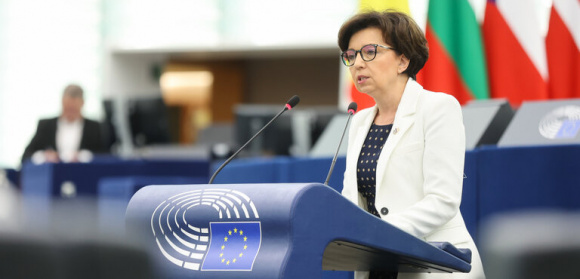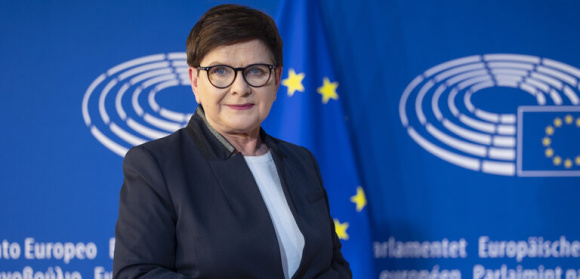
During the debate on the guidelines for the 2027 EU budget in the European Parliament, MEP Beata Szydło emphasized that, in light of the ongoing war, Europe’s top priority should be security in the broadest sense —encompassing military, economic, energy, and food security issues. She also called for greater pragmatism in EU policy and a move away from projects that burden the European economy.
The MEP noted that Europe currently finds itself in an exceptional geopolitical situation, which should have a direct impact on the European Union’s budget priorities.
“We are in an exceptional situation because we are at war. Today, there is no issue more important for Europe than security. Security issues should be the top priority in the budget,” she emphasized.
As she noted, security should be understood broadly—not only in military terms, but also in economic and social terms. In her view, it encompasses the competitiveness of the European economy, labor market stability, and energy security.
Szydło also pointed out that the European Union should learn from the mistakes that led to Europe’s current economic problems.
“We must avoid repeating decisions that led to economic crises, problems for businesses, and high energy bills for citizens,” she noted.
The MEP also criticized EU climate initiatives, including the European Green Deal and the EU Emissions Trading System (EU ETS), arguing that these projects have not delivered the expected results and are generating significant costs for the economy.
“We know perfectly well that the Green Deal and the EU ETS have simply failed. We need to abandon them,” she stated.
In her speech, Szydło also emphasized the importance of agriculture for Europe’s security, noting that stable food production should be one of the key elements of EU policy.
“Agriculture is another issue we must take into account when thinking about the security of Europe and Europeans,” she added.
Concluding her remarks, the MEP called for a more pragmatic approach to EU policies.
“We need more common sense, more pragmatism, and less ideology,” she concluded.