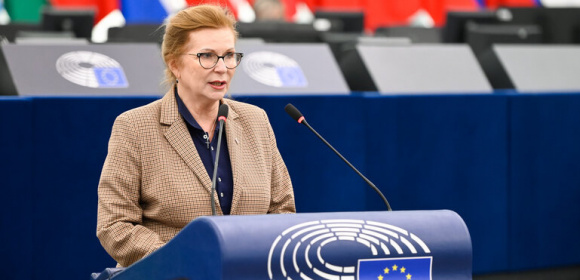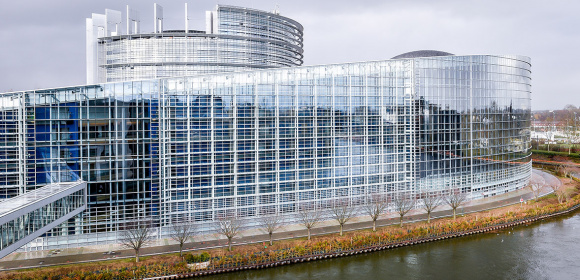
On April 3, 2025, in Strasbourg, during a plenary session of the European Parliament, the first part of the Omnibus 1 package was adopted, with the aim of reducing the administrative burden on businesses in the European Union.
The simplifications concern, among other things, the Corporate Sustainability Reporting Directive (CSRD).
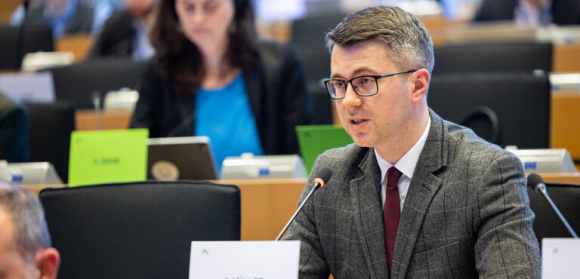
Tobiasz Bocheński, the ECR coordinator on the European Parliament’s Committee on Legal Affairs (JURI), commented on the matter.
“The European Parliament’s vote on April 3, 2025, on the first part of the Omnibus 1 package—the day after President Donald Trump announced the tariffs—is an extremely symbolic act, but not in a positive sense, as we would have wished. All economic statistics (including the now-famous Draghi report) point to Europe’s backwardness and economic decline compared to the U.S. and China. In response to this collapse, leaders—including Ursula von der Leyen—announced the need for an economic revival. Deregulation and building Europe’s competitiveness were supposed to be key elements of this policy. What did we get?
The European Commission and the European Parliament prevented any discussion or proceedings to reject in their entirety the CSRD and CSDDD directives, which have been widely criticized by businesses—both small and large. The Commission’s amendments—which were ultimately adopted—aimed to postpone the entry into force of the regulations (sic!) and partially alleviate the burdens on smaller businesses. We must therefore ask: what is deregulation?
Deregulation means scrapping existing regulations that impose additional legal burdens (financial, bureaucratic, etc.) on legal entities and individuals. Deregulation involves repealing unnecessary regulations that hinder the operations of companies and individuals, thereby expanding the scope of freedom that was previously constrained by a straitjacket of bureaucratic regulations.
Since the Green Deal directives have been postponed under the banner of “deregulation,” can we really call this deregulation? What does it mean to freeze the entry into force of legal regulations for a year or two? We cannot even call this simplification. We are dealing with a massive marketing scam. The European Commission, von der Leyen, the EPP, S&D, and Renew lack the courage and the will to reform the European economy. They are prisoners of a bureaucratic mindset that prevents them from fighting for the future of European entrepreneurship. If, today, “deregulation” means postponing the implementation of the Green Deal, then that means imposing new taxes can be portrayed as unlocking the economic potential of businesses. This is deceiving Europeans, and everyone will end up paying dearly for it.
“The ECR wants true deregulation—to throw out not only directives that have not yet entered into force, but also those that have been in effect for a long time and have contributed to the bleak picture of the European Union’s economy painted in Draghi’s report,” — stated the PiS politician.