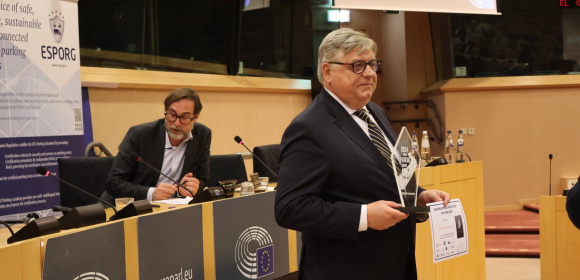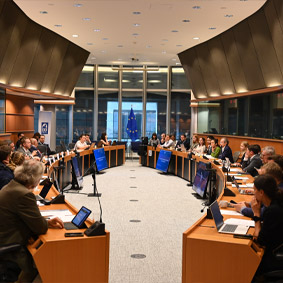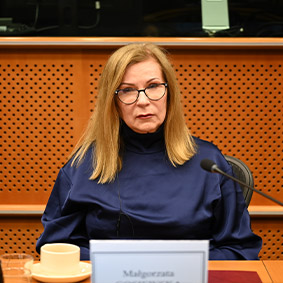
Today, during a meeting of the European Parliament’s Committee on International Trade (INTA), amid ongoing mass protests by farmers, a crucial vote was held on extending the temporary trade liberalization measures between the European Union and Ukraine until June 2025. The PiS delegation strongly opposed the document, which is disadvantageous to Polish farmers; however, it was adopted by a majority vote (26 in favor, 10 against, and 1 abstention), including votes from KO MEPs.
As the European Commission explains, “in light of Russia’s ongoing war of aggression against Ukraine, the resulting need to continue providing economic support to Ukraine, and given that in June 2022 Ukraine was granted EU candidate country status, and in December 2023 accession negotiations began, the Commission is proposing a regulation of the European Parliament and of the Council extending the validity of the aforementioned trade liberalization measures (facilitating the flow of goods, the operation of solidarity corridors between the EU and Ukraine, and further market liberalization—Ed.), which should remain in effect for a period of one year from the date of expiration of the current measures (i.e., from June 6, 2024).
The PiS delegation opposed this report, arguing that it harms the interests of Polish farmers by allowing a continued flood of agri-food products from Ukraine into European markets, particularly those of neighboring countries.
However, aware that the document would ultimately be adopted, the PiS delegation supported amendments that would help adjust the safeguard mechanisms proposed by the European Commission and thereby improve the situation for Polish agricultural producers. These amendments concerned, among other things, a change to the reference period, which would lead to the establishment of additional preferences at a level that would be easier for the unstable EU agricultural markets to absorb. In addition, PiS supported expanding the range of products for which ATM safeguard measures can be applied, including honey and wheat. It also opposed the possibility of suspending the application of Article 24, which, under extraordinary circumstances—i.e., in situations threatening public safety, human health, or plant and animal health—would allow member states to impose a unilateral embargo on imports from third countries. Given the war on the EU’s eastern border and reports of the possible use of unconventional weapons, this proposal by the European Commission is completely incomprehensible.
“Poland has strongly supported Ukraine from the very beginning. We opened our hearts and our homes to them and helped them live normal lives. We continue to provide significant assistance, but support for Ukraine should not jeopardize the safety of our citizens, including Polish farmers. We will not consent to the destruction of the Polish economy or the oppression of Polish farmers. Unfortunately, the amendments we supported were not adopted, but we hope to have the opportunity to adopt them during the plenary session,” Dominik Tarczyński commented on the vote.
The report will be put to a final vote during next week’s EP plenary session in Strasbourg. If the EP adopts its position at first reading, the Council will formally approve the regulation, which will enter into force upon publication in the Official Journal of the EU.