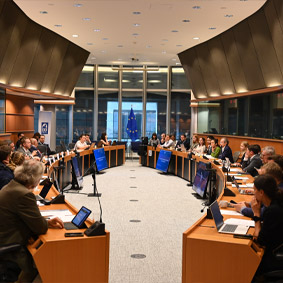
Today in Strasbourg, on the second day of the European Parliament’s plenary session, a debate took place on ensuring secure and sustainable supplies of critical raw materials. ECR MEPs Izabela Kloc, Grzegorz Tobiszowski, and Adam Bielan spoke during the discussion.
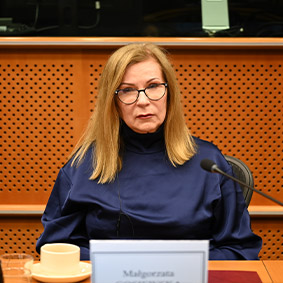
Izabela Kloc noted that Poland produces two raw materials that are extremely important for the energy transition: coking coal, which is essential for steel production, and copper, which is necessary for the production of cables and semiconductors.
As she noted, through difficult but effective negotiations in the European Parliament, it was possible to maintain coking coal’s status as a critical raw material, and the unique role of coking coal in the European economy is a fact recognized even by European Commission officials. “The European energy transition needs steel, it needs copper, and many other key raw materials that must be sourced primarily within Europe,” the MEP emphasized.
According to the Polish politician, however, the most important thing is to adjust the pace of this transition to our continent’s technological capabilities and raw material resources. In her view, a pace of change that is too rapid and revolutionary leads to companies leaving and the deindustrialization of the European Union. “The European economy will neither be attractive nor serve as an example to anyone if it turns out to be a story of ideology triumphing over common sense,” – stated Izabela Kloc, expressing her satisfaction that the regulation on critical raw materials is a sign of common sense in economic thinking.
“I am pleased with the positive outlook for Europe’s largest coking coal producer: Jastrzębska Spółka Węglowa,” she added.
Grzegorz Tobiszowski emphasized that the principles underlying this regulation are extremely important, as the legislation aims to provide an impetus to increase, among other things, EU extraction of raw materials, diversify the EU’s supply of critical raw materials, strengthen the circular economy—including recycling—and support research and innovation in the areas of efficient resource management and the development of substitutes. The Polish politician, highlighting the need to increase EU raw material extraction, asked whether this would be possible when, at the same time, EU climate policy is aimed at phasing out the mining sector in Europe.
“Our climate policy, which involves the systematic elimination of the mining and mining-related industries, as well as the institutional and academic infrastructure, contradicts the extremely important objectives of this act,” the MEP argued. As he noted, in a few years it may turn out that, without managerial staff, equipment, and mining-related companies, the EU will become secondarily dependent on raw materials from third countries.
Adam Bielan emphasized that the Critical Raw Materials Act is a vital initiative for European industry and economic prosperity. “Our innovation-driven continent has so far been overly dependent on raw materials from external sources that are essential for technologies such as chips, batteries for electric vehicles, and renewable energy systems,” he noted. The MEP expressed hope that this legislation would create a new dynamic, reducing the EU’s dependence on imports, which pose a threat to European economic security and to Europe’s growing ambitions, particularly in the digital sphere. Bielan stated that, from the perspective of the internal market, he welcomes the new regulations concerning large companies, which will now assess the risks associated with the supply of critical raw materials, with the aim of preventing disruptions in supply chains which could affect consumers. “I am convinced that thanks to more transparent rules for companies and a reduction in existing burdens, we can significantly accelerate business growth, particularly in sectors critical to our technological and economic development,” he emphasized.