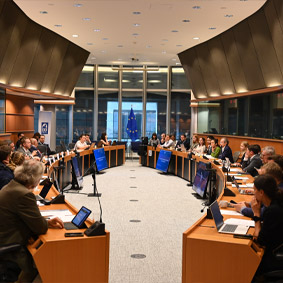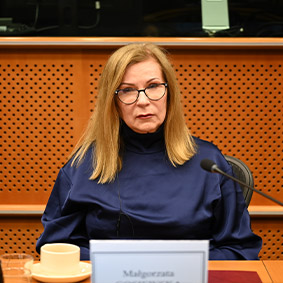
At the European Parliament in Strasbourg, one of the plenary session debates focused on the permissible levels for lead and its inorganic compounds, as well as diisocyanates. PiS MEP Elżbieta Rafalska spoke during the discussion.
Elżbieta Rafalska stated that lead and its inorganic compounds have extremely harmful effects on health. She explained that lead does not break down, accumulates in the body, is particularly dangerous for children, affects fertility in both women and men as well as fetal development, and damages the nervous system, kidneys, heart, and blood. The PiS MEP emphasized that amending the Lead Directive is very important for occupational health and safety and for workers’ health. “This is the first change to lead exposure limits for workers in 40 years. We have struck a balance between better protection for European workers and avoiding the collapse of the European lead industry and dependence on lead supplies from third countries,” the Polish politician stated. She added that the exposure limit has been reduced fourfold and a transition period has also been introduced. “This will allow workers to continue their duties, and by reducing blood lead levels, we will ensure that new workers are better protected,” the MEP explained.