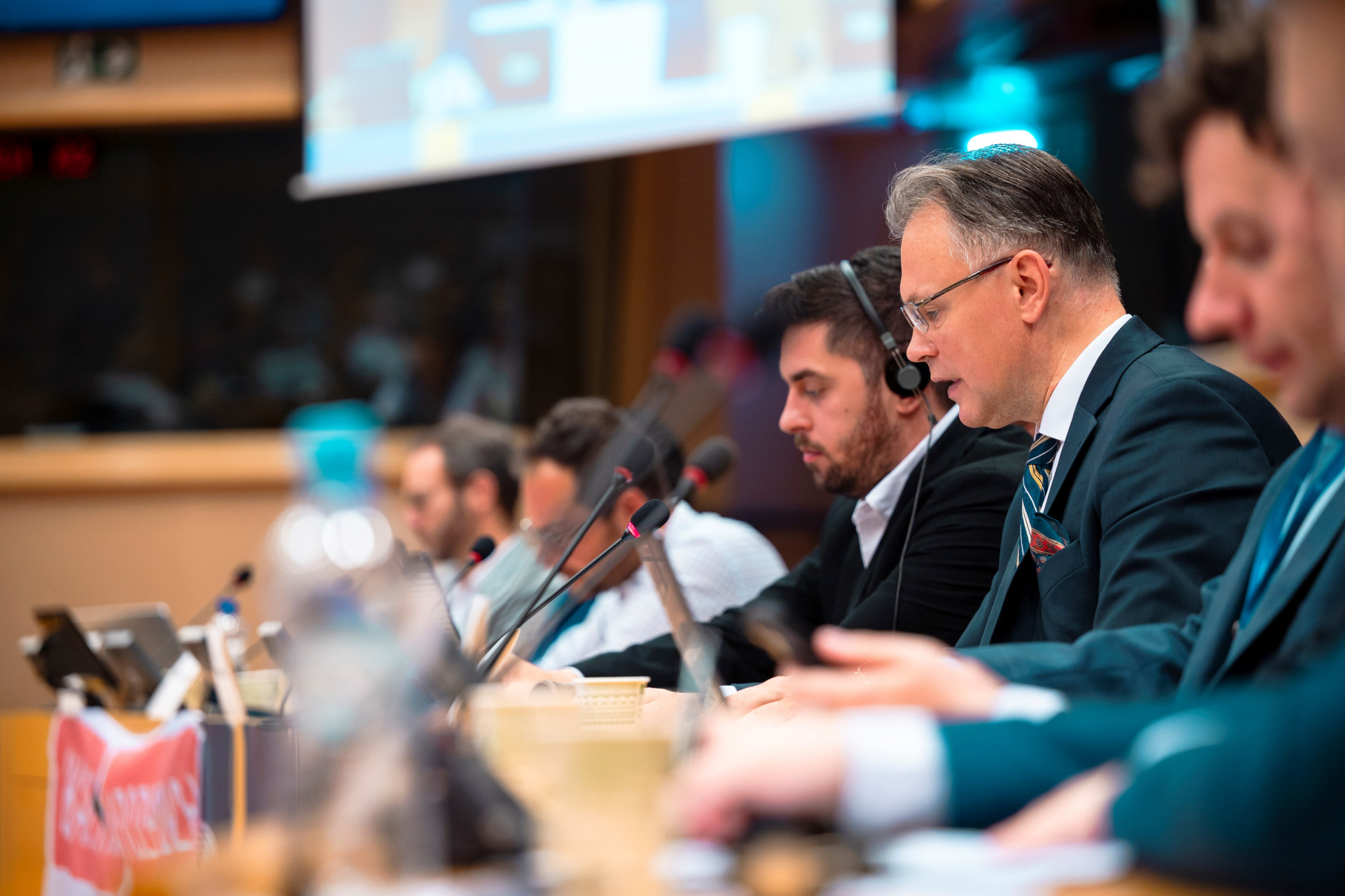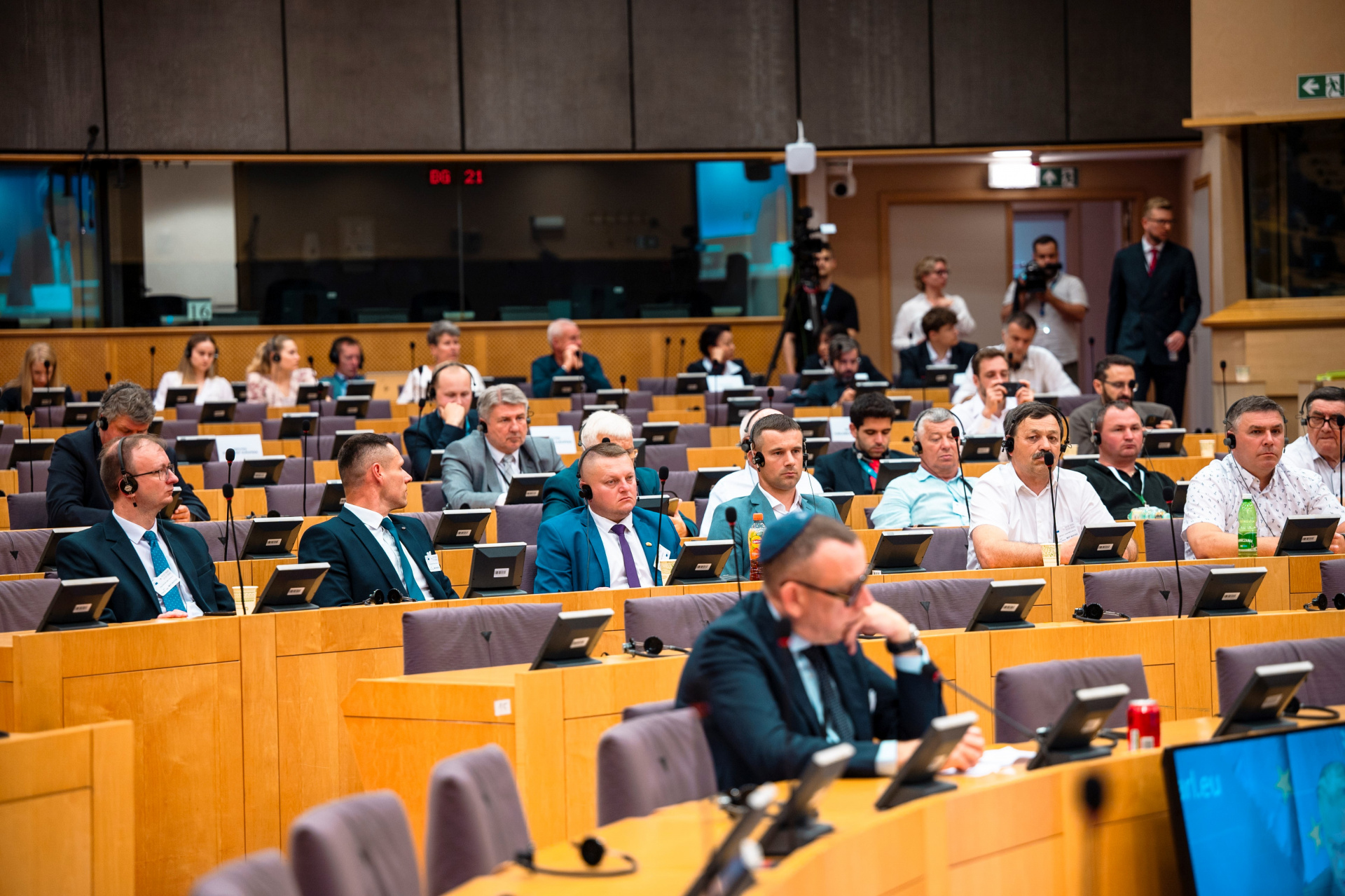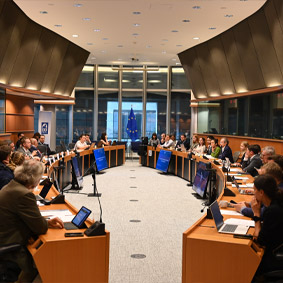
Today, at the European Parliament in Brussels, a public hearing titled “War Crimes and Reparations — Protecting the Rule of Law,” during which experts from Poland, Greece, and Italy discussed justice after World War II and the legal avenues for securing reparations for victims of German crimes.
Opening the hearing, Arkadiusz Mularczyk stated that “this is not merely an academic discussion, but a profound call for reflection, action, and, most importantly, justice.” The MEP noted that the hearing aims to address a deeply troubling contradiction that directly affects today’s citizens of the European Union. As he explained, on the one hand, the European Union proudly champions the rule of law, reaffirms its commitment to ensuring transitional justice worldwide, and strives to protect human rights. On the other hand, however, Mularczyk said, we are faced with the uncomfortable truth that EU citizens—victims of past illegal wars—have no legal recourse for the harm they have suffered. “This is a clear violation of human rights,” he emphasized. At the same time, the PiS politician noted, the European Commission is washing its hands of this human rights violation and is making only minimal efforts to create a forum for EU member states that are victims so that they can negotiate with Germany. “How can the European Union, which is founded on the principles of justice and human rights, credibly uphold the rule of law and ensure transitional justice while neglecting those who are alive today and who bear the scars of World War II?” – wondered the PiS MEP, stating that this “divide” is not only an ethical failure but also a fundamental challenge to the very integrity of the values declared by the EU.
The Vice-Chair of the European Parliament’s Subcommittee on Human Rights (DROI) also pointed to a second contradiction, noting that—while, of course, it is right – significant resources are allocated to remembrance and education about the victims of World War II, the focus on historical memory often overshadows the urgent needs of those who were directly harmed by that same conflict. “We respect the past, but do we truly support those who continue to live with its consequences?” the Polish politician asked, adding that “this selective memory undermines the sincerity of efforts to commemorate the past, as well as any attempts to implement the principle of transitional justice.” “The ease with which the European Union seems to forget the very foundations upon which it was built is alarming,” Mularczyk said, recalling that the Union was born from the ashes of World War II and was established precisely to to prevent such atrocities in the future and to promote peace and ensure justice, and that its founding treaties and the very spirit of European integration are deeply rooted in the lessons learned from that catastrophic period. “Ignoring the ongoing claims of the victims means ignoring the very reason the EU was created in the first place,” Mularczyk emphasized, noting that “for too long, the voices of these victims have been marginalized.”
“In today’s unstable world, where many conflicts persist and new injustices are emerging, our ongoing efforts to fight for the rights of past victims are more important than ever,” Mularczyk said, listing a number of initiatives he had authored in the European Parliament. He emphasized that such actions are necessary to reinforce the principle that “no one is above international law, and accountability is not a matter of convenience but a fundamental pillar of the global order.” “Our fight for the rights of past victims strengthens the very fabric of justice for those who suffer today,” he noted.
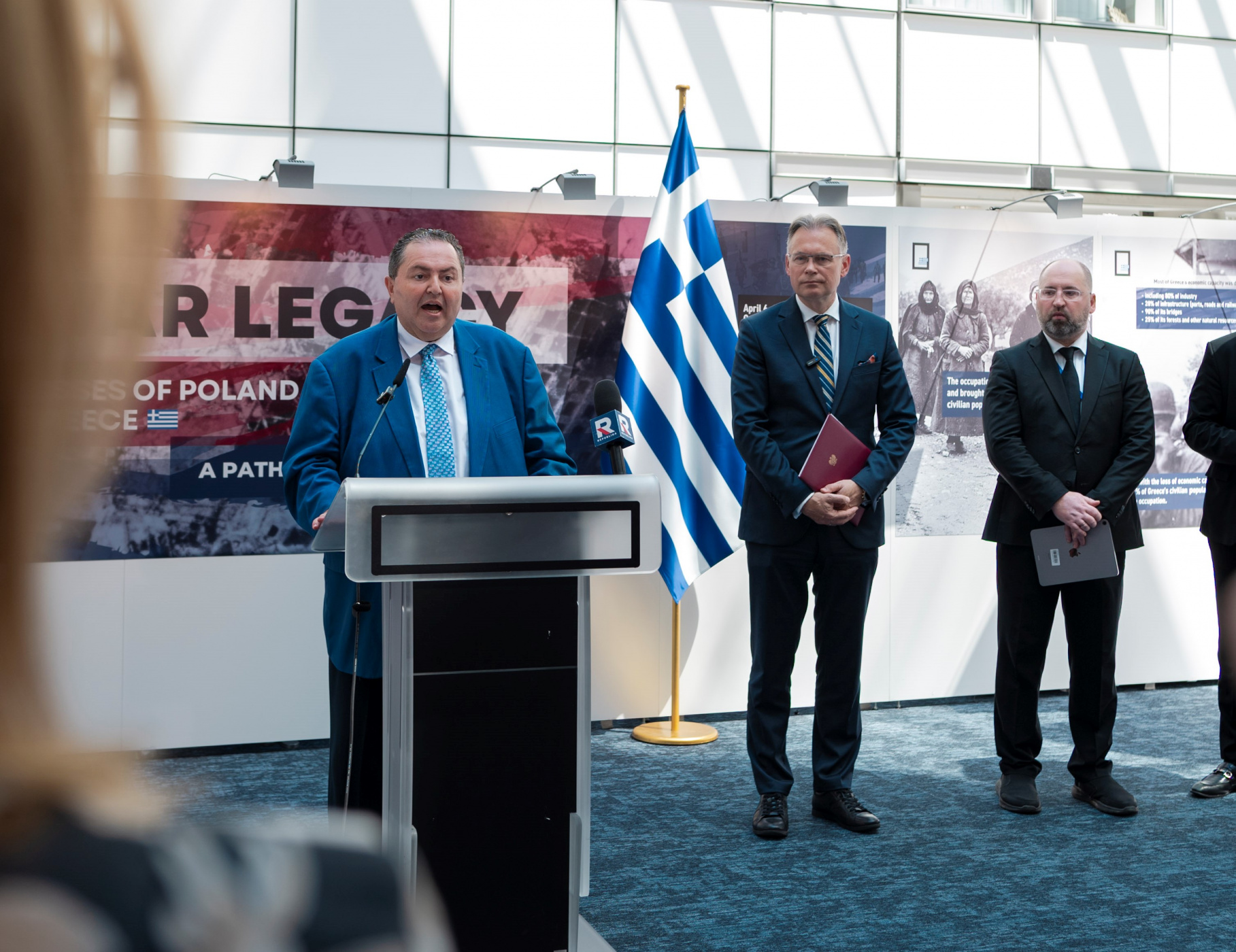
Following the hearing, an exhibition dedicated to wartime losses and the need for historical reparations from Germany, titled “The Legacy of War—The Losses of Poland and Greece,” was opened.
Adam Bielan emphasized that this exhibition holds great symbolic significance. “It is meant not only as a reminder of the tragic past of certain European nations, but also as a call for just reparations for what has been silenced for decades,” emphasized the head of the Polish delegation to the ECR.
“It brings together nations that suffered enormous losses during World War II and whose pain has not yet been fully acknowledged or addressed,” said the PiS politician, recalling that both Poland and Greece were victims of brutal aggression by Nazi Germany. “Our nations experienced mass atrocities, the plundering of national wealth, the extermination of civilians, and the destruction of entire cities and villages,” – added Bielan, emphasizing that these wounds have not healed with time because historical justice has not been served. “That is why, as members of the European Conservatives and Reformists Group, we stand for historical truth and call for an honest dialogue on war reparations,” said the PiS politician. Adam Bielan argued that “this is not just a matter of the past; it is a matter of respect, morality, and European values, which should unite us rather than obscure the truth.”