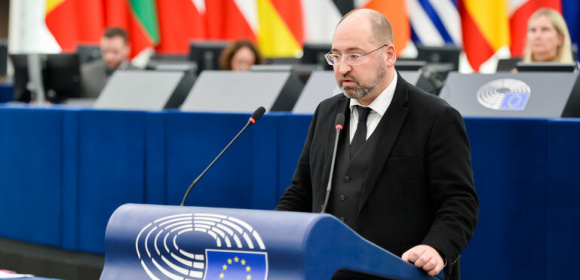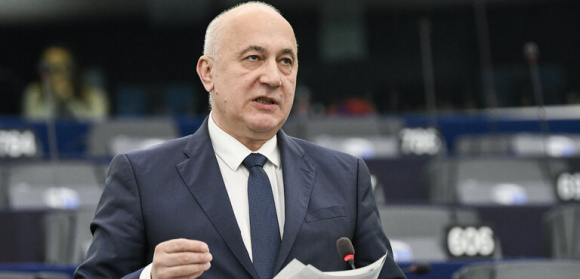
During the European Parliament’s plenary session in Strasbourg, a debate was held on the presentation of the European Court of Auditors’ annual report for 2024. Among those participating in the debate was Tony Murphy, President of the Court. PiS MEP Joachim Brudziński took the floor during the discussion, drawing attention to a number of serious problems related to the management of EU funds.
Joachim Brudziński emphasized that the Court’s annual report for 2024, approved in July of this year, once again exposes the weaknesses of the European Union’s financial control system. He highlighted the high error rate in spending, rising debt, and a lack of full transparency in the implementation of programs financed with EU funds. “Particularly concerning are the limitations on the control of expenditures under the Recovery and Resilience Facility (RRF),” Brudziński noted.
“The Court notes that, in the case of expenditures under the Recovery and Resilience Facility, its audit capabilities are limited, since payments are made based on the achievement of so-called milestones and final targets, rather than directly on the basis of compliance of spending with EU and national regulations,” the MEP said. He explained that in practice, this means it is not possible to fully verify the correctness of expenditures incurred by the final beneficiaries.
Brudziński also referred to recent media reports that confirm the validity of the Court’s observations. In this context, he cited the example of controversial projects funded under Poland’s National Recovery Plan (KPO), including a swingers’ club and the purchase of luxury yachts. “This is no joke. Funds from the KPO have been allocated to purposes that not only raise legitimate moral and economic concerns but, above all, grossly deviate from the declared priorities, such as the green transition or post-pandemic economic recovery,” said the PiS politician.
In his view, problems related to, among other things, the monitoring of spending on the climate transition and irregularities in the procurement of COVID-19 vaccines pose a real risk of further abuses and the inefficient spending of public funds. At the same time, they highlight the double standards applied by the European Commission, which itself fails to adhere to the basic principle of transparency in public finances—a fundamental principle in states governed by the rule of law, whose functioning it simultaneously seeks to oversee. Brudziński noted that the European Court of Auditors’ report for 2024, which has been published, clearly points to persistent serious challenges in the management of the European Union’s finances.