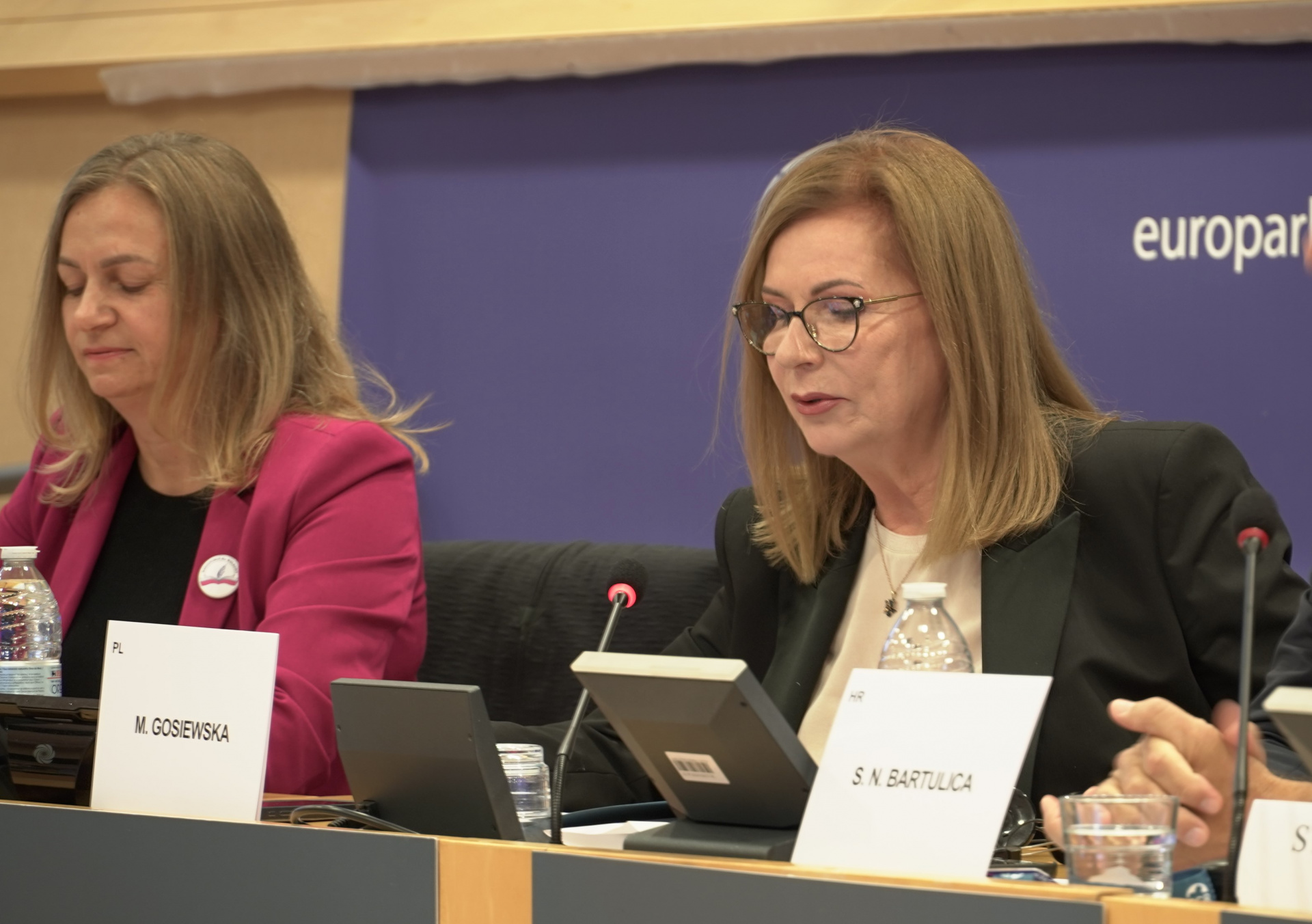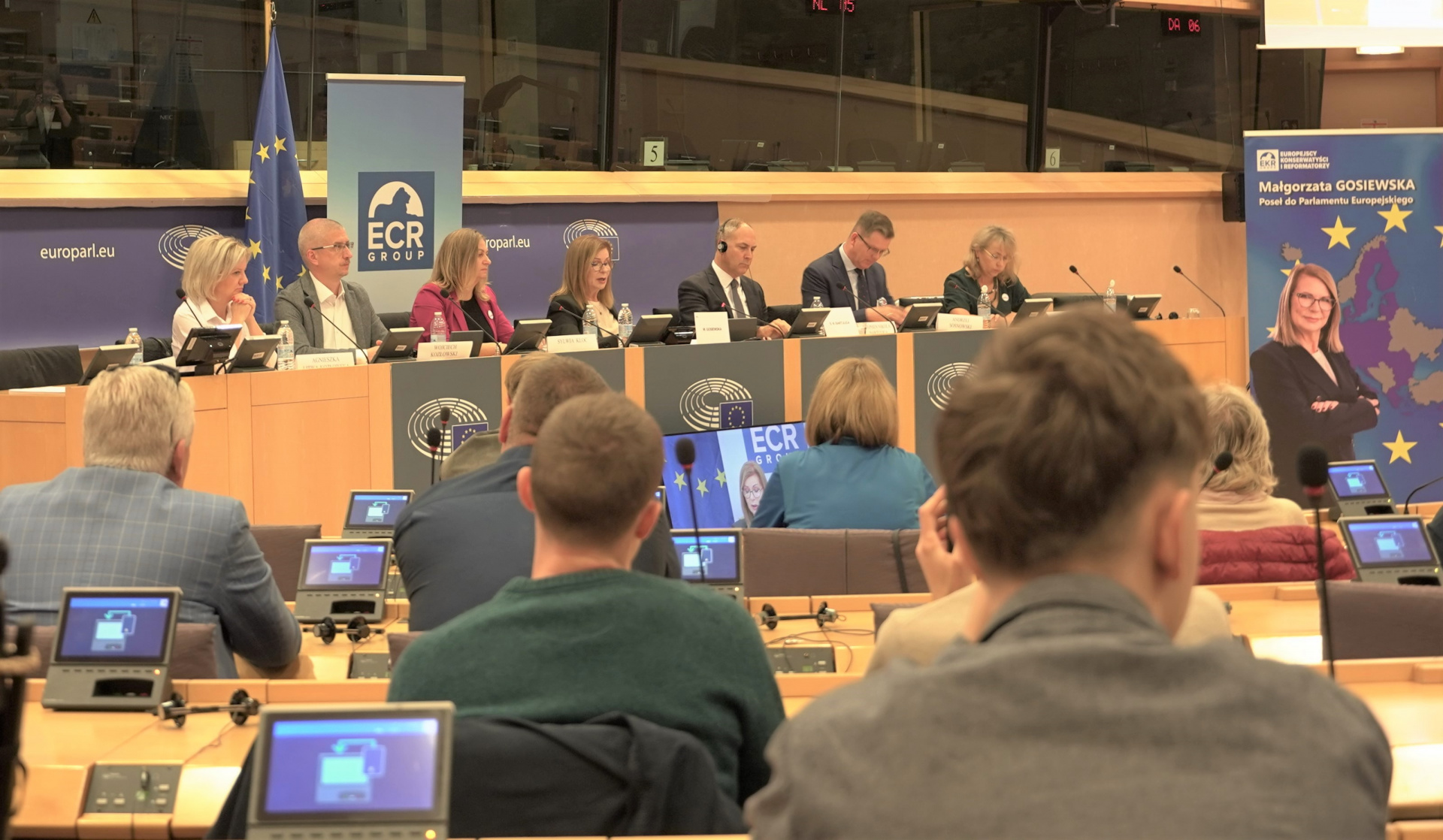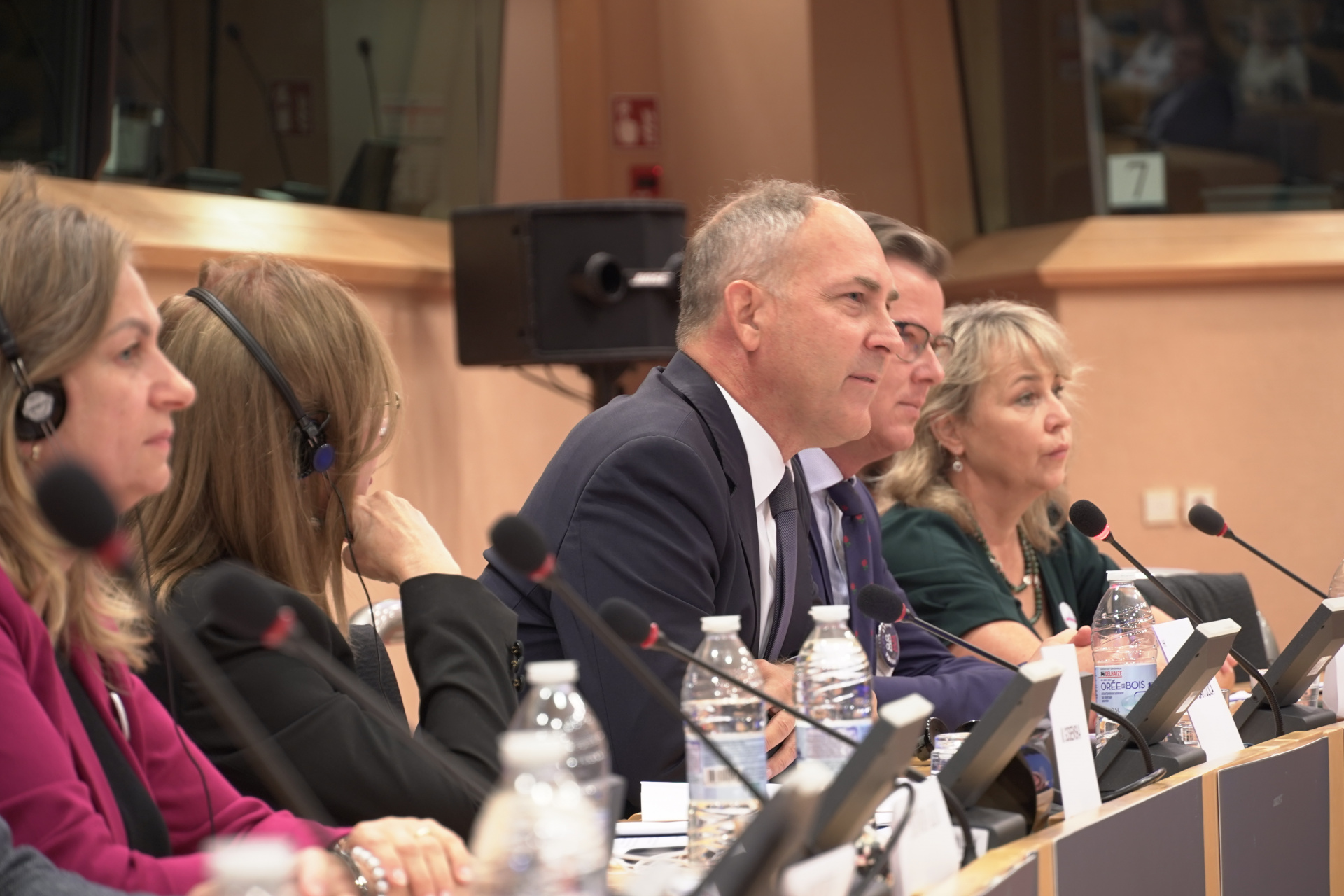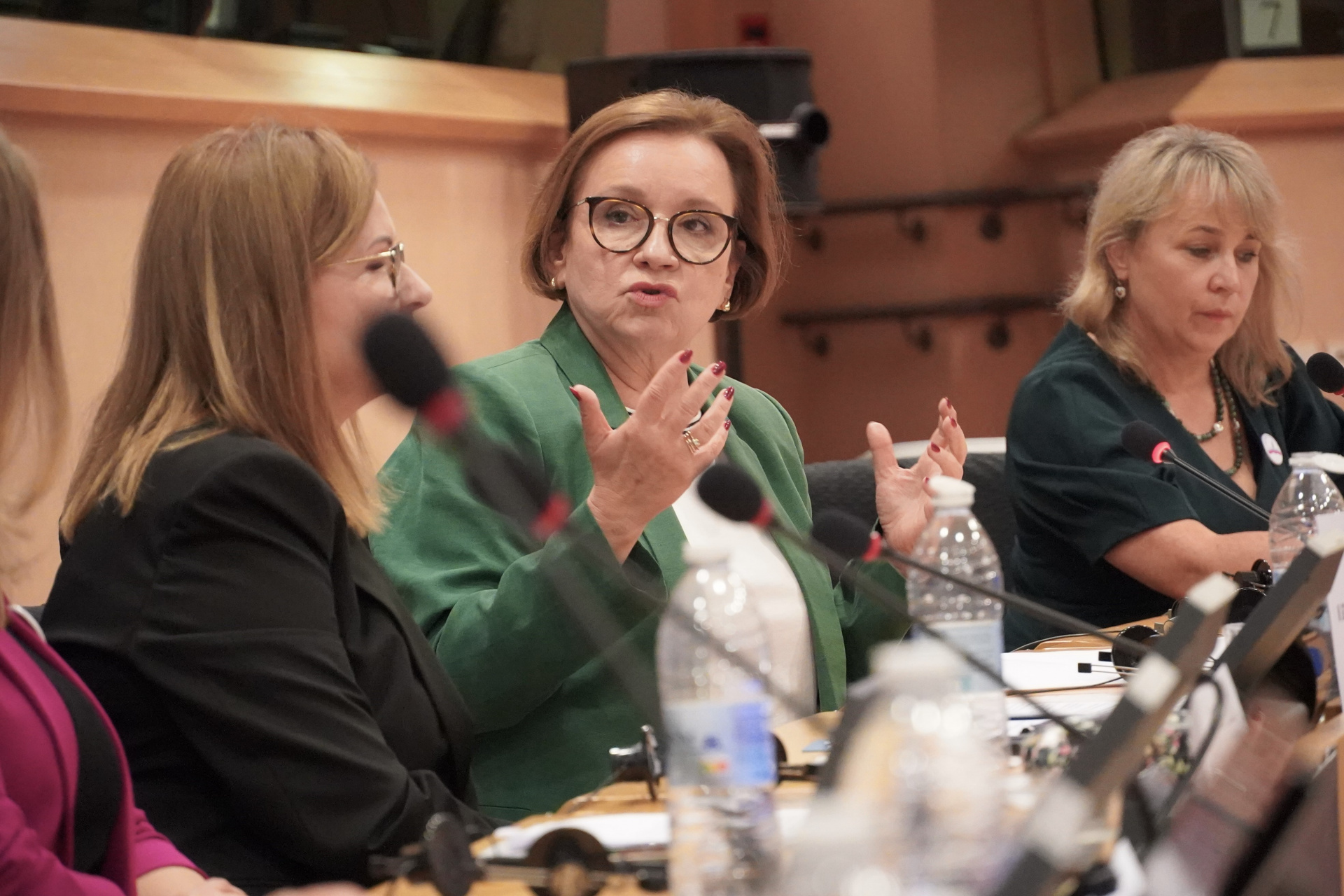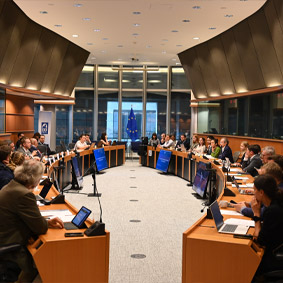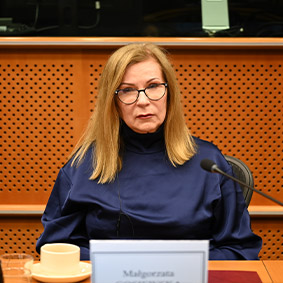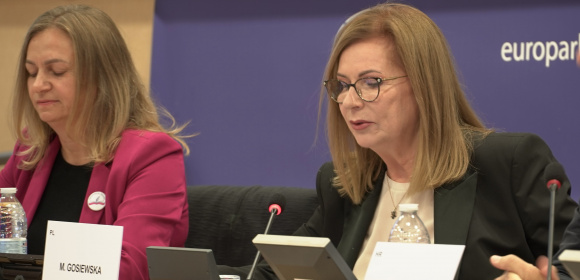
At the initiative of PiS MEP Małgorzata Gosiewska, a conference titled “Where Are You Headed, European Education?” (“Quo vadis, European education?”) was held at the European Parliament in Brussels. During the discussion, which included Stephen Nikola Bartulica, a member of the Committee on Culture and Education; former Minister of National Education Anna Zalewska; a representative of the Ordo Iuris Institute; Marek Puzio, former Mazovian Deputy Superintendent of Education Andrzej Sosnowski, and representatives of teachers’ associations, the experts discussed the consequences and risks associated with the project for a European education area.
Małgorzata Gosiewska noted that the question “Where are you headed, European education?” is particularly relevant today, as Europe “stands at a turning point in its history.” “On the one hand, we have the ambition to be a continent of innovation, democracy, and high quality of life; on the other hand, we are increasingly facing serious threats: demographic, security, identity, and economic crises,” she said. She noted that education is the common denominator of these problems. “What we teach our children, and how we shape our schools and universities, will determine whether Europe will be strong and true to itself in the future, or whether it will become merely a periphery of the world, subordinate to others,” she emphasized.
In this context, the MEP recalled that Europe was built on the foundation of Greco-Roman civilization. “Europe is a continent of nations, each with its own languages, cultures, heroes, and historical memory,” she emphasized. She noted that European education should remind young people that they are the heirs to a vast, beautiful tradition, and that freedom, civil rights, and personal dignity are not granted once and for all—they are the fruit of centuries of struggle and development. However, she noted with concern that we are increasingly witnessing attempts to cut young people off from their roots. As an example, she cited textbooks in which European history is presented selectively, while its religious foundations are glossed over. “Is it any wonder that young people don’t know why Europe is unique?” she asked rhetorically.
Although the Polish politician agreed that education should prepare young people for the job market, she emphasized that it cannot be limited to teaching technical skills, foreign languages, computer science, and modern technologies. “If we stop there, we’ll raise good workers, but not citizens,” she warned. “The freedom we value so highly in Europe requires being rooted in values. And that cannot be taught through apps or tests,” she added.
She called for showing young people what truth, goodness, and justice are. “We must teach them responsibility toward their family, their community, and their country,” she said.
In her view, European education should be based on dialogue—through the study of history, literature, and philosophy; through engagement with culture and the arts; and through the strengthening of identity.
She noted that one of the greatest threats to Polish education today is the problem of ideologization. “Instead of being based on the ideals of learning and development, schools are increasingly becoming a testing ground for ideological experiments and the promotion of controversial worldviews that find no support in European tradition or in students’ families,” — she noted with concern. “We cannot allow this to happen,” the MEP urged.
She emphasized that the family “is and should remain the primary educator.” As she noted, schools are meant to support parents, not replace them. She pointed out that any attempts to impose content contrary to parents’ wishes constitute a violation of fundamental human rights. “European education must be ideologically neutral and, in that sense, institutional, but rooted in the civilizational foundations that have shaped us,” she said.
Gosiewska identified the decline in the quality of education as another challenge. We talk too often about “equal opportunities,” which in practice leads to lowering standards. In her view, the result is that students leave schools and universities without the knowledge and discipline needed to compete effectively with young people from Asia or America.
“Europe must be a continent of high standards. We need an intellectual elite that is open-minded, based on talent and hard work, rather than on inherited privileges,” Małgorzata Gosiewska urged. She pointed to the need to develop the natural and technical sciences, which impact the economy, as well as to nurture the humanities. “Without them, a person becomes a cog in a machine rather than an individual capable of reflection and creativity,” she argued.
She noted that European education also has a geopolitical dimension. She stated that if Europe raises conscious, responsible, and creative citizens, it will become a continent that is economically independent from Asia, militarily independent from America, and ideologically independent from global trends. “Europe can be a leader. It can offer the world not only technology but also values—a person who is free yet grounded, innovative yet faithful to tradition, open-minded yet not naive,” she explained.
“Quo vadis, European education” is a question about the future of our children’s education. Will it be an education devoid of identity and values, reduced to tests and modules? Or rather, one that instills pride in European roots, a sense of responsibility toward the community, and the ability to tackle European challenges?” the MEP asked. She argued that education should serve a Europe that knows its foundations, defends the family and traditions, sets high standards for young people, but also gives them the tools to become the leaders of the future.
Experts present at the conference pointed out the risks associated with adopting the proposal for a European education area, which would lead to the standardization of curricula subject to European Union control, the reduction of identity-forming subjects such as history, restrictions on parents’ rights to raise their children through the forced ideologization of subjects such as health education, and the curtailment of national sovereignty in the field of education.