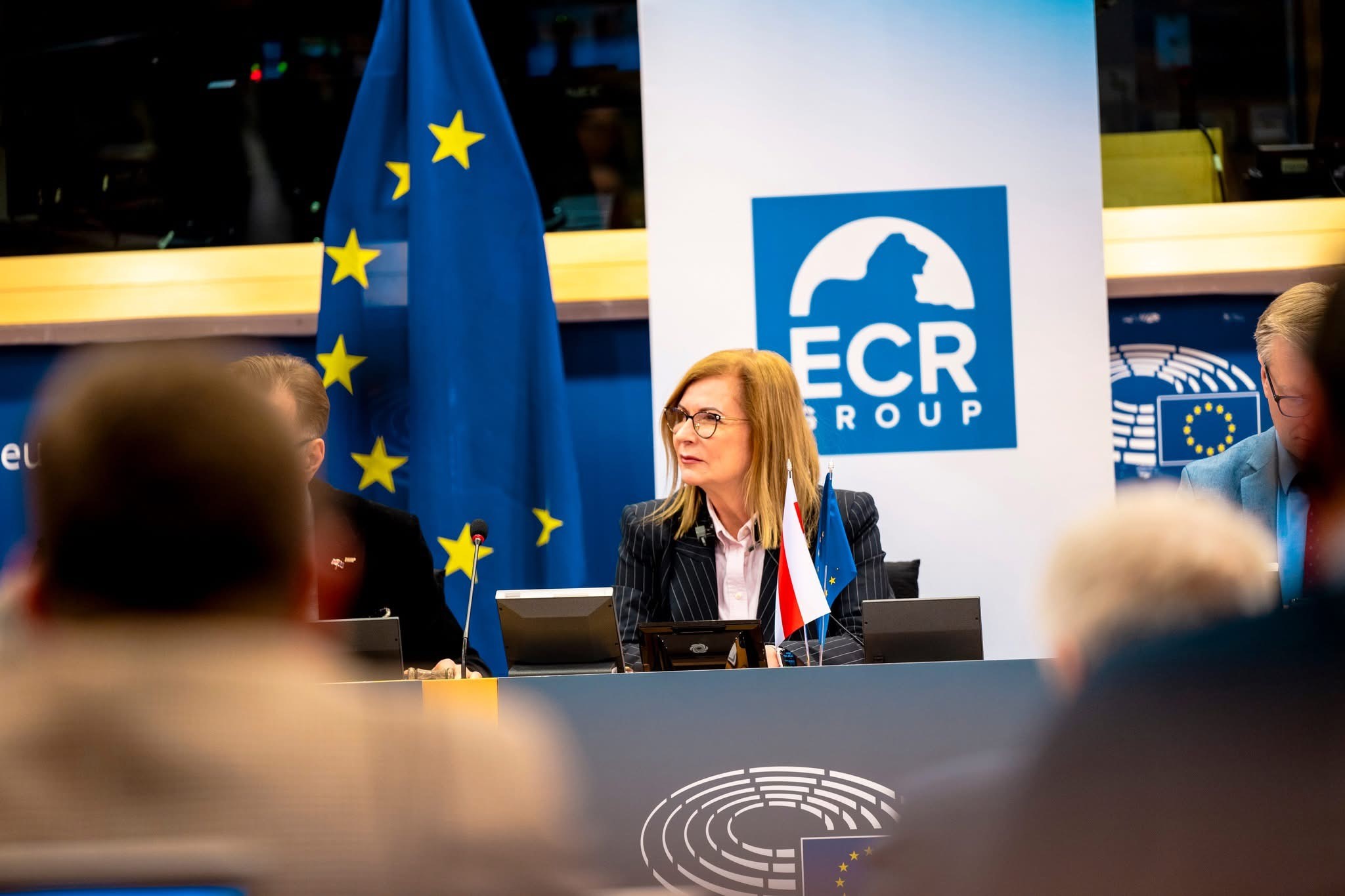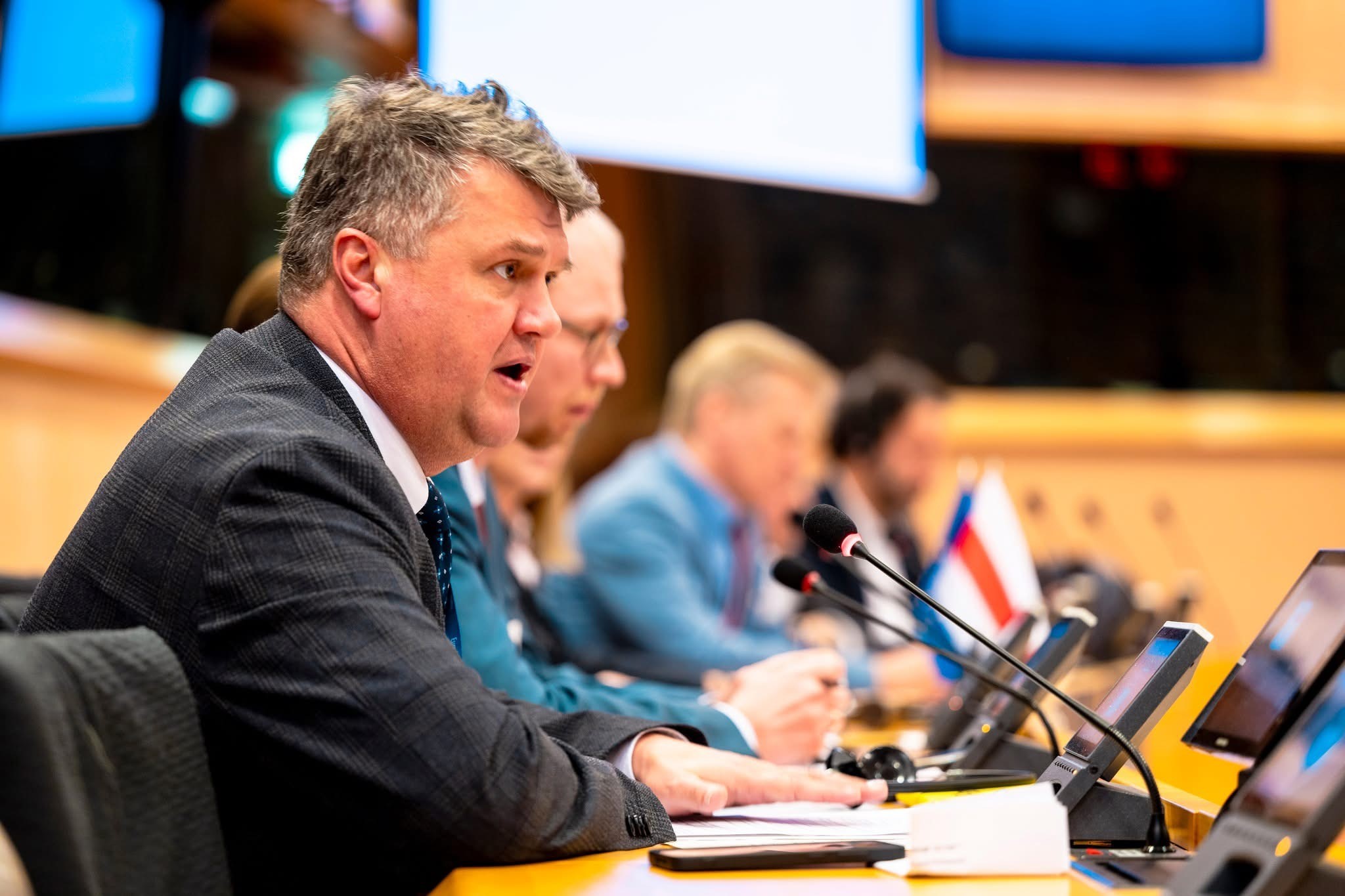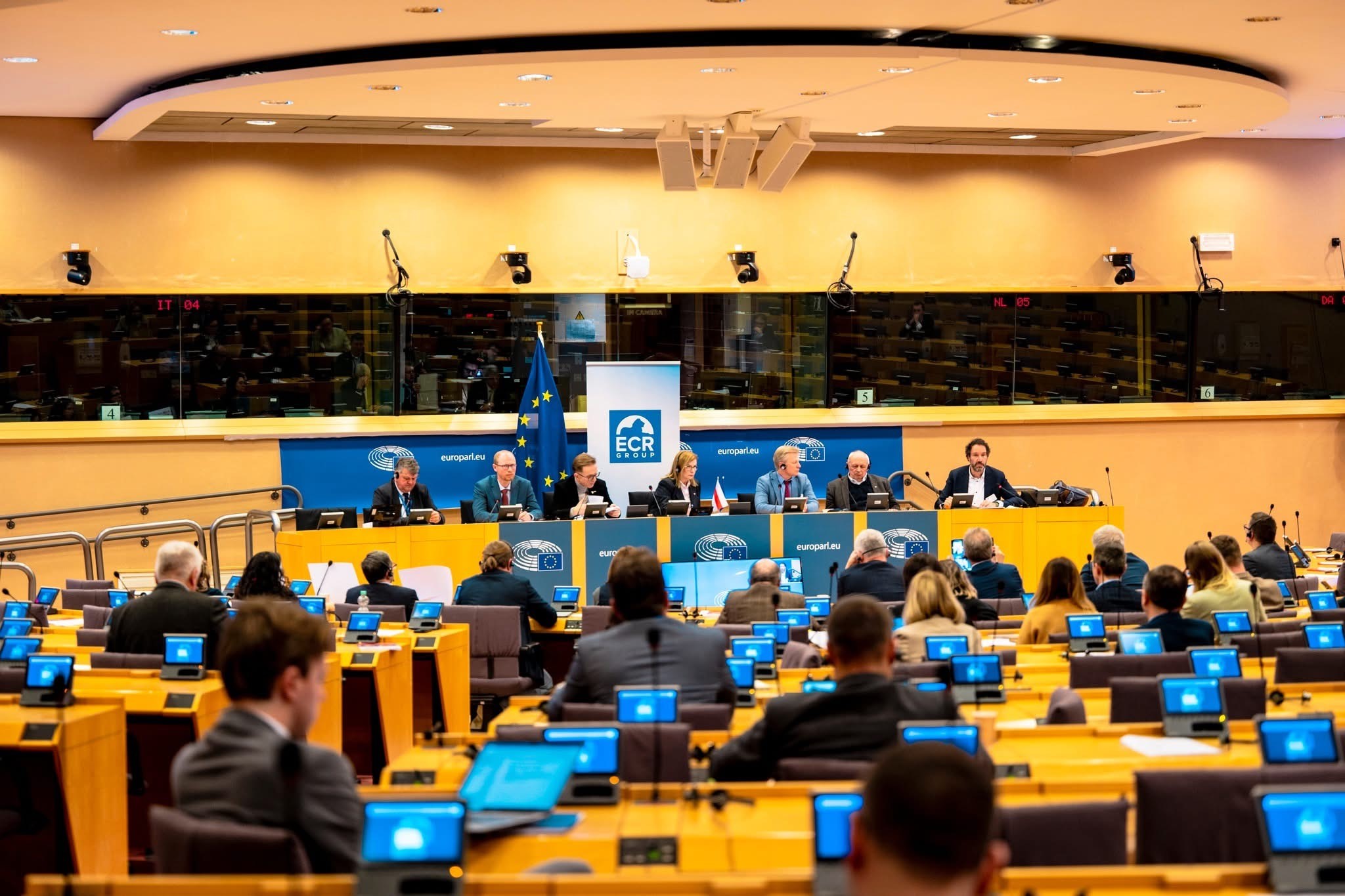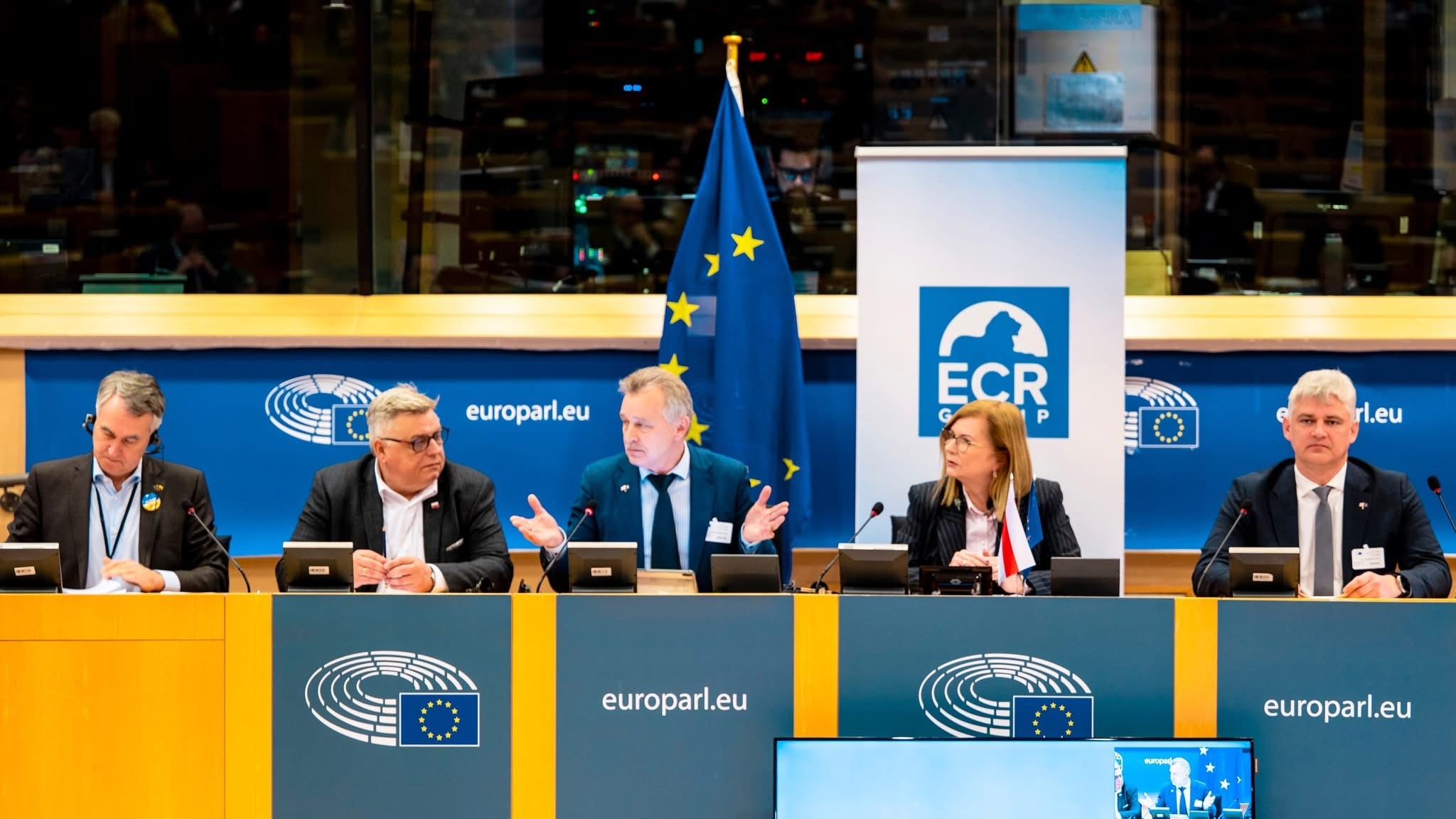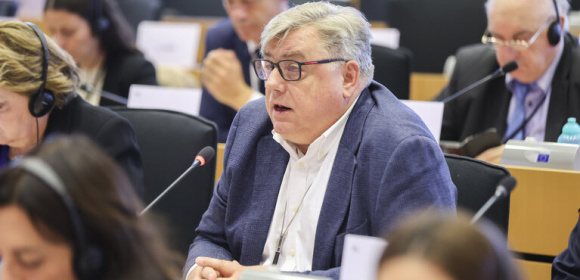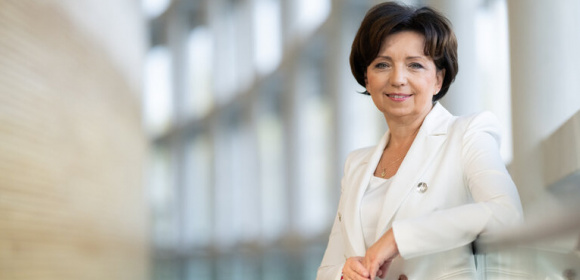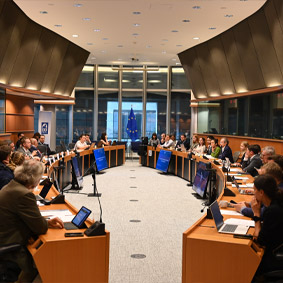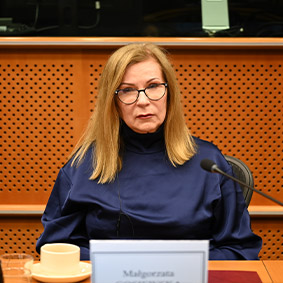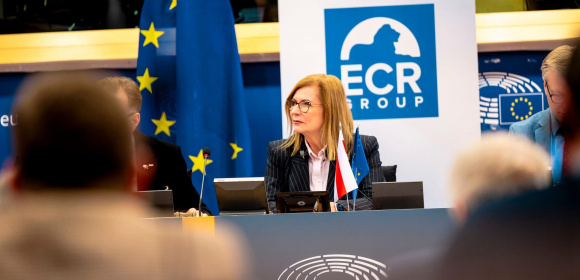
The second cross-party “8+100” Forum, aimed at supporting cooperation between Belarusian democratic forces and European political parties, was held at the European Parliament in Brussels. The event was organized by Małgorzata Gosiewska, a PiS MEP and chair of the Delegation for Relations with Belarus (D-BY), the ECR Group, and the office of Belarusian opposition leader Sviatlana Tsikhanouskaya.
Participants in the Forum included representatives of the Belarusian opposition and members of the European Parliament. Speakers from the ECR Group were PiS MEPs Kosma Złotowski and Maciej Wąsik
Małgorzata Gosiewska stated that the “8+100” Forum is another step toward building a shared path toward a democratic future for Belarus. She noted that this initiative brings together eight Belarusian democratic parties dissolved by the Lukashenko regime and over one hundred European parties. The MEP also noted that this is a platform for cooperation that sends a clear and firm message: “Belarusian democratic parties are the legitimate representatives of the Belarusian people, our partners, and the foundation for the future revival of democracy in that country.”
The Polish politician noted that the Forum’s main topics concern strategies and tactics related to the upcoming “pseudopresidential ‘elections’ in Belarus, the issue of political prisoners in Belarus, and the challenges and opportunities facing Belarusians in exile. “The goal of the ‘8+100’ Forum is to develop a common strategy for a democratic Belarus, the protection of human rights, and support for those suffering as a result of the regime’s repression,” said the event’s organizer.
The MEP also highlighted the need to strengthen cooperation between Belarusian and European political parties and to involve new European actors in efforts to support Belarus. “Our task is not only to reaffirm our recognition of Belarusian democratic parties, despite their formal dissolution by the regime, but also to take action to ensure future, truly democratic elections in Belarus,” she argued. She also called for promoting solidarity with the Belarusian people.
The Member of the European Parliament addressed the calls for world peace that have emerged during debates on Ukraine. She noted that this is a valid demand, but “there are more important values worth fighting for.” She pointed to the right to self-determination, freedom of speech, the freedom to hold specific views, and the right to political activity. “We do not want peace at any cost,” she emphasized. She also drew attention to the Minsk agreements, which gave Russia time to prepare for another major offensive. She added that the same applies in the context of sanctions against Belarus.
“We must demand further stringent sanctions against Lukashenko, the Belarusian regime, his associates, those involved in acts of terror, as well as European companies operating in Belarus,” stated Małgorzata Gosiewska. She noted that this provides Lukashenko with the means to continue his rule and terrorize the population. “We must also demand appropriate action from international institutions, including the International Criminal Court in The Hague, so that criminals are brought to justice and know they do not act with impunity,” she emphasized.
Małgorzata Gosiewska also listed other measures that could help bring down Lukashenko’s regime. She emphasized the importance of increasing support for democratic opposition forces in Belarus, both financial and political. She also pointed to the need to support free media and nongovernmental organizations that document and publicize cases of human rights violations and convey the truth about what is happening in Belarus. She further called for making it easier for Belarusians fleeing repression to obtain asylum and for the creation of scholarship programs for young Belarusians at European universities, combined with visa facilitation measures. “We can also fight the Lukashenko regime by increasing support for the Belarusian diaspora and expanding international information campaigns aimed at educating and raising awareness about the situation in Belarus among the public in Europe and around the world,” the MEP explained.
“Today, when the lives of thousands of people are at risk, we must unite in the fight for the freedom of the Belarusian people,” the PiS MEP urged, calling for solidarity with the victims of Lukashenko’s regime.
In her speech, Sviatlana Tsikhanouskaya expressed her heartfelt thanks to the organizers and participants of the “8+100” forum. “This is truly a unique, cross-party convention, attended by parties that usually compete with one another for voters. We must remember that we all share a common goal: a free, prosperous, open, and peaceful society for everyone,” said the Belarusian politician, emphasizing that “the goal is to build a truly European society in Belarus.” Tsikhanouskaya noted that the event brought together many well-known supporters and advocates of Belarusian democracy, but there were also many new faces. “This is a sign that cross-party work has great potential,” she stated. “You all represent different political views, but today you are united by a single concern: the future of Belarus. Our ambition is to unite Europeans in support of our cause, not to divide them. Only by standing united can we defeat tyranny,” she added.
She said that recently it has not been easy to keep Belarus at the top of the international agenda. “That is why I am grateful to all of you. You all understand the importance of an independent and democratic Belarus for the security of Ukraine, Poland, Lithuania, Latvia, and the entire world. You all see that the upcoming so-called ‘elections’ in Belarus have nothing to do with democracy, political competition, or the will of the Belarusian people. It’s all an illusion, nothing more than a farce. Unfortunately, under the dictatorship in Belarus, there are no political rights. Most politicians are in prison precisely because of their loyalty to democracy and Europe. “Long live Belarus! Long live Europe!” said the leader of the Belarusian opposition.
Kosma Złotowski noted that the conference is taking place at an opportune moment—one week before the upcoming presidential election in Belarus.
He recalled that in 2006, he served as an observer of the Belarusian presidential election as part of an OSCE mission. He noted that at the time, there were no major objections regarding the conduct of the elections themselves at the polling stations, and the OSCE long-term mission, which monitored the election campaign, also did not note any irregularities. The PiS MEP said that he had, however, gotten the impression at the time that the country was “clearly distancing itself from the entire tradition of the Republic of Poland and from the entire Belarusian tradition.” He recalled that one of the first things the newly elected president did was to abolish the white-red-white flag and replace it with the flag of Soviet Belarus. “There was an overwhelming impression that Belarus was a republic that based its entire identity on the tradition of the Soviet Union,” – said Złotowski, adding that the Belarusian language and culture were also abandoned at that time. “And at the same time, you could sense that this Soviet tradition was foreign to the Belarusians—the people I spoke with on the street,” said the MEP, noting that the election was nevertheless won by someone who supported the Soviet tradition. According to the Polish politician, the clear conclusion is that the 2006 elections could not have been fair under these circumstances. “There was no dialogue with the public about the direction of change or the interpretation of history; instead, a single narrative was imposed—one that was clearly false—claiming that ‘we are the heirs of the Soviet Union, the only true “survivor” of the Soviet Union’” — he pointed out.
Maciej Wąsik stated that Poland—and in particular the Law and Justice government, in which he served as deputy minister of internal affairs—consistently supports the Belarusian people in their aspirations to build a free and democratic state. He recalled that the Polish government opened its borders to Belarusians forced to leave their homeland, and in 2020 handed over to the Belarusian community the building that now houses the Belarusian House. “We want free Belarusians to have a support network and a safe haven in Poland at a time when barbaric repression is taking place in their homeland—Belarus—at the hands of the thug Lukashenko, with the support of another thug—Putin,” he noted. He also reported that there are currently about 308,000 Belarusians in Poland, of whom more than 120,000 already hold residence permits, making them the second-largest ethnic group in Poland. The PiS MEP also listed other measures implemented by the Polish government to assist persecuted Belarusians. He highlighted the issuance of visas to Belarusian citizens, the recognition of expired documents held by Belarusian citizens, the special “Polish Business Harbor” program for skilled workers leaving Belarus for political reasons, and scholarships for Belarusian students. “It is also extremely important to provide financial and organizational support to independent Belarusian media broadcasting from Poland and aimed at informing Belarusians within Belarus,” the Polish politician stated.
The MEP argued that not only Ukraine should be the focus of the international community’s attention today, but Belarus as well. “Today, all of Europe should be thinking about sanctions, the arms race, and supporting the Belarusian people,” Wąsik stated. He noted that the only way to free political prisoners and return their country to the Belarusian people is through a tough policy toward Lukashenko, because other approaches—without questioning their good intentions—are naive. “Belarusians need unity, because any division among them strengthens Lukashenko’s regime,” he pointed out.