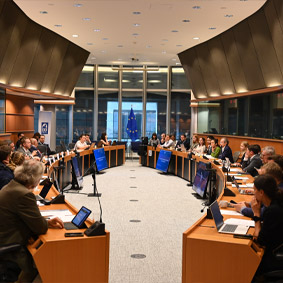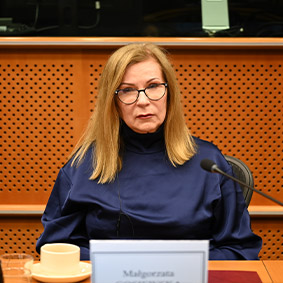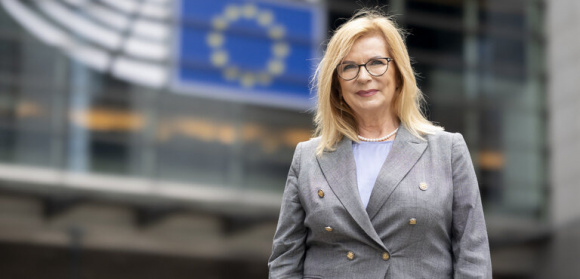
A debate on renewing the European Union’s strategic partnership with Africa took place at the European Parliament in Strasbourg. The discussion aimed to establish common priorities ahead of the EU–Africa summit scheduled for November 24–25, 2025, in Luanda, the capital of Angola. PiS MEP Małgorzata Gosiewska spoke during the debate.
Małgorzata Gosiewska emphasized the need for Europe’s genuine commitment to the development of the African continent. In her view, Europe must “finally stop talking about aid and start actually helping.” “Africa doesn’t need charity. It needs partnership, respect, and concrete action,” she stated.
Gosiewska pointed out that key areas of support should include education, the development of healthcare infrastructure, local drug production, and the sharing of technology and know-how. “Let’s invest in education: in schools, teachers, and young people; let’s build hospitals, train doctors, and support local drug production,” she said. She also highlighted the need to build strong and transparent public institutions that will increase citizens’ trust in the state and help reduce illegal migration and human trafficking.
The PiS MEP also emphasized the role of religious communities, especially Christian churches, which for years have played a key role in providing aid to the most needy regions of Africa. “For decades, they have been bringing education, care, and hope to places where neither the state nor international organizations reach: Gabon, Burundi, Congo, South Africa, and Burkina Faso,” the MEP noted. She also noted that the number of missions is enormous. “Thousands of dioceses and parishes form a support network across the entire continent. It is these communities that build schools and hospitals and provide food, often serving as the only lifeline for the poor,” she explained.
Gosiewska emphasized that Europe should support precisely these organizations and involve them in aid planning, as they are the ones who best understand local needs. “They also build trust, peace, and dignity—not on paper, but in people’s daily lives,” she noted.
The Polish politician also drew attention to the geopolitical consequences of the European Union’s inaction in the region. “Europe, you have a choice today: you can continue to pretend that you’re helping, or you can finally start building a true partnership and shared security,” she urged. “If Europe does not actively participate in creating healthy, just societies, Russia and China will do so—in their own authoritarian way,” she emphasized.