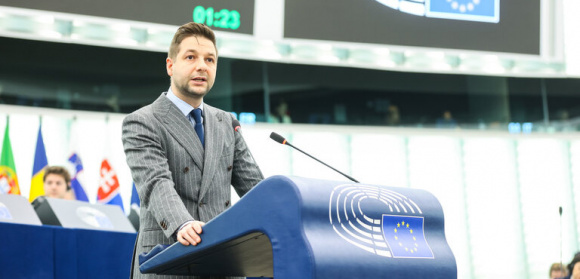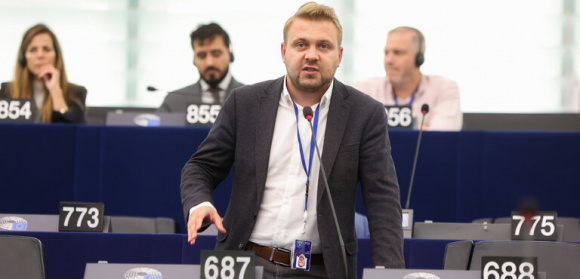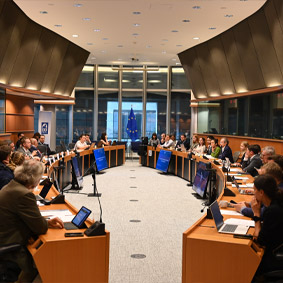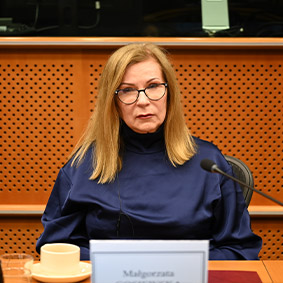
During a plenary session of the European Parliament in Strasbourg, in a debate titled “The Union of Savings and Investment: Time to Accelerate the Process to Deepen Market Integration,” PiS MEP Marlena Maląg highlighted the challenges associated with the integration of European capital markets and the risks arising from excessive centralization of economic decision-making in the European Union.
In her speech, she emphasized that all member states want a stronger European economy, greater investment, and greater access to capital for businesses.
“We all want a stronger European economy. More investment. More capital for our companies. Capital market integration can help achieve this,” the MEP noted.
As she pointed out, discussions on financial market integration often involve comparisons between Europe and the United States, which, in her view, fail to take into account fundamental historical and institutional differences.
“In the U.S., a unified financial system was built over more than two hundred years—one market, one set of rules, one investment culture. Europe is something completely different: twenty-seven markets, twenty-seven economic traditions, and twenty-seven financial systems. This cannot be centralized with just a few directives,” she emphasized.
The MEP also drew attention to the problem of the growing number of regulations and—as she assessed—the ideologization of economic policy in Europe.
“The problem isn’t just market fragmentation. The problem is also increasing regulation and the replacement of common sense with green ideology, which hinders development, drives away investment, and weakens the European economy,” she said.
In her speech, Marlena Maląg also pointed out cultural differences in the approach to investing between Europe and the United States.
“In the United States, risk is part of the investment culture. In Europe, citizens are more focused on protecting their savings. That is why I fear that the Savings and Investment Union may increase Brussels’ power faster than it improves the competitiveness of the European economy,” the MEP concluded.
Maląg emphasized that efforts to develop the European capital market should focus primarily on strengthening the economy’s competitiveness, reducing excessive regulation, and creating conditions conducive to investment and business growth.