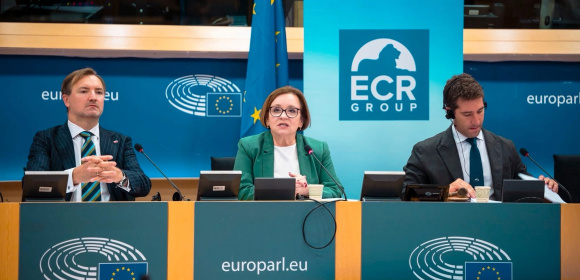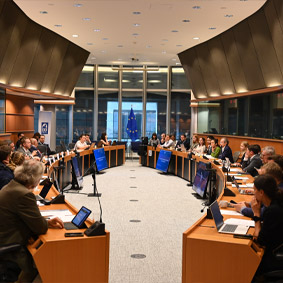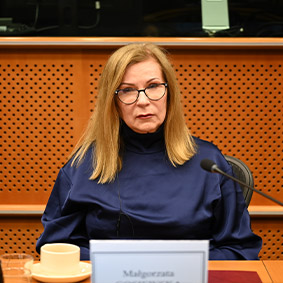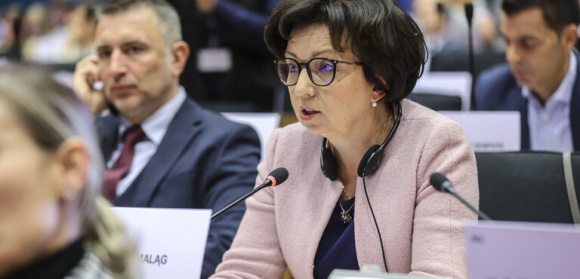
Today, during a joint meeting of the Committee on Economic and Monetary Affairs (ECON) and the Committee on Employment and Social Affairs (EMPL), a discussion took place on the 2025 European Semester package with Valdis Dombrovskis, Commissioner for Economy and Productivity, as well as Implementation and Simplification. PiS MEP Marlena Maląg spoke during the discussion.
The PiS MEP asked Commissioner Dombrovskis about the chances of success for the new Economic Governance Framework. As she noted, the new Framework was intended to give countries greater flexibility, but also to make the Stability and Growth Pact—which had become de facto defunct—more realistic.
However, Marlena Maląg noted that the very difficult economic situation—which is likely to worsen in the coming years—does not bode well for the implementation of medium-term fiscal plans. “In particular, countries subject to the excessive deficit procedure have rather slim chances of restoring fiscal health,” she pointed out. Furthermore, as she noted, the pace of deficit reduction agreed upon with the Commission often involves “pushing” the most severe cuts to the end of a multi-year period.
In light of this, the Polish politician asked whether this is truly a “good framework for our times,” especially given the increasingly frequent calls for drastic modifications to it.
Marlena Maląg also raised the issue of the escape clause regarding defense matters. She noted that member states are “not eager” to activate escape clauses for two reasons. She explained that the most indebted countries fear a negative market reaction and rising borrowing costs. On the other hand, countries subject to the excessive deficit procedure gain little from this; while they do receive some short-term flexibility, ultimately—in order to “get rid of” the excessive deficit procedure —they must still “bring their deficit below 3 percent.” The Polish politician pointed out that the reason is the “inconsistency” between the so-called preventive and corrective arms of the new Framework. Maląg therefore asked what the prospects are for changes to the new Economic Governance Framework to resolve this problem and provide real assistance to countries subject to the excessive deficit procedure.