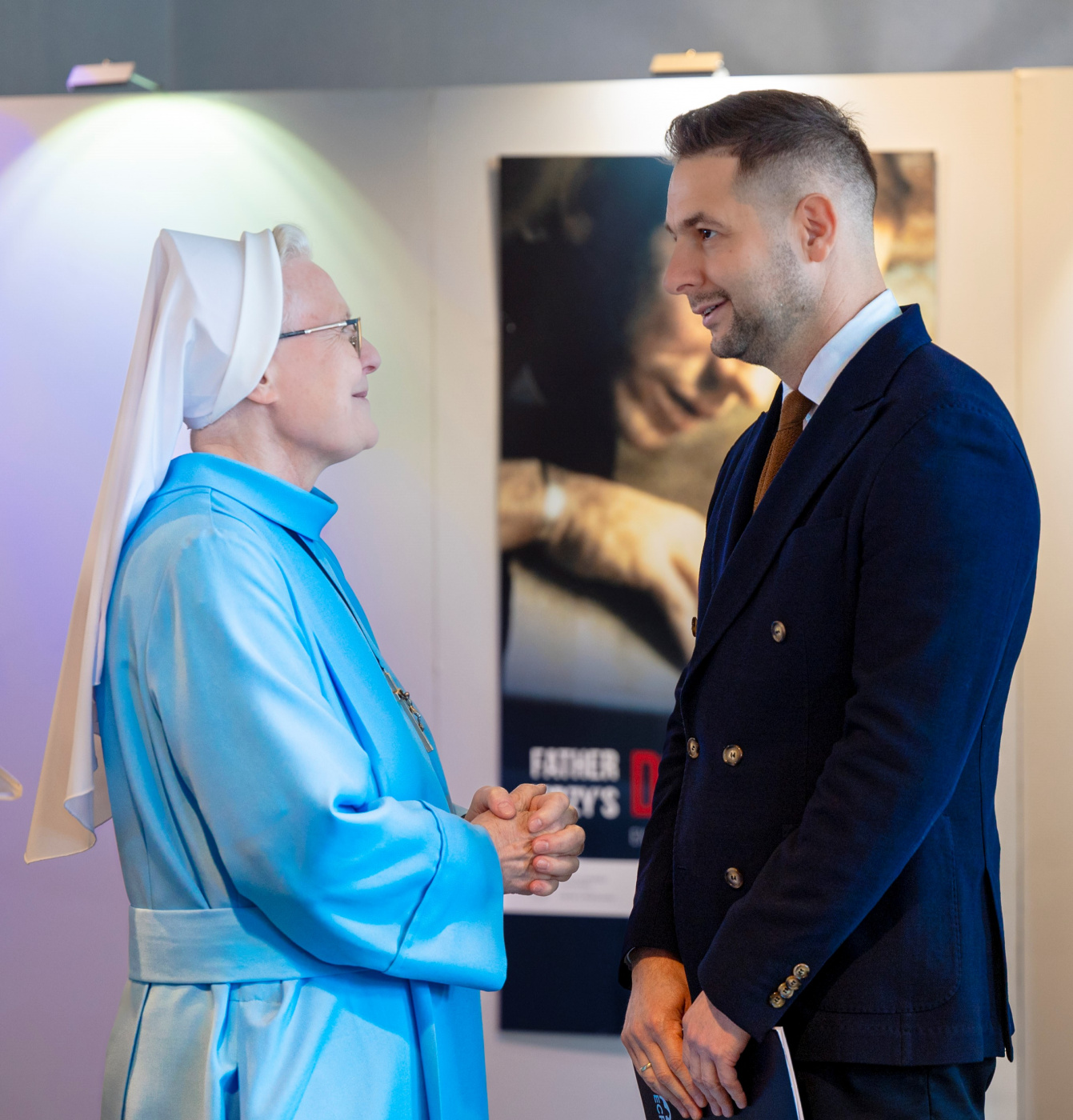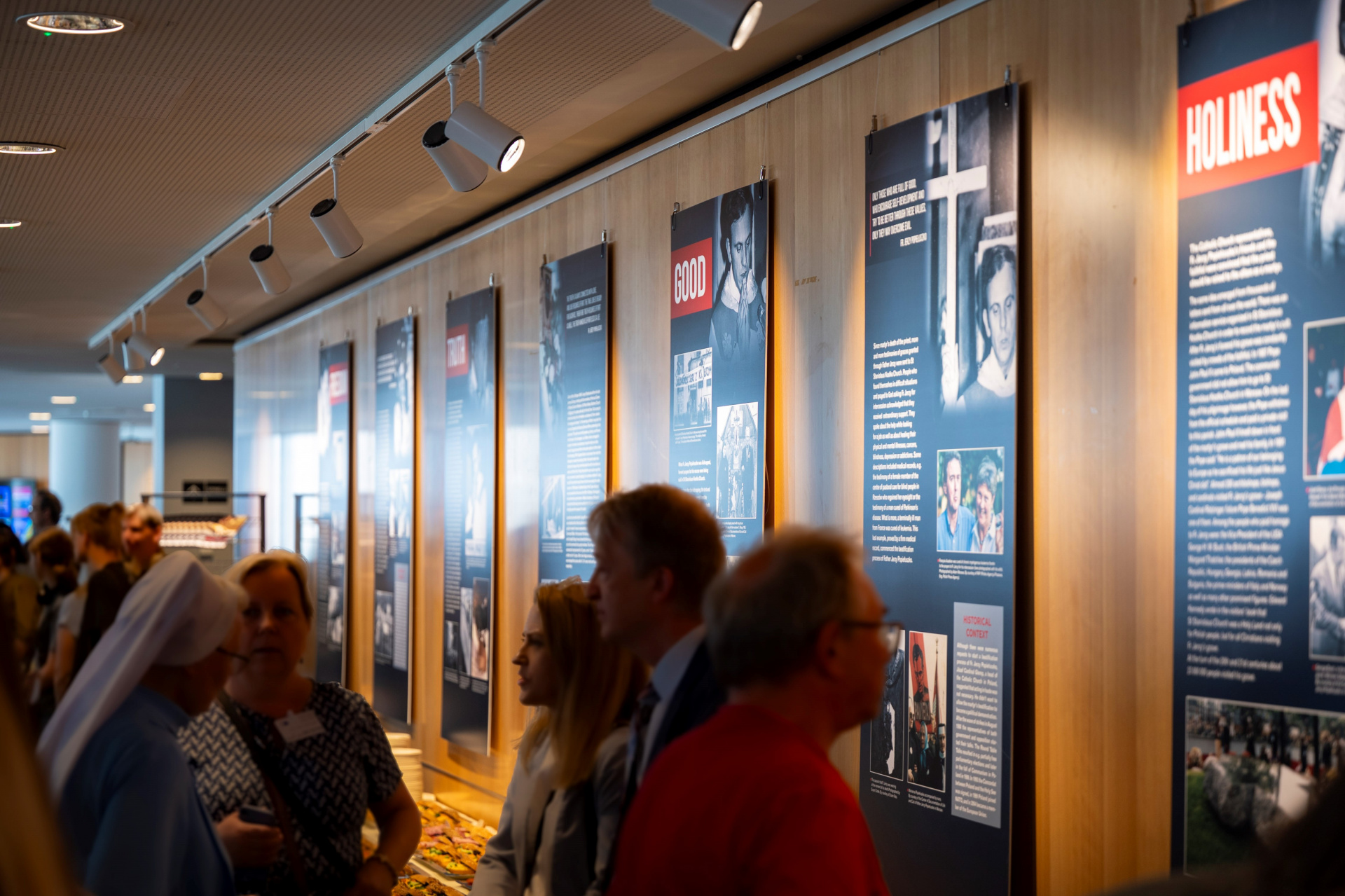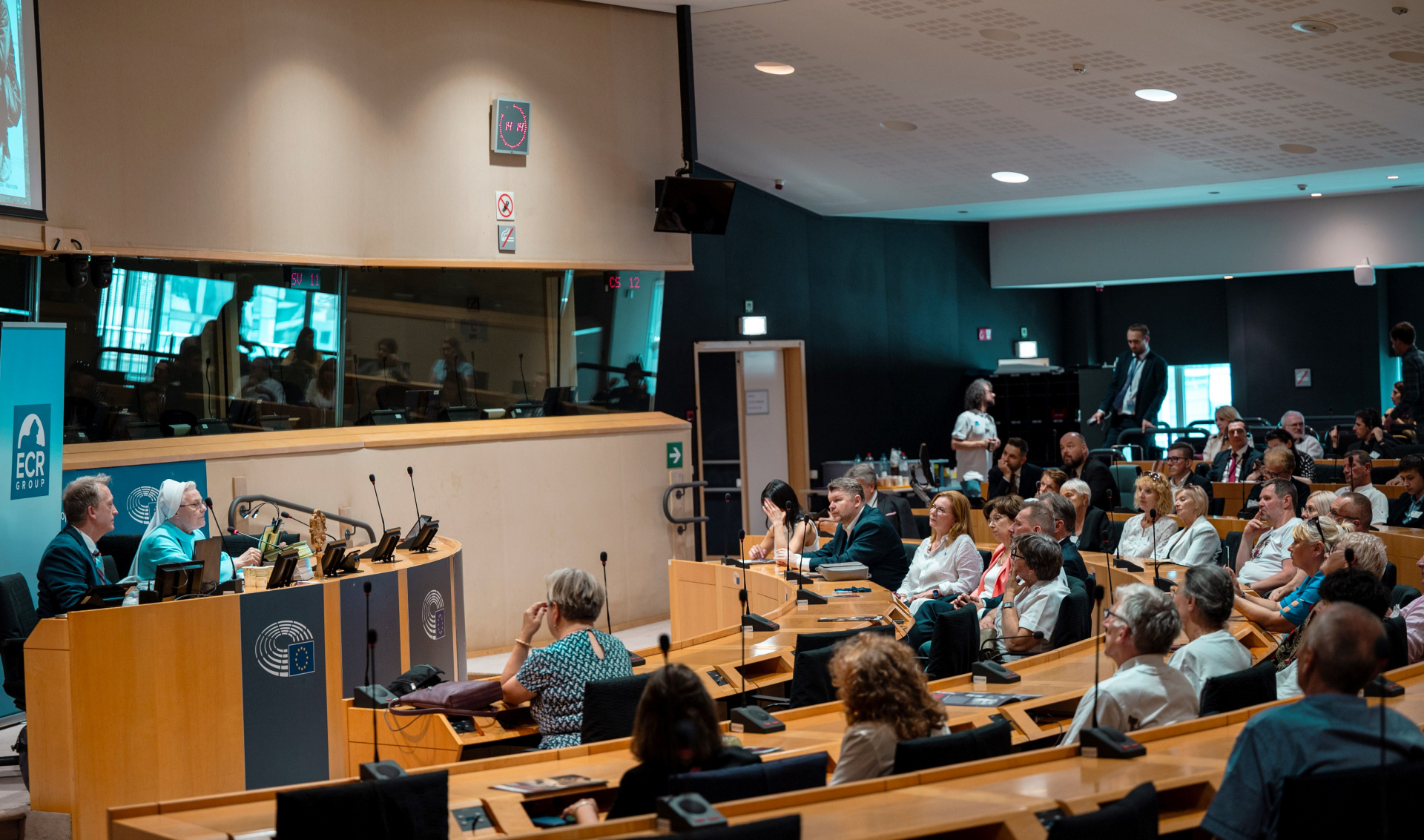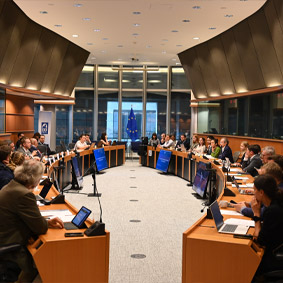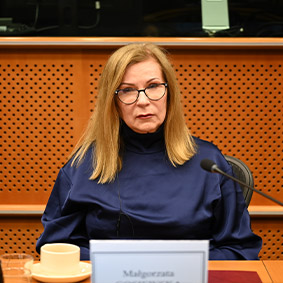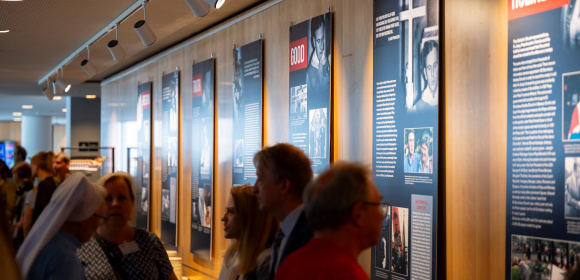
Today at the European Parliament in Brussels, PiS MEP Patryk Jaki opened an exhibition on Blessed Father Jerzy Popiełuszko titled “Father Jerzy’s Decalogue,” created by Urszula Gierasimiuk (IPN Białystok) and Paweł Kęska (Center for the Documentation of the Life and Cult of Blessed Father Jerzy Popiełuszko). Following the exhibition, a meeting was held with Sister Krystyna Włodarska, an eyewitness to the priestly life and pastoral ministry of the “Solidarity” chaplain.
Patryk Jaki noted that Blessed Father Jerzy Popiełuszko played a key role in the overthrow of communism. “Without him, it wouldn’t have been possible,” he emphasized. He said that the IPN exhibition presented at the European Parliament shows “what the formation of a man who made such an enormous contribution to the overthrow of communism looked like.” He explained that the display panels show how, from the very beginning—that is, from early childhood—the future priest’s consciousness was shaped when his grandmother showed him the writings of Maximilian Kolbe, composed during the difficult wartime years, and how it was influenced by the virtues and values by which he was raised, based on the philosophy of St. Thomas Aquinas, Aristotle, and Plato. “Father Jerzy Popiełuszko worked very hard to build the foundations of these virtues within himself,” said Jaki, recalling a quote that particularly captured the martyr’s approach to his faith: “Faith and ideals must not be sold for the proverbial bowl of lentils—for positions, a higher salary, the opportunity to study, or social advancement. For whoever easily sells their faith and ideals is one step away from selling their very humanity.” “This is one of the quotes showing how deeply these virtues were evident in Father Jerzy and how they have led us to this moment,” said the head of the EKR.
Dr. Marek Jedynak, director of the IPN branch in Białystok, said that the exhibition tells the story of one of the pillars of a free, democratic Poland. “It’s about an ordinary man from the very edge of Podlasie, from the village of Okopy, near Suchowola, which is the geographical center of Europe,” he added. He explained that Father Jerzy Popiełuszko was raised on the legend of Alfons Gniedziejko, his uncle, who was killed by the Soviets in June 1945—as a soldier in the independence underground, he died in a skirmish with the Soviets preceding the Augustów Roundup.
The head of the Białystok branch of the Institute of National Remembrance (IPN) said that the priest’s life is presented in the exhibition in an unconventional way, through the qualities that defined him and accompanied him from birth to death, and which also accompany all those who draw inspiration from his legacy and his life: “Truth, freedom, love, and solidarity are the qualities he acquired from his family and later from his mentors—Cardinal Wyszyński and John Paul II.” Jedynak emphasized that when Popiełuszko, in his homilies for his homeland—mainly during martial law, when “Solidarity” was outlawed—quoted the words of his mentors, the people gathered by the thousands knew “that these words were not merely for applause,” that Blessed Father Jerzy Popiełuszko himself lived by them every day.
“I hope that the figure of Father Jerzy will reach a wider audience, and that his words will serve as a guide for us in various difficult moments,” said Dr. Marek Jedynak.
The exhibition will be on display at the European Parliament through the end of this week.