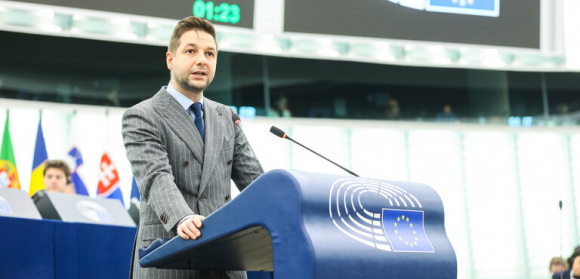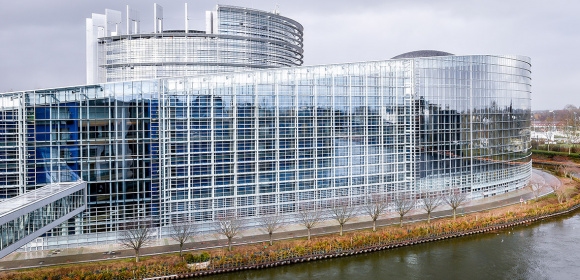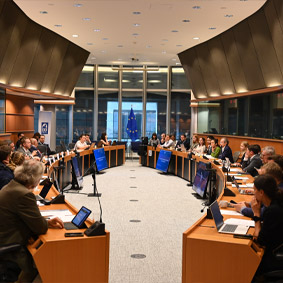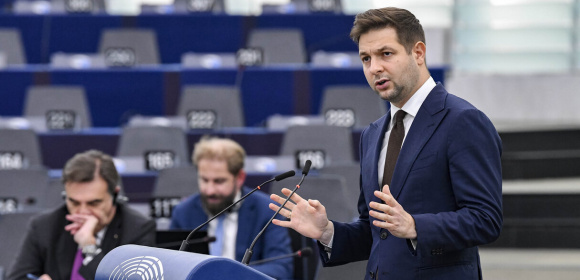
During today’s plenary debate in Strasbourg on the peace plan for Ukraine, the leader of the European Conservatives and Reformists Group, PiS MEP Patryk Jaki, sharply criticized the EU’s policy toward Russia to date and the way in which talks to end the conflict have been conducted. He noted that the West’s long-standing mistakes contributed to the outbreak of the war and undermined Europe’s security.
“It is madness to keep doing the same thing and expect different results,” Jaki began, noting that the war was “the sum of Europe’s weaknesses.” He listed three key areas of neglect. “First—arrogance and the exclusion of certain countries from key decisions,” he noted.
Jaki recalled the experience of the Minsk agreements and warned that the same pattern is repeating itself today: “The ‘better’ ones are sitting in Geneva and deciding everything, while the rest of Europe has been sent to Africa. You haven’t learned a thing!” He noted that the countries most threatened by Russian aggression are being pushed away from the negotiating table. Second, Jaki said, is naivety in relations with Russia. The PiS MEP assessed that successive European “resets” toward Moscow were the result of the mistaken belief that Russia could change its behavior. “Neither then nor now is Russia any different, and it will not honor any agreement,” he emphasized.
“Thirdly—a lack of concrete action and political hypocrisy,” the PiS MEP emphasized, noting that many European leaders today declare their opposition to Putin, even though at the start of the war they were unwilling to take any decisive action. “We remember how you sent those helmets of yours,” he recalled, pointing to the lack of accountability for years of a policy of rapprochement with Russia. “To this day, no one in Germany or the European Union has been held accountable for the ‘resets’ with Russia,” he added.
The ECR leader expressed his conviction that there can be no lasting peace unless Russia is defeated or held in check by a strong deterrent. “Russia cannot function without attacking someone,” he stated.
In conclusion, he warned that by excluding from the decision-making process those countries that are most at risk, European decision-makers—whether consciously or not—are “playing into Putin’s hands.”