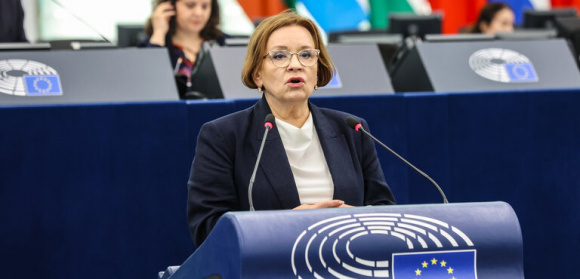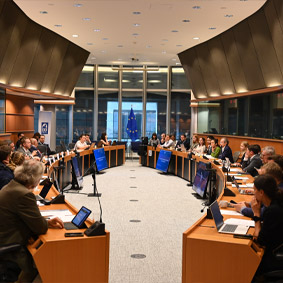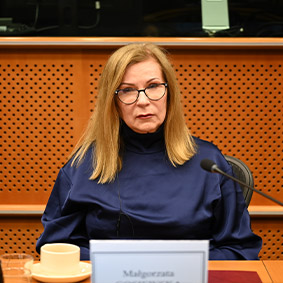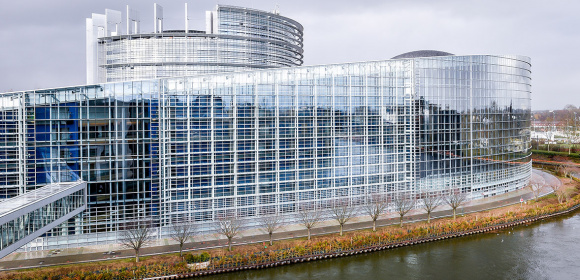
Today in Strasbourg, during the European Parliament’s plenary session, a vote was held on granting budgetary discharge to EU institutions for the year 2023. MEPs adopted six reports authored by PiS politician Joachim Brudziński, which highlighted a number of issues related to transparency, employment policy, internal procedures, and cybersecurity within EU bodies.
During the debate preceding the vote, PiS MEPs—rapporteur Joachim Brudziński and Maciej Wąsik—took the floor.
Joachim Brudziński, pointing to certain shortcomings related to transparency, employment policy, internal procedures, and cybersecurity in the context of budget implementation, expressed serious concerns regarding certain aspects of the functioning of the European Union’s institutions. He also highlighted the necessary measures that must be taken.
First, he said, the European Commission’s growing tendency to encroach on the competences of member states must be strongly criticized. “Responsibility for managing national budgets and economic policies lies with the governments of individual countries, not with central EU institutions,” —emphasized the EP rapporteur, recalling that the Commission should play an advisory and supervisory role, rather than a decision-making one, in matters that require consideration of specific national interests.
“Second, criticism must be directed at the Council of the European Union, which has shown a lack of engagement in the budget discharge procedure,” noted the PiS MEP. He also called on the European Council and the Council to immediately resume cooperation with Parliament. “This stalemate must be resolved to enable Parliament to effectively fulfill its oversight role. In this context, I demand that the Council publish a full breakdown of its expenditures—particularly on travel and representation—in a format accessible to the public, so that every EU citizen can have access to information about the expenditures financed by their taxes," the Polish politician urged.
The Polish politician also drew attention to concerns regarding the functioning of the European Public Prosecutor’s Office in terms of its effectiveness and compliance with the principle of subsidiarity. "The European Public Prosecutor’s Office is encroaching on areas that fall under the jurisdiction of national legal systems, which could lead to conflicts of jurisdiction and excessive bureaucracy," he noted.
"We need to strengthen the principles of accountability and transparency within the European Union, but also respect the competences of member states. Only in this way will we be able to maintain citizens’ trust in EU institutions and preserve the balance between integration and independence,” Brudziński emphasized.
Maciej Wąsik, in turn, addressed the report on Frontex, recalling that it is an agency established to strengthen the protection of the European Union’s borders. “And those should be the tasks of this agency,” he emphasized. The PiS MEP noted, however, that the agency is evolving and, over time, its activities—hidden behind the nice-sounding slogan of ‘protection of fundamental rights’—are becoming increasingly prominent. As he explained, this is evident in the increasingly significant role played within Frontex by so-called fundamental rights observers. “Frontex has a mandate to protect borders, not to bring legal proceedings against Border Guard officers who are selflessly serving at the borders,” Wąsik emphasized.
He noted that it cannot be the case that Frontex’s presence—for example, in Lithuania, a country exposed to a massive hybrid attack by Putin and Lukashenko—results in the Frontex Fundamental Rights Office accusing the Lithuanian authorities.
As he explained, on the one hand, officers are being attacked by aggressive migrants and Lukashenko’s forces, while on the other hand, proceedings are being initiated against them by Frontex officials. “And migrants holding Belarusian visas should be immediately sent back to Belarus, because their stay there is legal,” —the PiS politician argued, pointing out that “these are not refugees, but illegal migrants who are deliberately breaking our laws in order to enter the EU illegally and take advantage of social benefits by exploiting the EU’s weaknesses.”
“Frontex’s activities outside its mandate—not in defense of borders, but against national border guards—are unacceptable,” the Polish MEP emphasized once again, urging that the agency’s management not be granted a discharge.