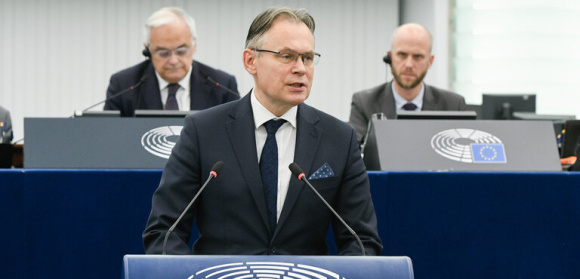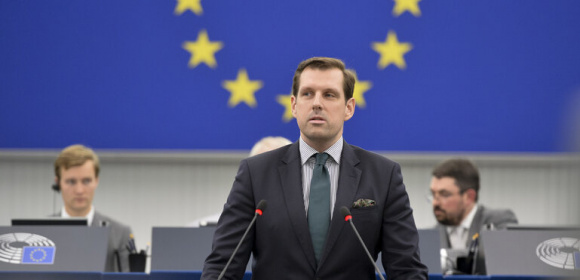
During the European Parliament’s plenary session in Strasbourg, a debate was held on the draft general budget of the European Union for 2026. MEPs Bogdan Rzońca and Tobiasz Bocheński took the floor during the discussion, presenting a critical assessment of the proposed measures.
Bogdan Rzońca emphasized that the European Union is currently facing a particularly complex economic and geopolitical situation, and that the 2026 draft budget does not address the real challenges. “This budget could be better and more suited to the challenges ahead of us. We should be responding more decisively and effectively, right now. We are not doing so, and that is our cardinal mistake,” the MEP noted. He drew attention to the deteriorating condition of European industry and the lack of support for entrepreneurs, while high spending on the Green Deal continues—which, in his view, perpetuates high energy prices and burdens the manufacturing sector.
Rzońca also criticized the draft budget for allocating insufficient funds for border security, despite widespread awareness of growing threats. “Putin has put the entire Russian economy on a war footing. We can all see how much the threat has increased globally and in Europe. So why doesn’t the 2026 budget reflect this reality? Parliament proposed increasing funding, but the European Commission did not take this into account, leading to a compromise that is simply insufficient,” he said. The MEP also criticized the reallocation of funds in agriculture, which he believes is taking place at the expense of subsidies, as well as the lack of adequate funding for military mobility.
In his speech, Tobiasz Bocheński offered an equally critical assessment of the 2026 draft budget, pointing to the EU institutions’ disconnect from economic realities. “Unfortunately, nonsense, nonsense, and more nonsense. This budget is by no means a budget for innovation. It is a budget of bureaucracy, tied hands, and a lack of prospects,” he stated. He emphasized that in recent years, the EU has been clearly losing its global economic competitiveness. As evidence, he cited industrial production data from 2024, showing that China recorded a 5.5 percent increase, the United States nearly 2 percent, while the European Union recorded a 0.7 percent decline. He also noted that in 2010, the EU, the U.S., and China each accounted for 18 percent of global industrial production, whereas today China accounts for 30 percent, while the EU has fallen to 15 percent.
“You sit in your ivory towers, cut off from EU citizens, with neither the understanding nor the competence to manage the continent’s affairs. This budget, just like you, is out of touch with reality,” Bocheński concluded.