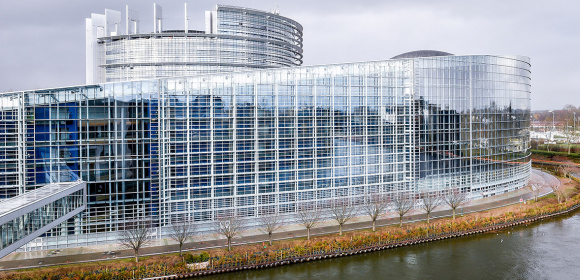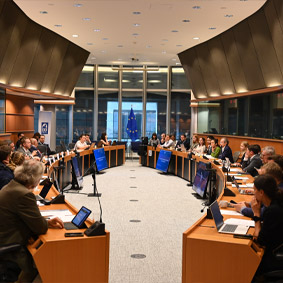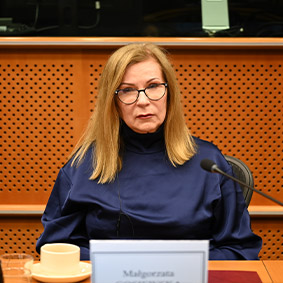
In Strasbourg, on the second day of the European Parliament’s plenary session, a discussion was held on the overthrow of the Syrian regime, its geopolitical implications, and the humanitarian situation in the region. During the debate, which included the EU’s new High Representative for Foreign Affairs, Kaja Kallas, PiS MEPs Adam Bielan and Joachim Brudziński took the floor.
Adam Bielan expressed his deepest condolences to the Syrian people, who have lost hundreds of thousands of lives over the course of 13 years of devastating tyranny and bloody reprisals that followed the Arab Spring, orchestrated by Putin’s puppet, Bashar al-Assad. “It is an understatement to say that the regime change is already having enormous repercussions in the region: the failed states of Russia and Iran are suffering a strategic defeat, while other regional and global players are already calling the next move,” commented the Polish politician.
“Europe must be ready to support the Syrian people in their quest for political transformation,” stated the MEP. He pointed out that this includes substantial humanitarian aid, promoting inclusive dialogue among all legitimate partners, and strengthening accountability measures for war crimes. “At the same time, the European Union should support capacity-building for the new Syrian government, ensuring that the population can safely remain in their homeland and preventing further destabilization of the country,” said the MEP. He added that we must not forget the Christians in Syria, who may now be in danger.
Joachim Brudziński stated that the fall of the al-Assad regime in Syria, like the fall of any bloody dictator, should bring relief and joy. He wondered, however, how Syrians and Europeans feel, given the current situation in Damascus, Aleppo, and other cities and regions of Syria. In this context, he referred to the words of a priest from one of the Christian churches, a Melkite priest, who said that the feelings accompanying Christians in Syria today are joy and fear. He explained that the joy stems from the arrival of something new, while the fear arises from the prospect of chaos.
The PiS MEP recalled that Christians have been in Syria since the time of St. Paul and, before the war, made up 7 percent of the total population, numbering about 1.5 million. He noted that today there are barely 300,000 of them left. “May the fall of al-Assad not mark the beginning of the end of Christianity in Syria,” the Polish MEP expressed his concerns. “Let us hope that this naivety—which is also evident here in the speeches of representatives of the left, who claim that democracy is about to arrive in the countries of the Middle East and North Africa—does not result in Christianity disappearing from Syria, and we end up with Islamists marching through Christmas markets and shouting about the right to Sharia law in Europe,” said the MEP, recalling that such naive thinking was also widespread during the Arab Spring.