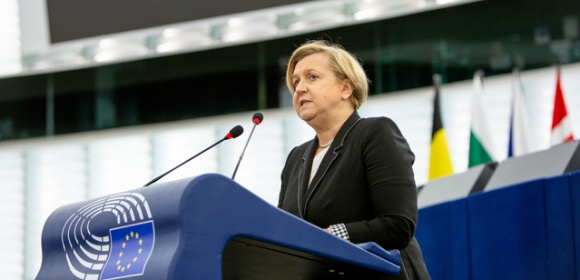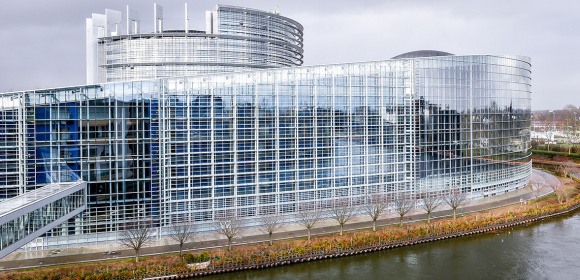
On the third day of the European Parliament’s plenary session in Strasbourg, a debate on European security and defense took place. PiS MEP Anna Fotyga participated in the debate.
Anna Fotyga stated that Sweden’s accession to the North Atlantic Treaty Organization is not only a triumph for NATO but also a triumph of unanimity, strengthening common security and fostering the unity of the collective West even in difficult situations. “This unity was achieved not without difficulty, but with respect for the smallest nations, especially those with a long tradition of fighting for freedom and independence,” the MEP noted.
“Our concerns will become yours tomorrow,” said the Polish politician regarding her opposition to attempts to depart from the principle of unanimity, addressing EU partners and future allies, in particular Ukraine, Georgia, and Moldova. “We should make every effort to help you join the collective West as soon as possible, and to help Ukraine defeat Russia,” she concluded.
PiS MEP Witold Waszczykowski also commented on the matter: “I view this latest debate on the European Common Security and Defense Policy with concern. It proves that history has taught Europeans nothing. Let me remind you that we could not cope on our own during World War I and World War II. Nor during the Cold War, nor in the Balkan conflict. We could not manage on our own in Libya, nor in the fight against the Islamic State (ISIS). We are helpless in the face of Russian aggression against Ukraine. The EU isn’t even trying to resolve the latest chapter of the Israeli-Palestinian conflict. Why, despite such negative experiences, are we once again dreaming of military independence, strategic autonomy, a “compass,” and so on? The Russian-Ukrainian war should definitively convince us of the need for close transatlantic cooperation. Right now, as doubts are emerging across the ocean, we should be presenting a credible offer of cooperation, rather than autonomous, self-serving solutions.
The disregard for facts is also troubling. We do not have a common definition or a common list of threats in Europe. Therefore, we cannot have the same responses to different threats. Nor can the majority impose on others the ways to counter these threats. Together, however, we must take into account the different circumstances of the various member states. Our Western friends should finally understand that our experiences in the East—and the proposals based on them to ensure Europe’s security—are realistic and practical.
Let us deter Russia from interfering in Europe, maintain the U.S. presence, and curb the hegemonic ambitions of certain member states. Only a policy of solidarity and transatlantic cooperation will ensure peace for our Europe.”