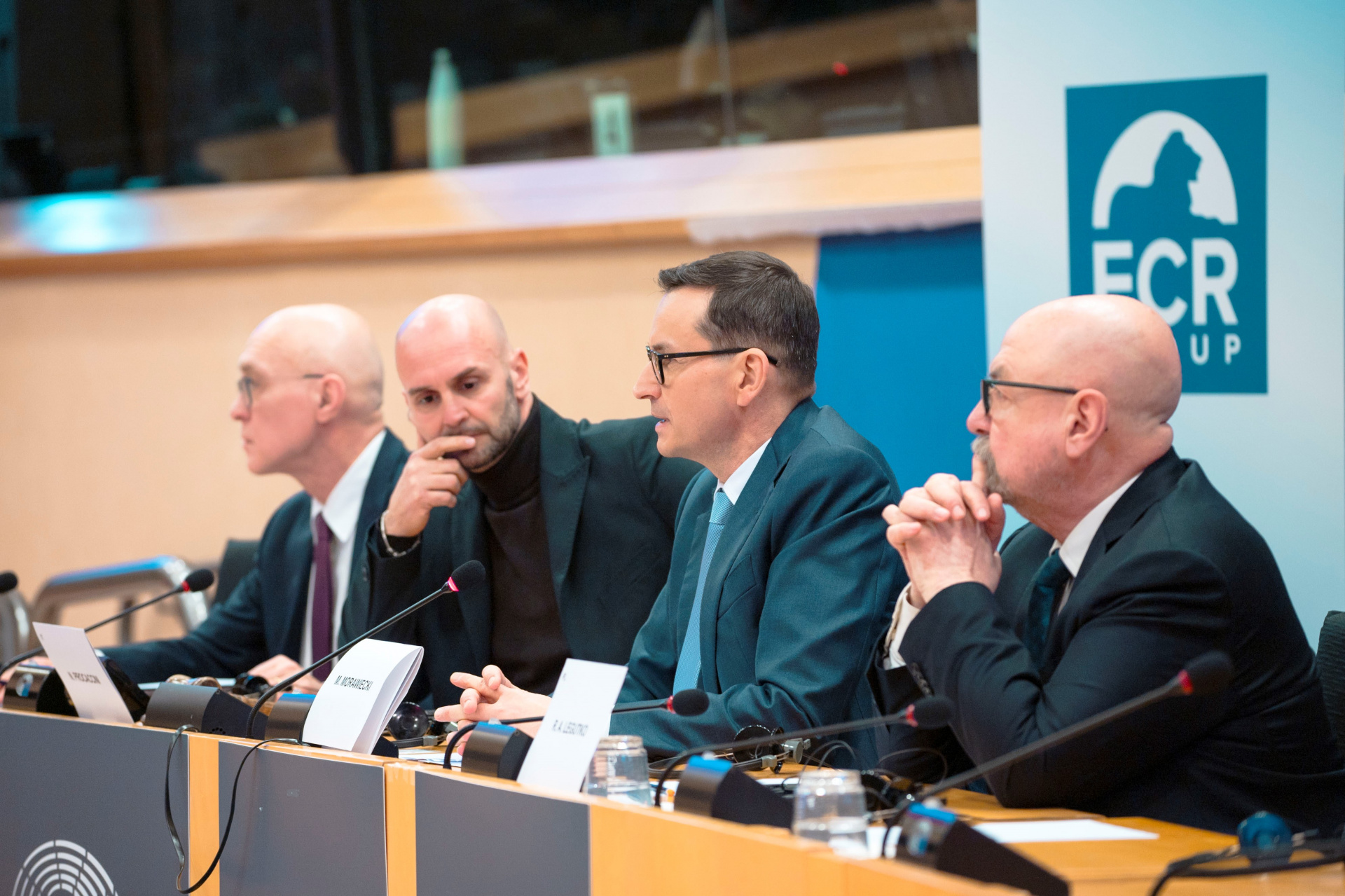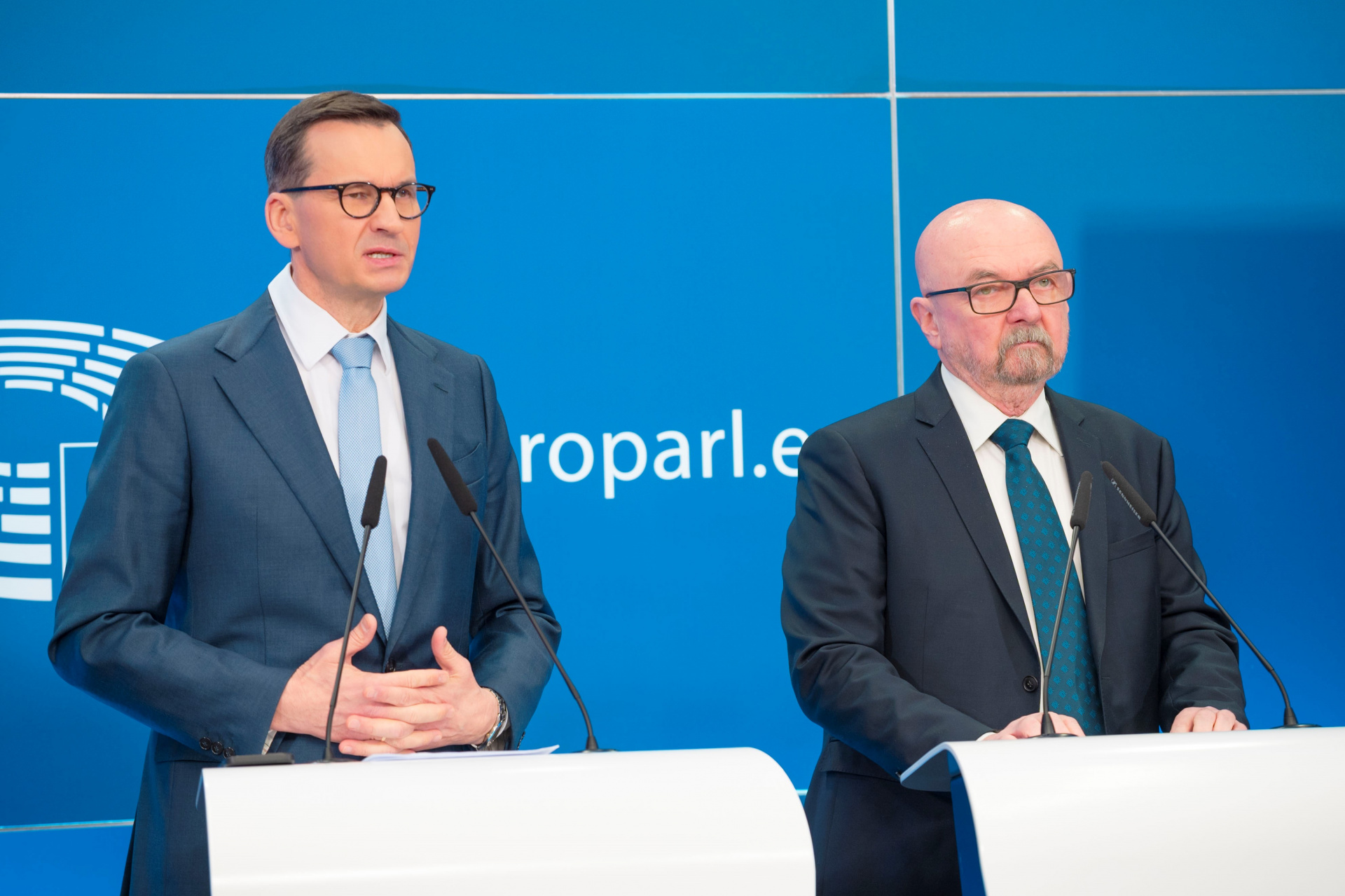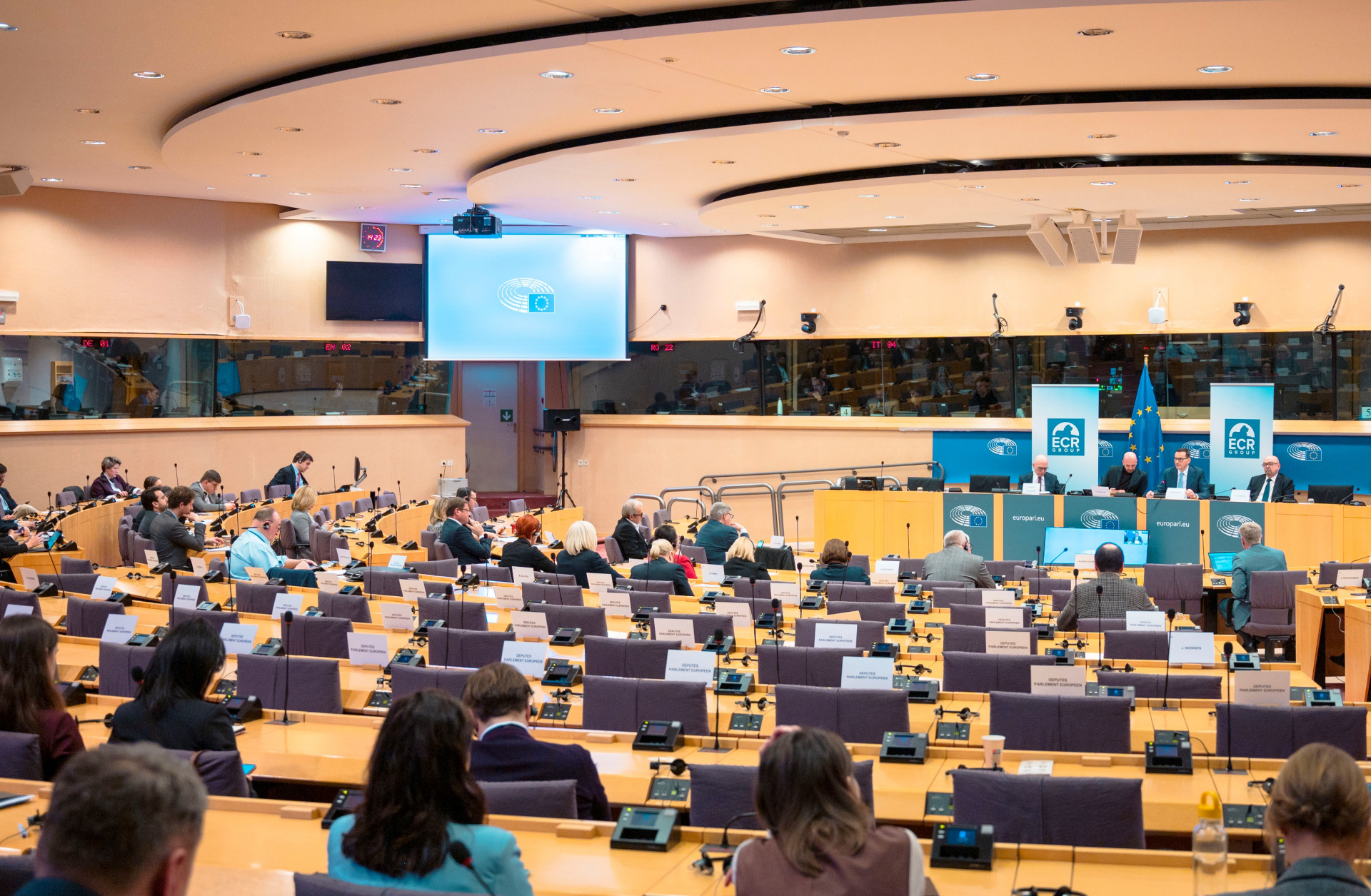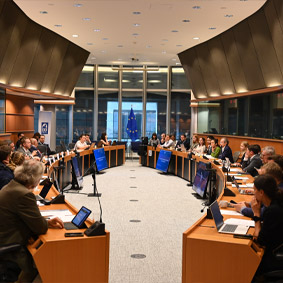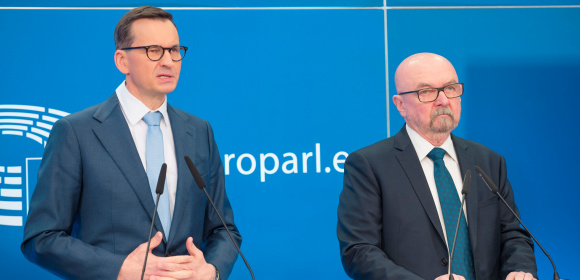
Today at the European Parliament in Brussels, at the invitation of ECR Group Chair Prof. Ryszard Legutko, Prime Minister Mateusz Morawiecki held a series of meetings with representatives of Polish and foreign media, as well as MEPs from the European Conservatives and Reformists Group. The former head of the Polish government spoke about priorities on the EU agenda as well as the situation in Poland following the recent parliamentary elections.
During a press conference at the European Parliament, Prime Minister Morawiecki focused on the main challenges facing the EU in the near future and presented the Law and Justice party’s position on the matter.
He spoke about the need to make changes to the Multiannual Financial Framework in order to be able to provide financial aid to Ukraine. “Of course, we support Ukraine and any financial aid for it, but we emphasize that this must take place without harming cohesion policy or the Common Agricultural Policy,” he stressed.
The Polish politician emphasized the PiS’s opposition to the Migration Pact—that is, the mechanism for relocating illegal immigrants and the financial penalties for refusing to accept them. “We continue to believe that the only effective way to deal with immigration in the long term is not an ‘open-door’ policy in Europe, but effective border protection and a fair policy toward those countries that are experiencing various tensions, and from which many migrants originate. We firmly oppose precisely this approach to illegal migration proposed by the current government in Warsaw,” he emphasized.
Mateusz Morawiecki also spoke about the problematic issue of treaty reform. “I believe that further centralization of decision-making processes in Europe is a road to nowhere,” — the PiS politician noted, adding that in the medium and long term, this would lead to a rise in radical sentiments and destructive centrifugal forces within the European Union. “The way to increase the efficiency of the European Union’s functioning is, above all, to reduce the scope of authority of the institutions in Brussels, primarily the European Commission,” Morawiecki stated, pointing out that the key to success lies not in further centralization, but in a return to the situation from 10 to to 20 years ago, when the European Union was easier to manage due to the smaller number of issues it sought to address, is the key to success. He emphasized that the current direction of work on treaty amendments—which includes the abolition of the veto right, further centralization of decision-making in Brussels, and the inclusion of many new areas subject to qualified majority voting, could lead to very dangerous developments in the European Union.
The former head of government also mentioned tax changes and the decision by the new Polish government, which agreed to so-called “own resources” through three new taxes. He emphasized that tax policy falls under the jurisdiction of the member states, which can grant such consent only through a unanimous vote—and that applies to every decision. “The Polish government’s agreement to three new taxes, including the transfer of 25 percent of ETS revenues to the central budget, will cause enormous damage to the Polish budget, and we strongly oppose this approach,” he emphasized.
The PiS politician also spoke about the difficult situation farmers in the EU are facing today as a result of the EU’s ill-considered climate policy. “We stand in solidarity with Polish, French, and Belgian farmers, because the excessive regulations associated with the Green Deal—which, incidentally, are imposed in an extremely unfair manner on countries such as Poland— could lead to a decline in the competitiveness of Polish agriculture. We call for common sense and the withdrawal of the planned reforms,” he emphasized.
Morawiecki also addressed the issue of geopolitical tensions and the need to support Ukraine in its fight against Russia. “This is crucial for maintaining security on our continent and restoring stability, which are always the foundation for socioeconomic development and future economic growth,” he noted.