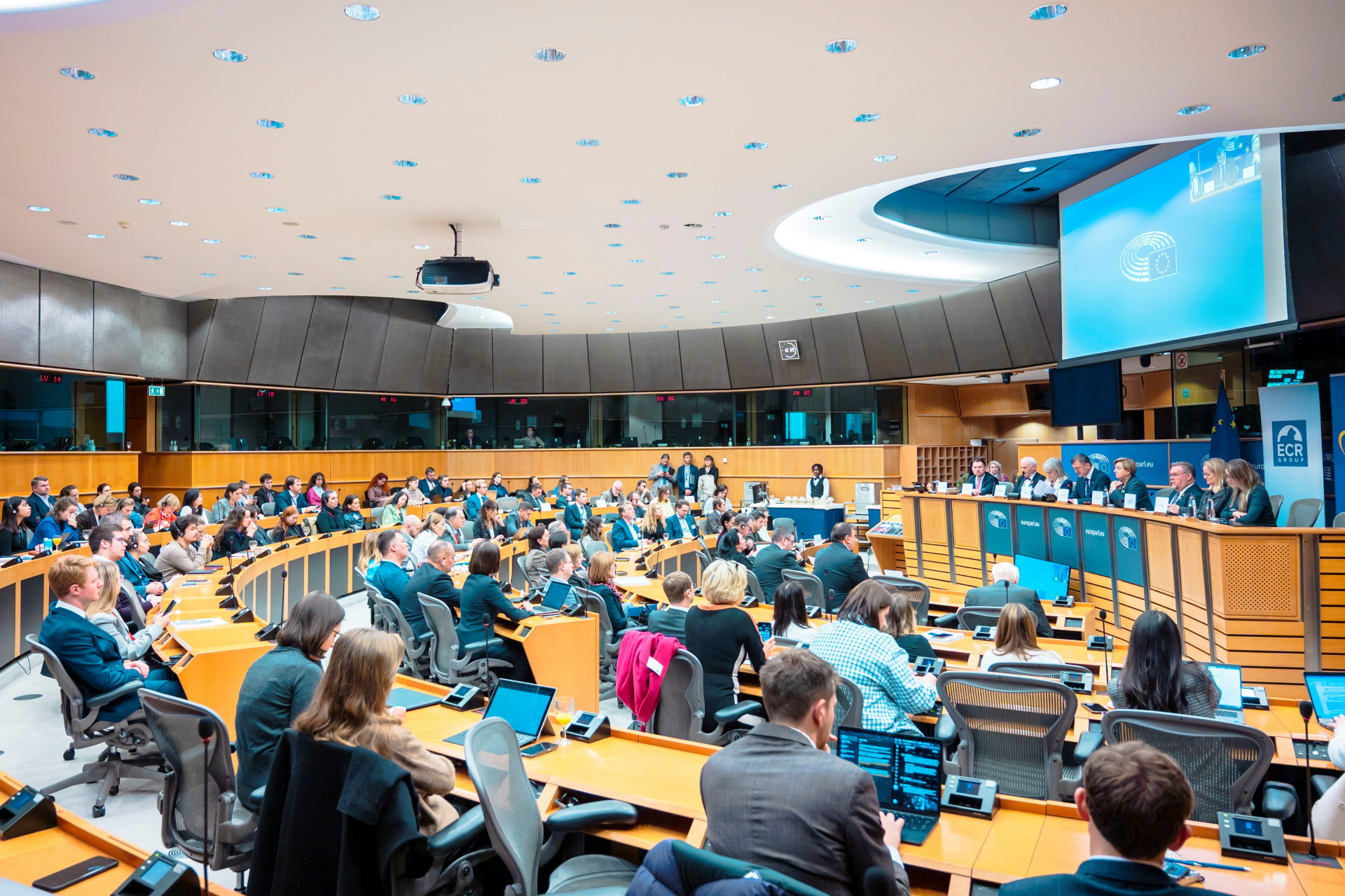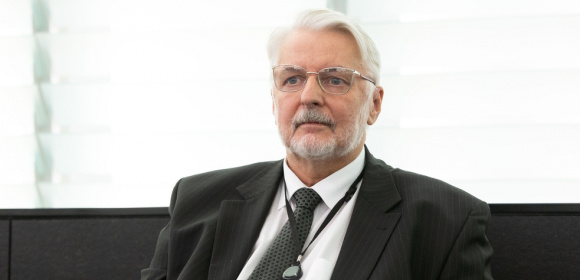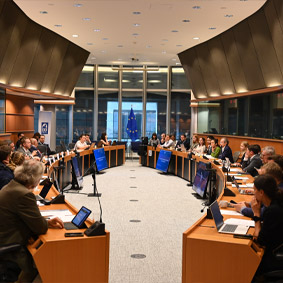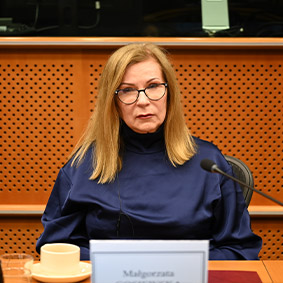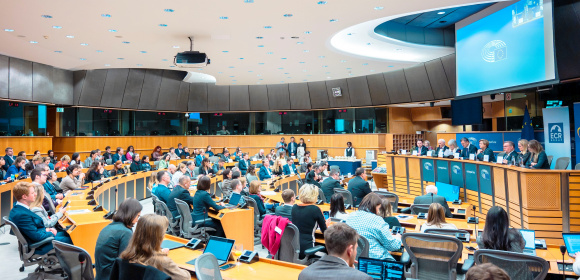
“Without justice, there will be no lasting peace. Only by holding those responsible for the war and its crimes to account can we ensure stability and security. And that is our goal,” said participants at the European Parliament in Brussels during a conference titled “Justice and Accountability for Russian Aggression: Recommendations and Next Steps.” The event, initiated by PiS MEP Anna Fotyga, was organized in cooperation with the International Bar Association and the Ukrainian Bar Association, and was attended by renowned experts in international law from Europe, the United Kingdom, the United States, and Canada. The conference was opened by Dmytro Kuleba, Minister of Foreign Affairs of Ukraine.
“It will soon be two years since the Russian Federation launched a full-scale, illegal, and unjustified war of aggression against Ukraine. Everything must be done to punish those guilty of the crime of aggression, war crimes, and the crime of genocide. This applies both to those committing barbaric acts on Ukrainian territory and to the top leadership of the Russian Federation. Today, we are discussing this so that it does not become a matter for the distant future. The mechanisms of justice and punishment for these crimes cannot wait until the end of the war—neither within the framework of the Ukrainian judicial process nor through international mechanisms and institutions,” said the event’s initiator, Anna Fotyga. “The truth about the crimes in Ukraine must reach the Russian public. Putin is not the only one responsible for them,” said the Polish politician, recalling the Allies’ efforts to educate Germans about the crimes committed during World War II.
The PiS MEP said that the goal of this international conference is to present the legal steps already taken in this regard and to identify current gaps and challenges facing the justice system. The debate is also expected to result in the presentation of policy recommendations regarding the next steps necessary to ensure justice and ways to ensure effective cooperation between Ukrainian and international institutions.
Dmytro Kuleba, Ukraine’s Minister of Foreign Affairs, emphasized that he greatly appreciates the fact that accountability for Russian crimes is high on the EU’s political agenda and is influencing much-needed decisions. “I believe that justice is crucial not only for putting an end to Russian aggression, but also for reducing the risk of future aggression against other nations,” said the head of Ukrainian diplomacy. As he noted, one of the main reasons Putin continues to send thousands of Russian soldiers to their deaths is the hope that a war of attrition will allow him to avoid accountability for the crimes he has committed, including the crime of aggression. “I hope that the temptation to engage in talks with Putin will not prevail over the need to hold him accountable,” Kuleba emphasized, adding: “Russia is fighting for impunity, while Ukraine is fighting for justice.”
“If we let Russia’s crimes fade into oblivion, we will condemn our own children to a life in a world full of war and injustice. And this is one of the main reasons why we must set aside our political and legal differences to establish a fully functional special tribunal for crimes of aggression against Ukraine,” the Ukrainian politician urged. According to Kuleba, if Russia is not held accountable for its aggression against Ukraine, the world will be forced to deal with three, four, or five wars at the same time. “There are too many forces in the world that believe brutal military force is the best means to achieve their goals. If they see that Russian aggression caused Moscow trouble, sanctions, and isolation, but ultimately paid off because it ended in impunity, nothing will stop them from repeating Russia’s actions in other parts of the world,” he added.
Speaking about the need to punish war criminals, Kuleba emphasized: “We owe this to the families of Ukrainian soldiers who have died, and to the civilian population, which has also fallen victim to numerous war crimes and would still be alive if Russia had not attacked Ukraine,” — Kuleba said, adding that this is also necessary from the perspective of the international community, which supports Ukraine in part out of concern for its own security and prosperity.
Kuleba also spoke about the International Center for the Prosecution of Crimes of Aggression against Ukraine (ICPA), established this year. “These are the first actions taken by the international community since World War II aimed at punishing the crime of aggression,” he added.
The head of Ukrainian diplomacy thanked the European Parliament for its firm and principled stance on this issue. “The relevant resolutions from this year and last year have given us a solid foundation for further work on the tribunal. I hope that the European Parliament will remain actively engaged on this issue during the next legislative term as well,” Kuleba urged.
“The people of Ukraine demand justice. The whole world is demanding justice. This demand is urgent. A just peace in Ukraine will ensure decades of stable international peace and security. This is a goal worth working toward,” he emphasized.
Oleksandra Matviychuk, a human rights lawyer and head of the Ukrainian Center for Civil Liberties—a Nobel Peace Prize laureate—spoke about her experiences working with people who have suffered war crimes: “These people have very different views of justice. For some, it means seeing the perpetrators behind bars or receiving compensation. For others, justice means learning the truth about what happened to their loved ones. There are also those for whom justice simply means obtaining official recognition that what happened to their family was not only immoral but also illegal,” said the Nobel laureate.
As she explained, to meet all these needs, we must answer the questions of how to effectively prosecute crimes against humanity, genocide, war crimes, and aggression, and how to punish Russia for its crimes. According to the expert, to answer the first question, a Special Tribunal on the Crime of Aggression against Ukraine must be established as an international court that would hold Russia accountable for the crime of aggression. Matviychuk emphasized that justice cannot wait for the end of the war, nor can it be contingent on its outcome. “We must establish such a tribunal right now—for Putin and his allies,” she urged. She also noted that it is necessary to strengthen the Ukrainian justice system so that it is capable of dealing with an unimaginable number of war crimes. “The work of the International Criminal Court is extremely important, but the vast majority of the burden will fall on the national justice system,” she said. “We cannot wait until the end of the war, because we do not know whether we are in the middle of it or just at the beginning. To become stronger, we must begin this entire process right now. Justice is not just about the past or the future; justice has a huge impact on the present, because even if only a part of Russia begins to see that this time it will not escape accountability, that means thousands of lives saved," she said, appealing to the international community for courage.
Mark Ellis, executive director of the International Bar Association, emphasized that those who planned the aggression and issued the orders must be punished, even if they are heads of state. “We are facing a war between tyranny and a rules-based international order. We have certain instruments at our disposal, such as the International Criminal Court, the principle of universal jurisdiction, and the Ukrainian justice system, but we also need an international tribunal that should play a key role in holding Russia accountable for its aggression,” Ellis said.
Baroness Helena Kennedy, for her part, focused on the abduction of Ukrainian children, a practice bearing the hallmarks of genocide. She described the legal situation and specific measures aimed at returning these children to their families.
Andreas Kleiser, director of the International Commission on Missing Persons, emphasized the importance of utilizing new technologies, including the collection and creation of DNA databases for abducted children.
“The entire Russian Federation, as a state, bears responsibility for these crimes,” emphasized Anton Korynevych, Ukraine’s representative at the International Court of Justice.
Stanisław Krawczenko, President of the Supreme Court of Ukraine, spoke about the challenges facing Ukrainian courts.
Olga Butkiewicz, president of an association of Ukrainian lawyers, recalled that the world in this century was supposed to focus more on conflict prevention. “This did not happen, for many reasons. One of them, despite the 2008 invasion of Georgia, was the widespread policy of appeasement toward Russia, which led to the current situation. That is why it is so important to establish a special tribunal to adjudicate the crime of aggression,” she said, describing the types of crimes committed by Russia.
Magdalena Gawin, director of the Pilecki Institute, which houses the Rafał Lemkin Center for the Documentation of Russian Crimes in Ukraine, stated that the war is being waged on many fronts. “One of them is memory. At the Lemkin Center, we are collecting evidence that will shape future generations’ perception of this war,” said Gawin, providing a detailed account of the Pilecki Institute’s activities and the reports it is preparing.
Bill Browder recalled that he was one of the first people to experience who Vladimir Putin really is. “In 2009, after the murder of my lawyer Sergei Magnitsky, I saw that Putin was behaving like a criminal. I tried to warn the world about this, but at the time, the policy of appeasement prevailed,” said Browder, describing his efforts to enact the so-called Magnitsky Act. “Those sanctions hit Putin because they hit his money,” he said. Browder emphasized that military support is crucial, but there are also many other tools, including legal and financial ones. “That is why I am advocating for the frozen reserves of the Russian central bank to be transferred to Ukraine’s defense and reconstruction,” he said.
Markiyan Kliushkovsky, director of the International Registry of Losses Caused by Russian Aggression in Ukraine, said that “accountability cannot be separated from reparations.” “We already have 43 countries in our network. We all agree that compensation should come from Russian funds, whether the Russians like it or not. A great deal of Russian assets are still hidden in Europe, including in Brussels. We will not stop our efforts. Russia must pay for its crimes. And it will pay,” he said.
Maryna Katsarova, the UN Special Rapporteur on human rights in Russia, also spoke. “External aggression is not separate from internal oppression,” she said. “The world did not wake up after the murder of Anna Politkovskaya, a close friend of mine, and after many other crimes,” she said. According to Katsarova, Russian society should also get involved in finding the abducted children. “Despite being barred from entering Russia, I am currently preparing a special report for the UN. I am counting on the cooperation of all countries,” Katsarova said.
MEPs participating in the conference emphasized that holding Russia accountable is a prerequisite for lasting peace in Europe.
“We all share one goal: Ukraine’s complete victory. To achieve this, we need all available means: military, financial, and legal,” said German MEP Wiola von Cramon, highlighting the importance of this conference.
Swedish MEP David Lega, for his part, pointed out that Russia is a terrorist state and should be treated as such.
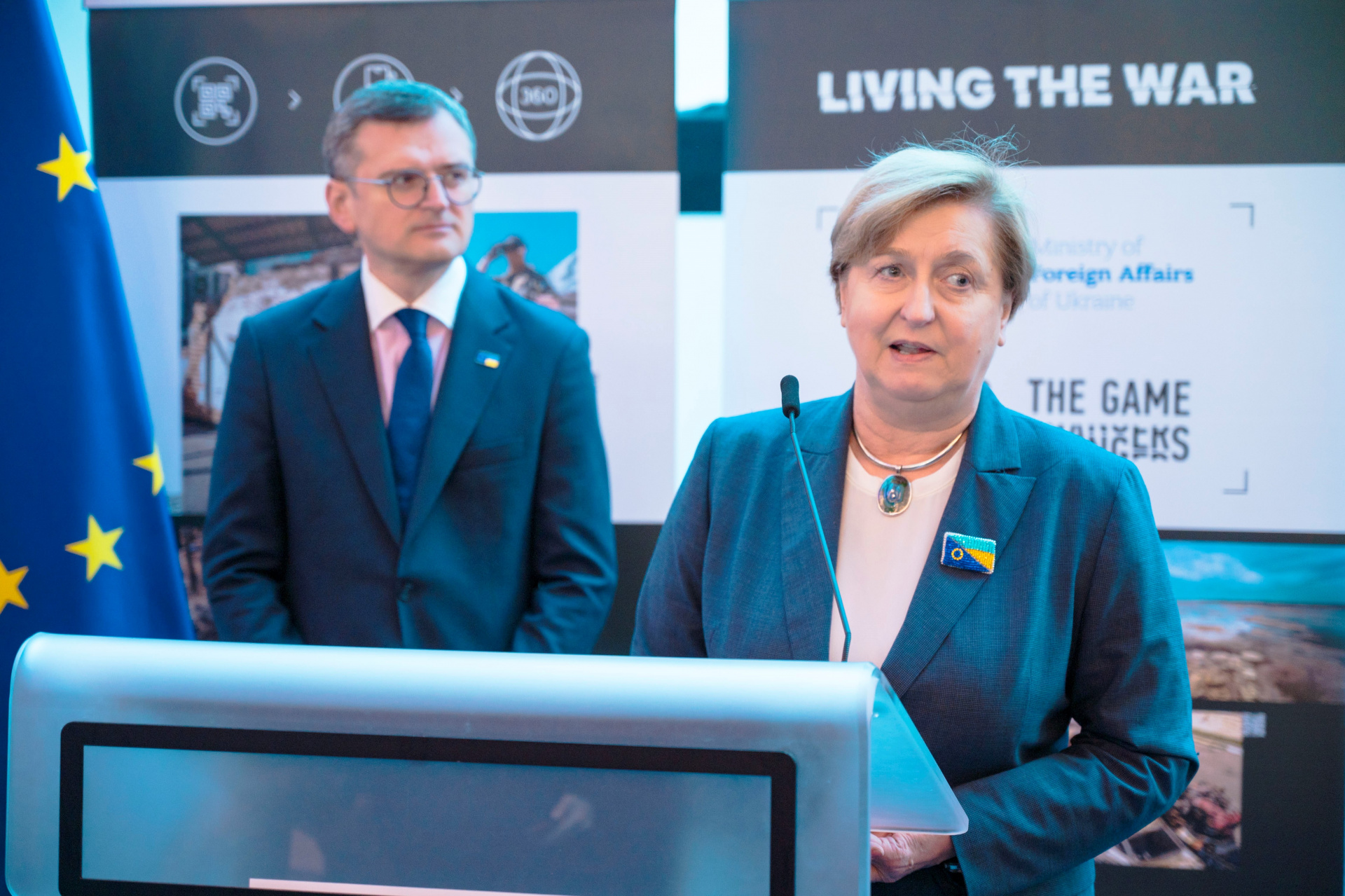
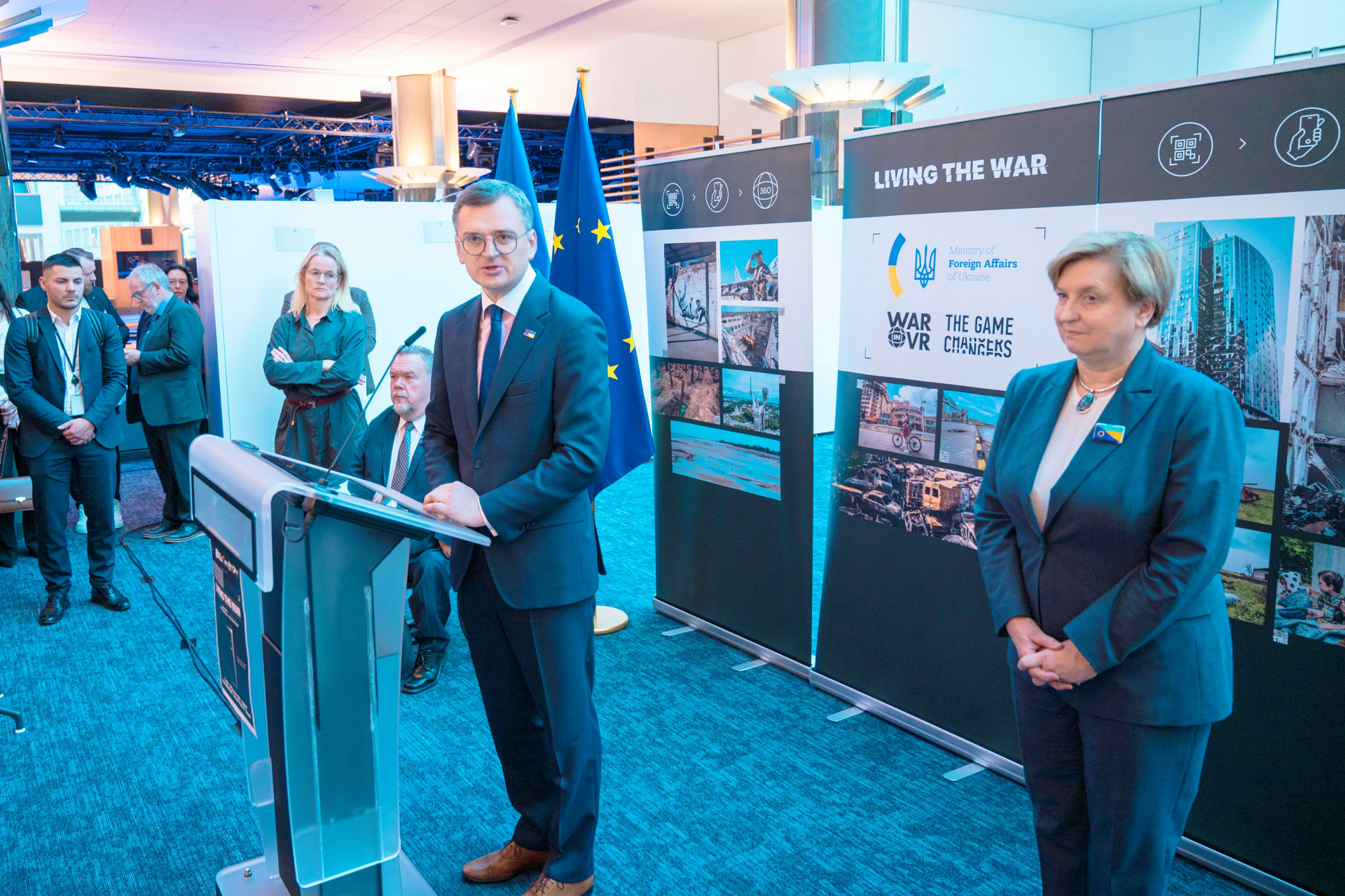
The conference was preceded by an immersive exhibition titled “Living The War,” dedicated to Russia’s war crimes on Ukrainian territory. Using virtual reality (VR), politicians, diplomats, officials, and experts were able to experience the price Ukrainians are paying in their fight for freedom and independence. “Living the War” was created by filmmakers and documentary makers whose VR cameras capture hundreds of pivotal events, recording stories that are both terrifying and inspiring. The liberation of Bucha, the genocide in Izium, the rescue of civilians in Bakhmut, and the heroic deeds of rescue workers, medics, and power plant engineers open a window into Ukraine for viewers, allowing them to see the true reality of war with their own eyes.