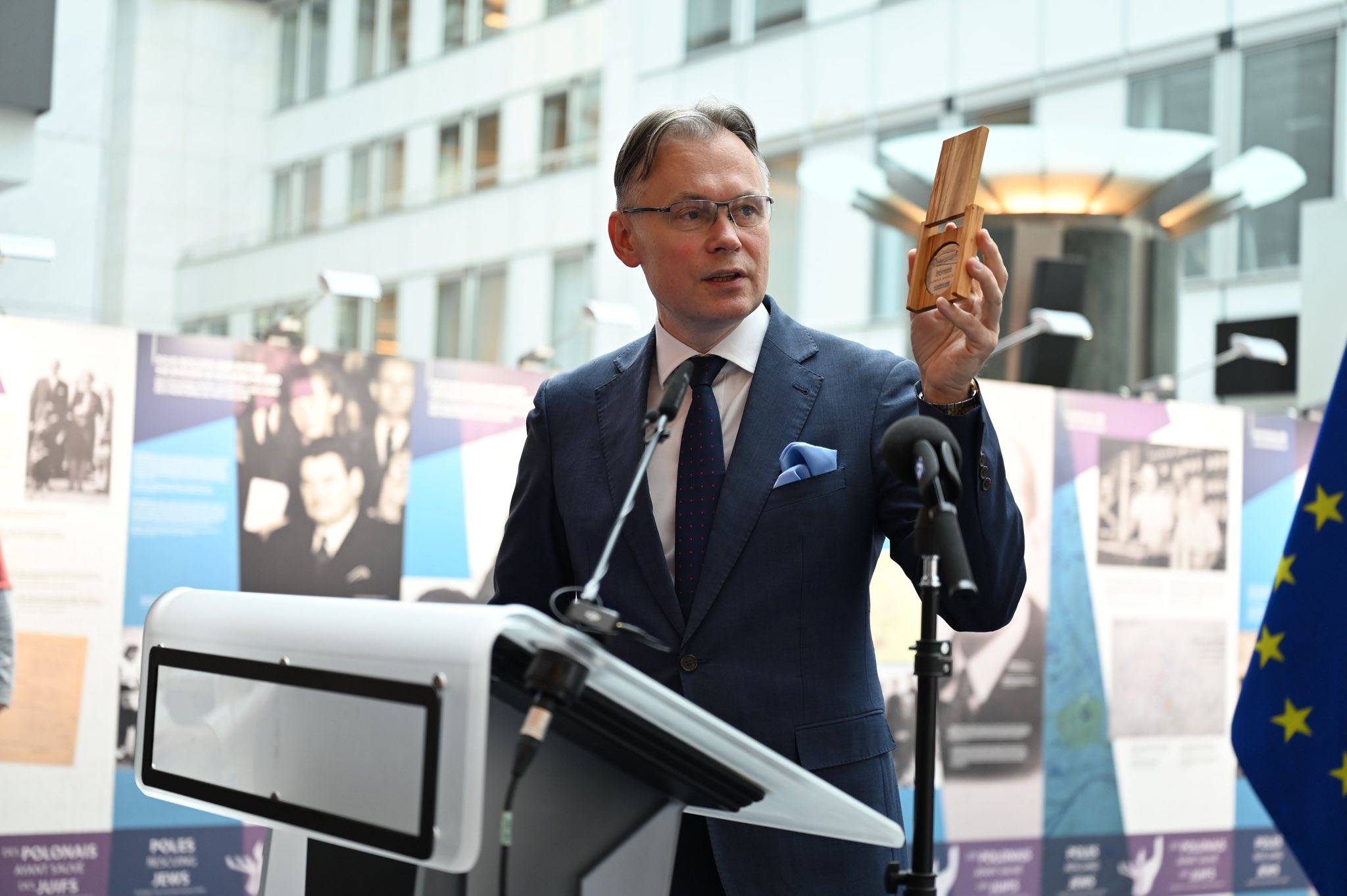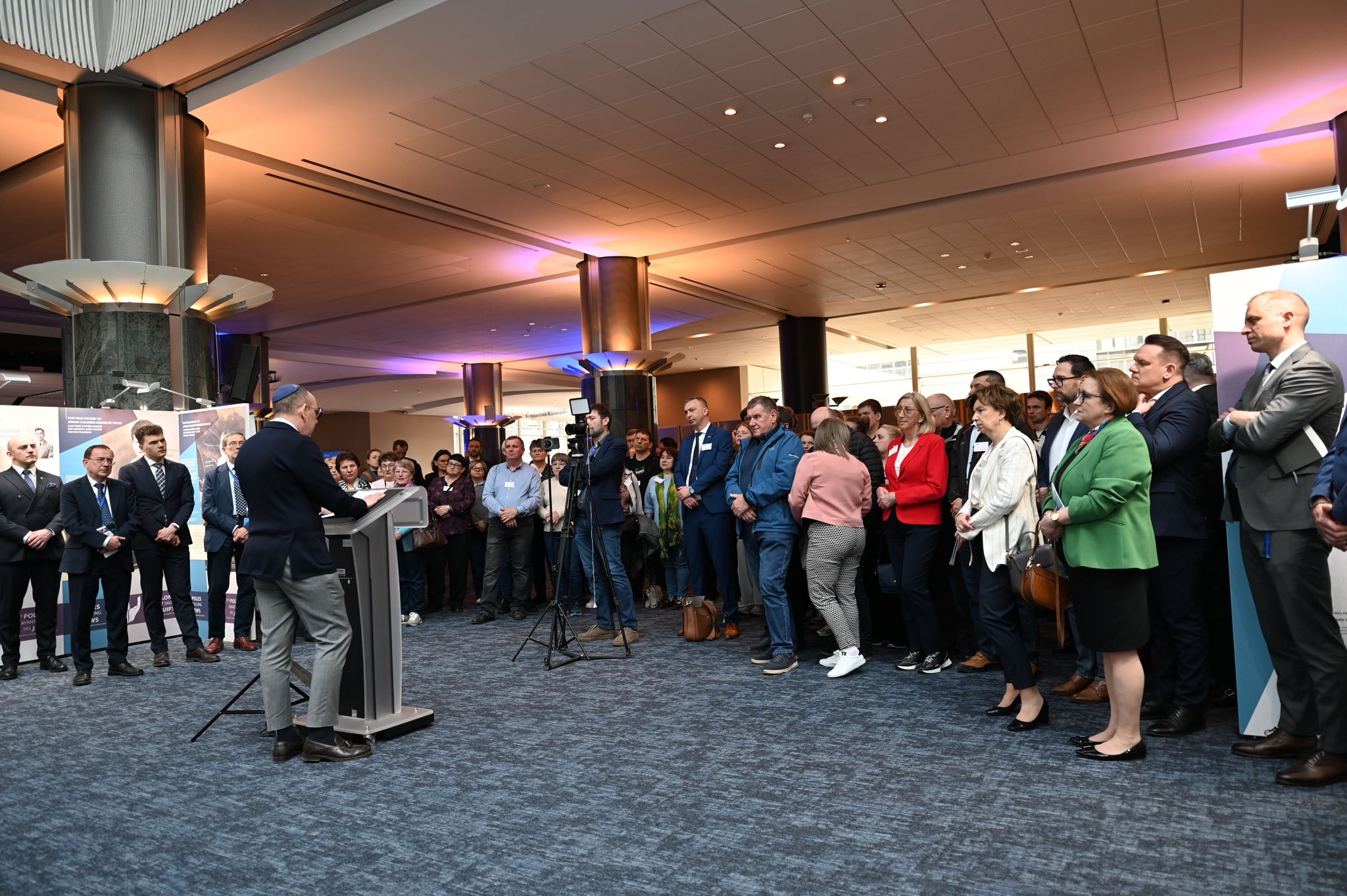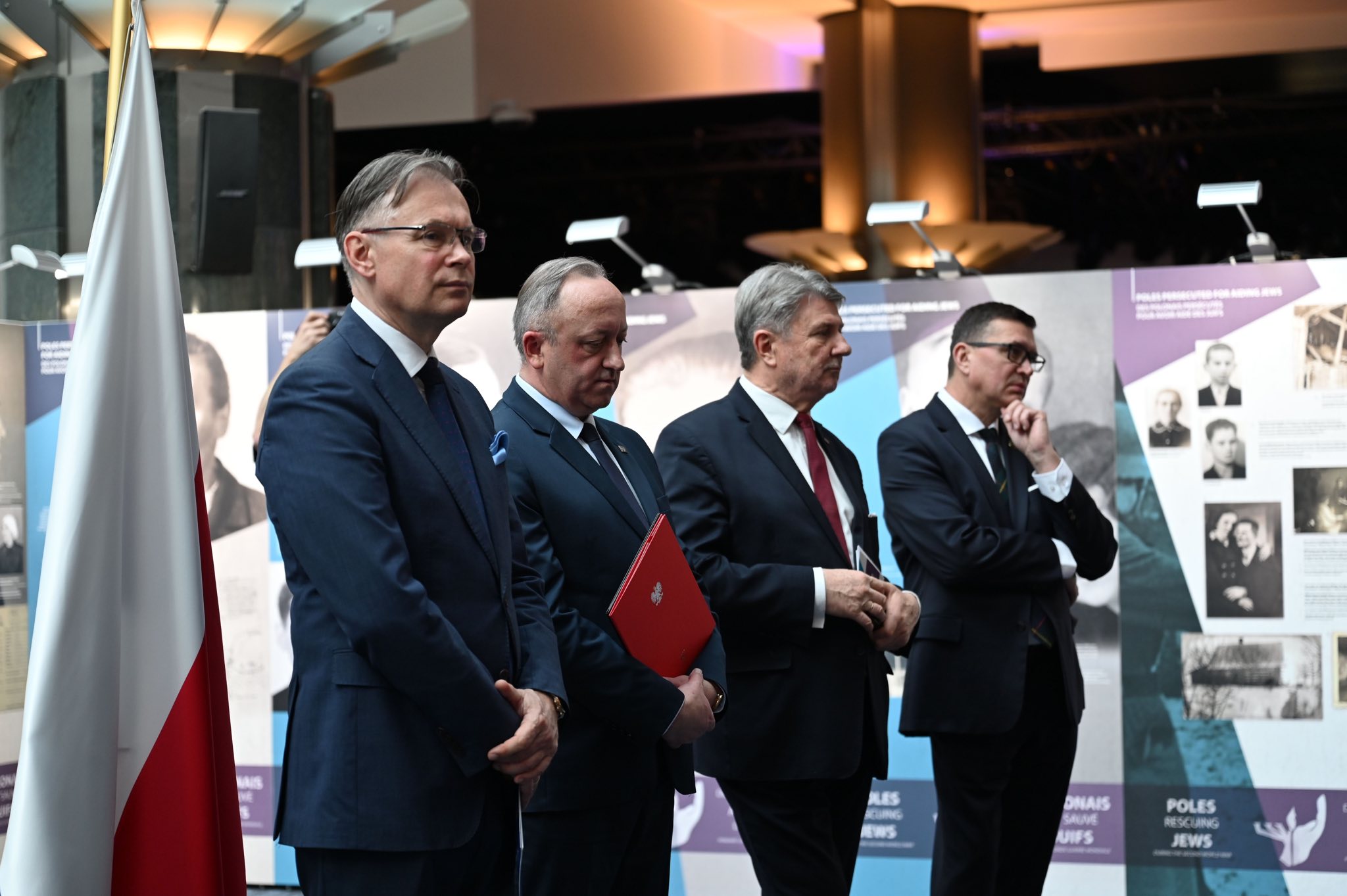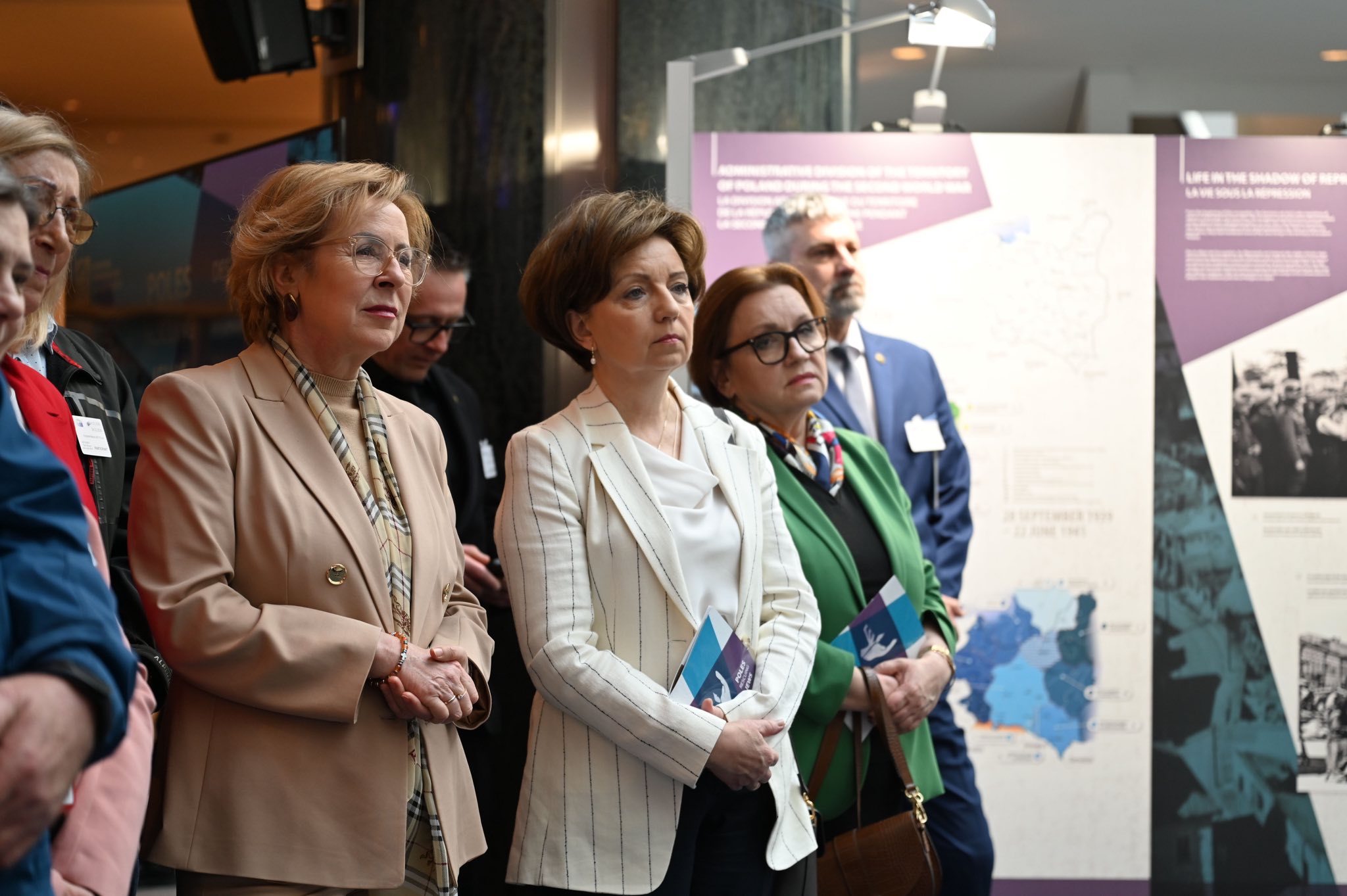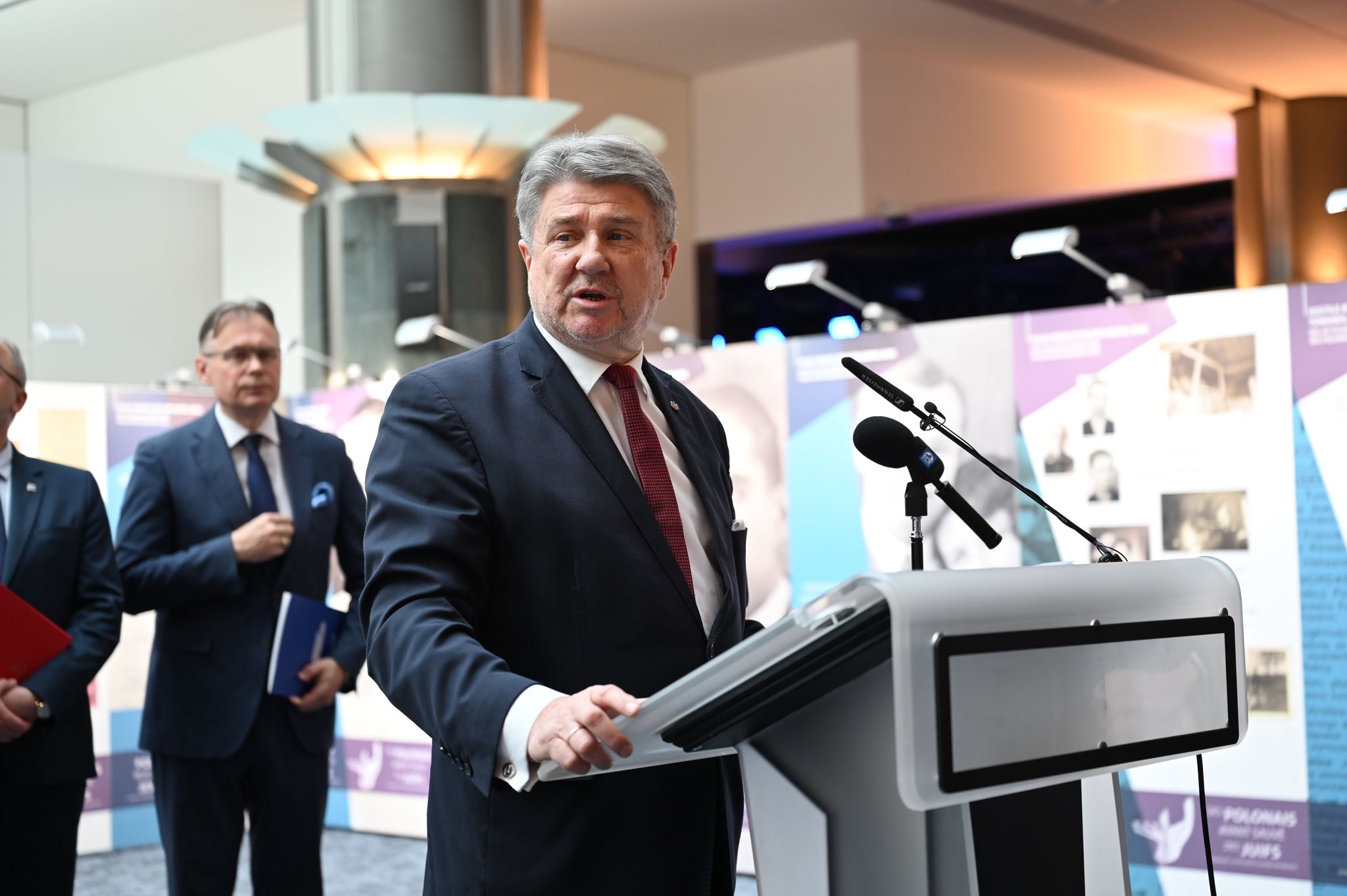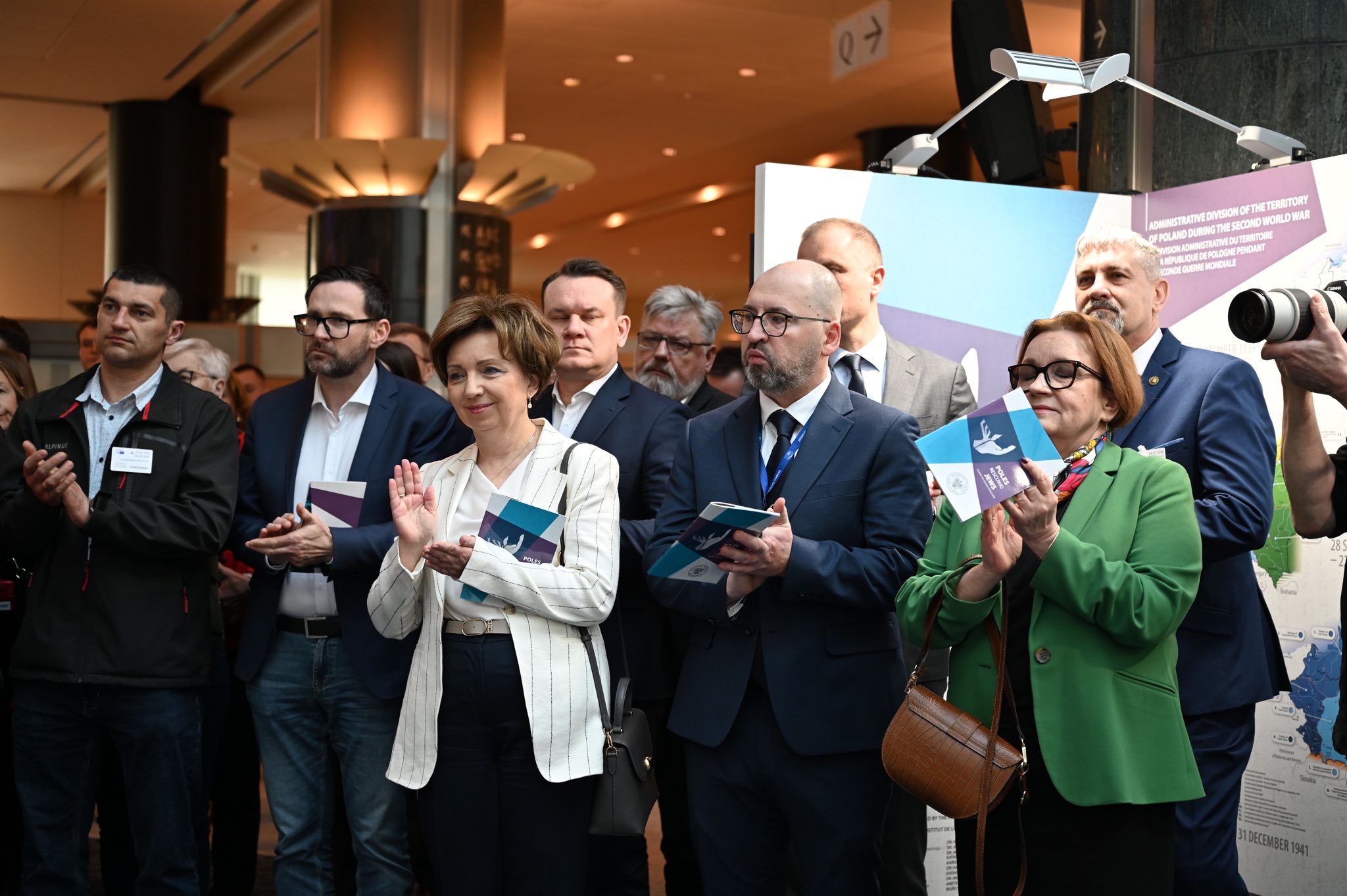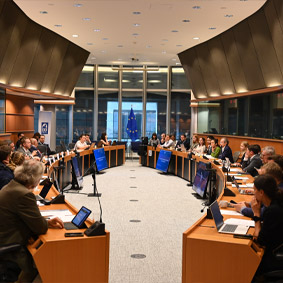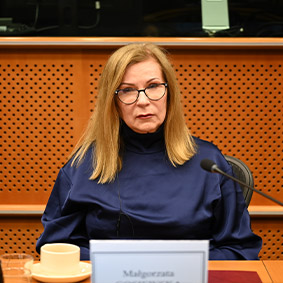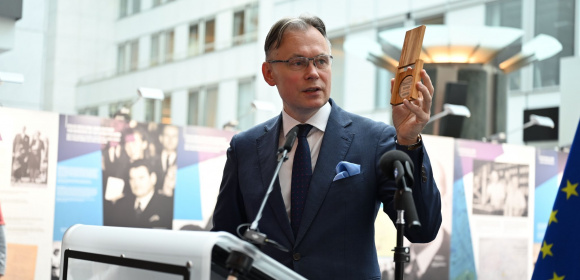
The European Parliament in Brussels hosted the opening of the exhibition “Poles Who Rescued Jews During World War II,” organized to mark the National Day of Remembrance for Poles Who Rescued Jews Under German Occupation. The event was initiated by Members of the European Parliament Bogdan Rzońca and Arkadiusz Mularczyk.
Among those attending the event were Dr. Karol Polejowski, Deputy President and Director of the Institute of National Remembrance (IPN); Dariusz Iwaneczko, Director of the IPN Branch in Rzeszów; and Alexander Benjamin, Vice President of the European Jewish Association.
The exhibition, prepared by the Institute of National Remembrance in Rzeszów, presents the stories of Poles who risked their lives to save Jews during the German occupation. The exhibition highlights both individual acts of courage and organized aid, including the activities of the “Żegota” Council for Aid to Jews. The exhibition features archival photographs and documents depicting the actions of Poles from various social strata—ranging from the intelligentsia and the clergy to workers, peasants, and even children—who saved the lives of Jews, often paying the ultimate price for doing so.
During the opening, Dr. Karol Polejowski read a letter from the President of the Republic of Poland, highlighting the exceptional nature of the exhibition as a testament to the courage of ordinary people in the face of evil. He noted that in occupied Poland, helping Jews was punishable by death, yet thousands of Poles chose to offer that help.
MEP Arkadiusz Mularczyk noted that the exhibition serves as a reminder of the courage of ordinary people—farmers, engineers, businesspeople, and even children—who helped Jews at the risk of their own lives. He emphasized the importance of remembering heroes such as Józef Pierzchała from Nowy Sącz and the Polish diplomats of the Ładosia Group in Bern, who saved Jews from the Holocaust.
MEP Bogdan Rzońca emphasized that the exhibition showcases people who did not remain indifferent to human suffering. It is a story of moral courage, of overcoming fear and risk, and of Poles—mothers, fathers, grandparents, and children—who saved the lives of Jews. He recalled that in Poland, helping Jews was punishable by death, and noted that remembering these heroes is also crucial in the context of combating historical revisionism and anti-Polish sentiment.
Alexander Benjamin, Vice President of the European Jewish Association, highlighted the shared experiences of Poles and Jews during the war and the importance of remembering those who provided aid. He noted that in many cases, the rescue of Jews was the result of individual actions, but also of the activities of organized support networks, such as “Żegota.”
The exhibition at the European Parliament is an important part of commemorating the victims and heroes of World War II and serves as a reminder of the moral responsibility to preserve historical truth. The organizers emphasize that Europe has a duty to know and remember these stories—as the foundation of our shared memory and future.
The exhibition will be open to visitors until March 27, 2026.