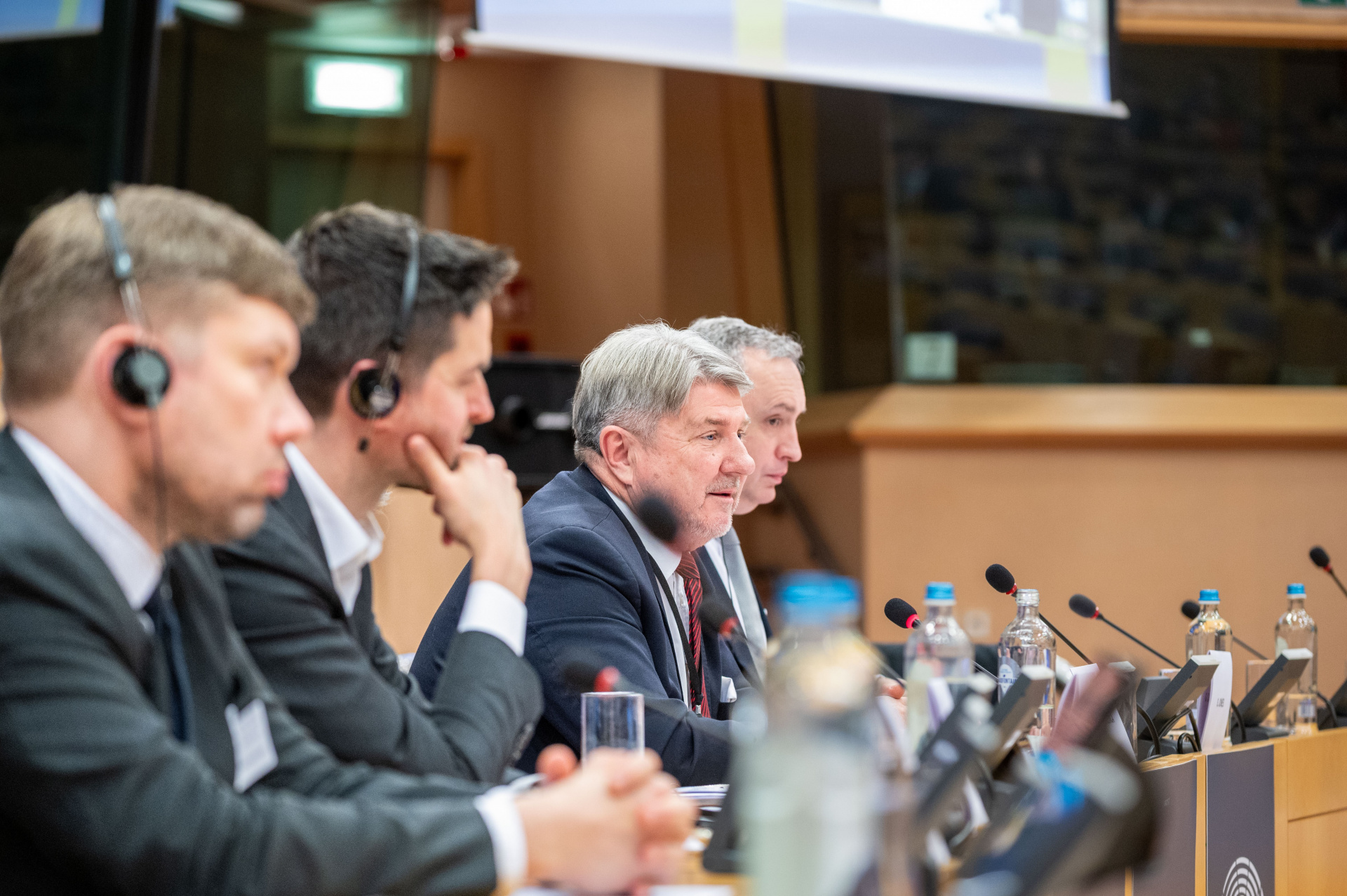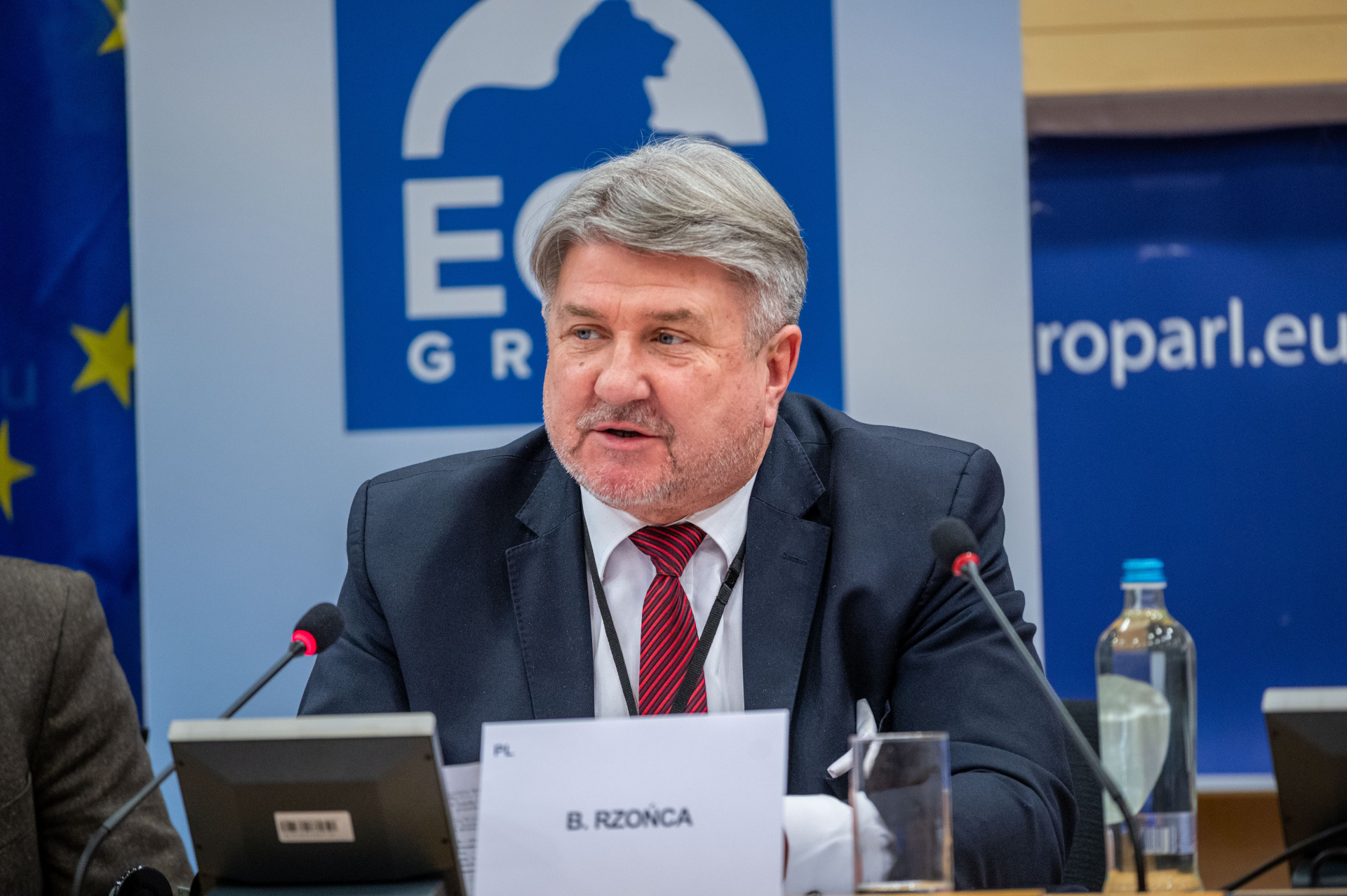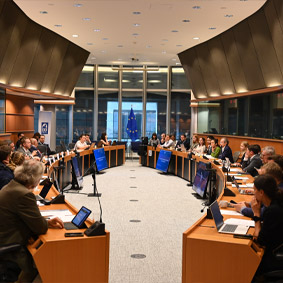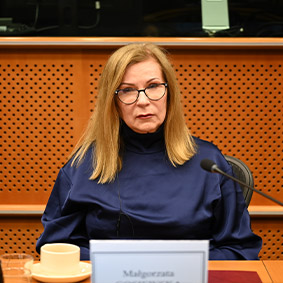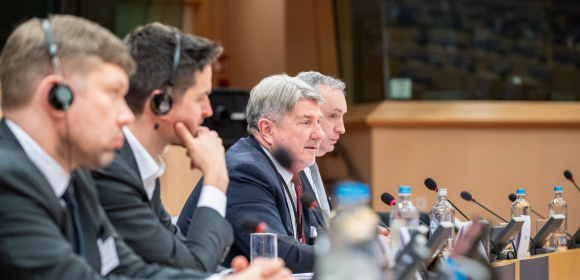
A conference titled “What Future for the European Union’s Finances?” was held at the European Parliament, focusing on the direction of the EU budget. The event, initiated by PiS MEP Bogdan Rzońca, coordinator of the ECR Group in the Committee on Budgets (BUDG), brought together decision-makers and experts from various member states to debate how to ensure the effectiveness of EU finances while maintaining transparency, accountability, and tangible benefits for citizens.
Conference participants discussed how the new EU budget for 2028–2034 should be designed, so that it can effectively address growing political, economic, and geopolitical challenges, while upholding the principles of accountability, transparency, and real value for European Union citizens.
The debate focused, among other things, on the EU’s spending priorities, the need to maintain fiscal discipline, the balance between the Union’s ambitious goals and the responsibilities of member states, as well as proposals for new sources of EU revenue —their potential benefits, but also the risks to citizens and national economies.
In his speech, MEP Bogdan Rzońca emphasized that the ECR Group continues to believe in the European project as a joint endeavor of 27 sovereign states. At the same time, he noted that this is a crucial moment for the responsible preparation of the new budget framework.
“We need a transparent debate and a clear answer from the three EU institutions to the question of what is best for all 27 member states,” the MEP stated.
Bogdan Rzońca also drew attention to growing concerns regarding new taxes and burdens on EU citizens, as well as the European Union’s mounting debt. He noted that the EU currently has approximately 700 billion euros in debt under national recovery plans, 150 billion euros under the SAFE program, and 90 billion euros in connection with aid to Ukraine.
“If this isn’t a financial nightmare, it is certainly a highly alarming situation,” he said.
Toward the end of his speech, the MEP addressed the discrepancy between the optimistic statements from EU institutions and the warnings from economists, who point to a decline in the EU’s competitiveness relative to China and the United States.
“Where do we stand today, and what needs to be done to truly strengthen the European Union?” asked Bogdan Rzońca.
Nicola Procaccini, co-chair of the European Conservatives and Reformists (ECR) group, also spoke during the debate. In his remarks, he strongly opposed the concept of the so-called “superbudget” for the European Union, emphasizing that it is linked to efforts to build a European superstate.
As he emphasized, the European Union should return to its original principles and focus on a limited number of key tasks, such as the development of the single market and the effective protection of external borders.
The ECR co-chair also criticized plans to finance the EU’s future financial framework through new so-called own resources, including European taxes. “This is pure madness,” Procaccini said.
Raffaele Fitto, Executive Vice-President of the European Commission for Cohesion and Reforms, also addressed the event via a video message, presenting the European Commission’s position on the Union’s future financial framework.
The conference serves as an important contribution to the ongoing debate on the future of EU finances and the shape of EU budgetary policy in the coming decade.