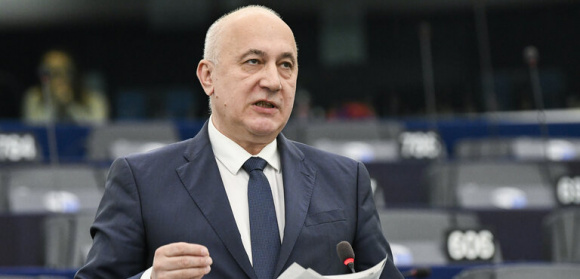
PiS MEP Joachim Brudziński presented reports on the discharge of the 2023 budgets of six EU institutions at a meeting of the European Parliament’s Committee on Budgetary Control (CONT). Five of them—the Committee of the Regions, the European Economic and Social Committee, the European Data Protection Supervisor, the European External Action Service, and the European Ombudsman—received a positive recommendation, while the European Council and the Council raise concerns, as they consistently refuse to cooperate with Parliament in the discharge procedure.
Joachim Brudziński commended the Committee of the Regions for continuing its efforts under the “Going for IMPact” program, which enabled the Committee to align its objectives with its limited resources, taking into account the effects of inflation linked to the war in Ukraine. He also mentioned OLAF’s investigations into the institution, noting that it had cooperated with this audit body and complied with its recommendations.
The European Economic and Social Committee, for its part, faced the challenge of “effective resource management” in 2023, primarily due to staff shortages. In response to these challenges, “the Committee intends to adopt a new approach to strategic workforce planning and staff allocation.” The EP report highlights the need for regular reporting on the results of this plan. Furthermore, in 2023, the overrepresentation of certain countries, such as Belgium and Italy, was noted. At the same time, the percentage of management staff from the 13 Member States that joined the Union after 2004 rose to 24 percent, compared to 21 percent in 2022 and 19 percent in 2021. “In this context, the Committee is encouraged to take further steps toward a balanced geographical distribution, particularly at the management level,” said the rapporteur.
The PiS MEP noted that the European Data Protection Supervisor introduced a number of organizational changes in 2023 to address data protection challenges. He pointed to delays in verifying declarations regarding family allowances, “which may lead to ineligible payments.”
In 2023, the European External Action Service “provided extensive support to Ukraine, exerted pressure on Russia, and continued global outreach efforts to address the broader consequences of the war, which included implementing an action plan on the geopolitical implications of Russia’s aggression against Ukraine.” Furthermore, as the rapporteur noted, following the resurgence of the Israeli-Palestinian conflict after the Hamas attack on October 7, 2023, the Service had to undertake intensive diplomatic efforts, respond to humanitarian needs, and support regional peace efforts. “In response to budgetary constraints, expenditures were optimized while managing inflation, currency fluctuations, and rising prices in third countries. In this spirit, the number of co-locations with member states has increased to 138,” he noted.
Brudziński also drew attention to the continued overrepresentation of Belgium and Italy in the staffing structure. “Of the 141 EU ambassadors, five member states hold 54 percent of the posts, while three countries (Hungary, Luxembourg, and Malta) have no ambassador at all,” he noted.
The European Ombudsman, meanwhile, is grappling with the problem of overrepresentation of certain nationalities (e.g., France and Ireland) while others (Romania and Spain) are underrepresented. “The Ombudsman is obligated to take steps toward a more balanced geographical representation,” Joachim Brudziński pointed out.
The vote on the reports in the Committee on Budgetary Control will take place on March 17.