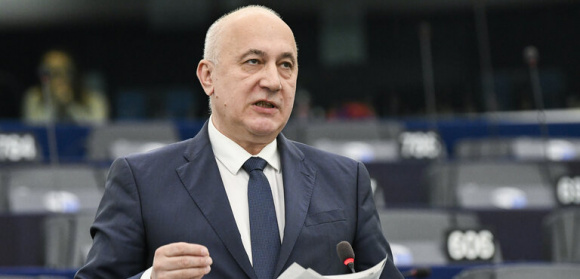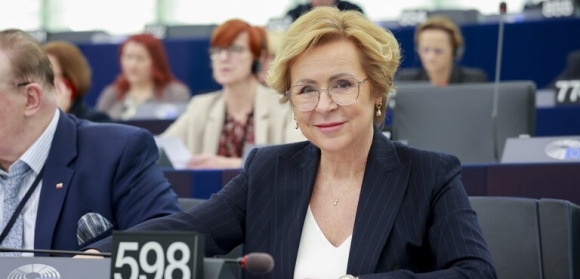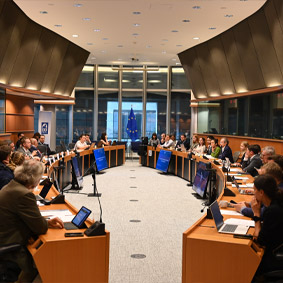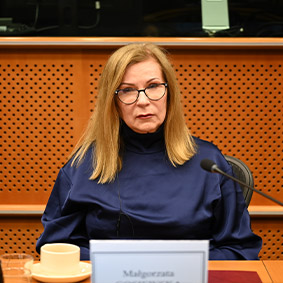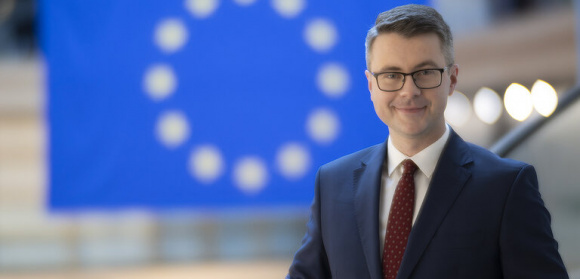
Today, during a meeting of the Committee on the Internal Market and Consumer Protection (IMCO), there was an exchange of views on a report by PiS MEP Piotr Müller concerning public procurement.
The Polish politician stated that “the European economy today is a bit like a car stuck in a loop on a roundabout.” “We must finally get off that roundabout and set the right course, or else we’ll be stuck there forever,” he added, pointing to the problem of excessive regulation, which is causing Europe to lose the global economic race. In this context, the PiS MEP outlined priorities for public procurement reform in Europe, “so that the European economy can truly meet the challenges that are currently emerging.”
The ECR rapporteur noted that “the world is changing rapidly right now, and geopolitics has once again come knocking loudly on Europe’s door.” He pointed out that U.S. President Donald Trump’s administration is focused on protecting domestic companies and is also reducing regulations on its internal market, while China, in turn, operates a large-scale system of subsidies and grants, which puts Europe in a difficult position. “This puts all of our enterprises and companies in a difficult situation. That is why today we should focus on what we can do to make internal competition within the European Union more open, and public procurement has become an extremely important element of this change,” said the PiS politician.
Piotr Müller noted that, according to a report by the Court of Auditors, public procurement in Europe amounts to over 2 trillion euros, of which 800 billion euros are contracts published through the European system. “That’s a huge amount of money—primarily taxpayers’ money—and we need to consider how to spend these funds in a rational, fair, competitive, and cost-effective manner,” Müller said.
According to the PiS MEP, the primary goal should be to facilitate access to the public procurement market for small and medium-sized enterprises so that they can better compete with other companies. “It is precisely these businesses that are often excluded from the public procurement market today due to regulatory barriers and various types of regulations,” he stated.
Another important issue, Müller said, — is the need to prioritize price criteria while maintaining quality standards—but in a way that does not lead to a situation where the public sector pays more for the same products and services that the private sector would normally purchase. “Such inefficient public procurement creates additional bureaucratic and administrative burdens, which means that a service that would normally be cheaper on the private market becomes more expensive on the public market,” he argued.
The PiS MEP proposed several measures that, in his view, would improve competitiveness.
“I firmly believe that the entire digitization process is an opportunity to simplify procedures, thereby systematizing and facilitating the comparability of public procurement across countries. Currently, we have a public portal for European contracts, which is a positive development because it enables companies to operate and compete with one another across the entire European market. However, similar solutions would also be useful in matters related to small businesses in individual countries,” he said.
Another measure mentioned is considering the possibility of dividing public procurement contracts into smaller parts, which would enable small and medium-sized enterprises to participate more effectively in tenders.
Furthermore, according to the politician, attention must be paid to cooperation with the scientific and innovation communities, as current barriers limit the scope of public procurement, which could be much broader and more innovative.
Finally, as Müller noted, additional bureaucratic burdens should be reduced. “In this context, I would like to clearly oppose the addition of new requirements to public procurement—such as those related to the Green Deal or other environmental regulations—because they already constitute a barrier to entry for many companies seeking to participate in various types of projects,” he noted.