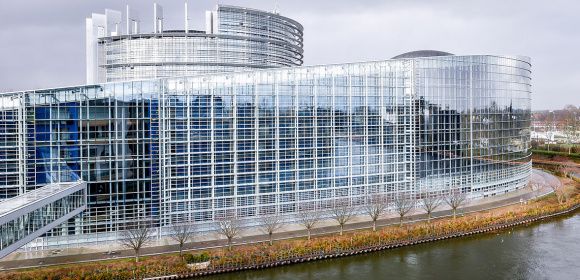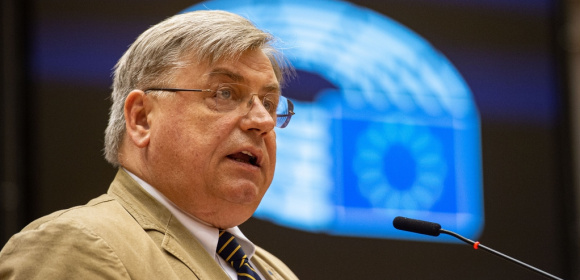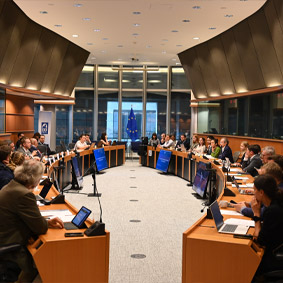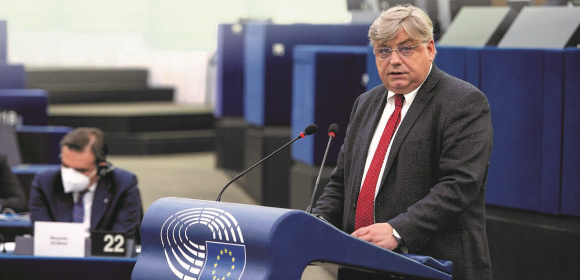
On the second day of the European Parliament’s plenary session in Strasbourg, a debate was held on amending the patent regulation. PiS MEP Kosma Złotowski took the floor during the discussion.
Kosma Złotowski stated that the smooth development of European innovation requires a supportive legal environment and regulations that make it easier for small and medium-sized enterprises (SMEs) to create modern products, such as those in the Internet of Things sector.
“Easy access to standard-essential patents (SEPs) is one of the conditions for equal participation in the benefits that the digital revolution brings to the European economy,” the MEP said, emphasizing that this is very important for Polish companies. The politician pointed out that the current rules governing access to SEPs are not entirely transparent, and that their owners often exploit their position to create obstacles that require resolution through the courts. He also noted that many SMEs have neither the time nor the resources to get entangled in such disputes. The MEP stated that this regulation will help remove many barriers and ambiguities, but this obviously cannot mean undermining the intellectual property protection system. “We need a reasonable balance between the interests of all market participants, and that is why the ECR Group considers this report a reasonable compromise worthy of support,” the Polish politician concluded.
Standard-essential patents (SEPs) are patents that protect technology deemed essential for the implementation of a technical standard adopted by a standards-setting organization (SSO). Such standards relate, for example, to communications, including 5G networks, Wi-Fi, Bluetooth connections, and contactless communication. Furthermore, they prevent third parties from commercially exploiting the invention without authorization.