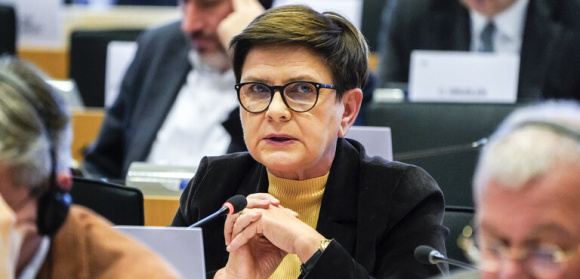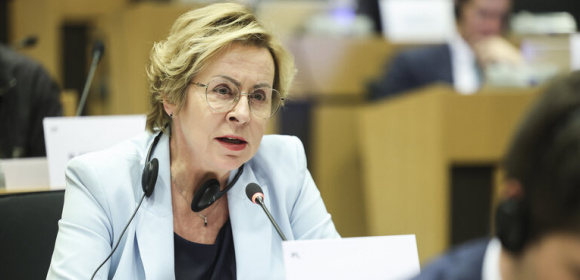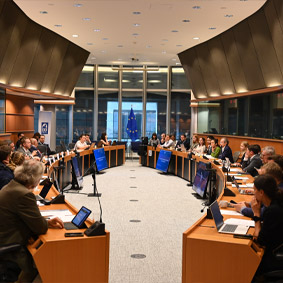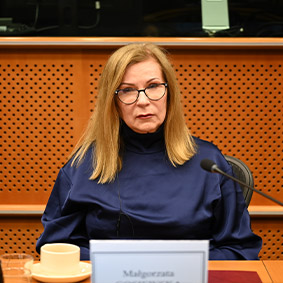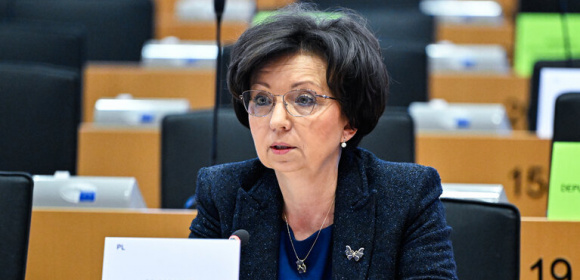
Today, during a meeting of the European Parliament’s Committee on Economic and Monetary Affairs (ECON), there was an exchange of views with Commissioner Valdis Dombrovskis on medium-term fiscal and structural plans and draft budget plans for the eurozone. PiS MEP Marlena Maląg spoke during the discussion.
Marlena Maląg addressed the issue of the excessive deficit procedure, which also applies to Poland. “On November 26, the draft recommendation of the Council of the European Union included a positive expenditure path from Poland’s medium-term budgetary and structural plan,” she said. She added that, according to this plan, the deficit reduction next year is to amount to only 0.25 percent of GDP, while in 2026–2028, Poland is expected to reduce the deficit by slightly more than 1 percent of GDP each year. “Here’s a question for the Commissioner: Do you believe this significant debt reduction will be possible? And how will it affect the investments Poland needs in defense, infrastructure, and the green transition—but above all, in the implementation of socio-economic programs dedicated to families? And isn’t this concession from Brussels—which originally wanted Poland to reduce its deficit by 0.82 percent of GDP starting next year—simply pushing these problems into later years, which will lead to a situation where Europe will not develop evenly?" – she asked.
The PiS MEP emphasized: “We should care about the European Union being a community of strong states that develop evenly.” According to Maląg, this agreement will result in “a two-speed Europe,” and Poland will have to cut back on its social and economic programs at the expense of Poles.
Valdis Dombrovskis confirmed that Poland is indeed subject to an excessive deficit procedure and that, compared to the previous forecast, the fiscal situation has worsened. He noted that the deficit stands at 5.8 percent of GDP this year, 5.6 percent next year, and 5.3 percent in 2026.
“From this perspective, it is, of course, important for Poland to take the necessary measures to reduce the budget deficit and bring it below the treaty limits,” he said.
The Commissioner referred to the medium-term structural fiscal plan submitted by Poland, which received a positive assessment from the European Commission and will serve as the basis for implementing “correction paths” to address the excessive deficit the country is currently facing. “The main operational indicator we use to assess these plans is the growth in net expenditure, and in Poland’s case, we’re looking at an average of 4.5 percent through 2028, which also includes the structural reforms and growth-enhancing investments outlined in the plan,” he explained. According to Dombrovskis, implementing this plan will help balance the need to ensure fiscal stability with sustained growth and the ability to maintain levels of public investment.