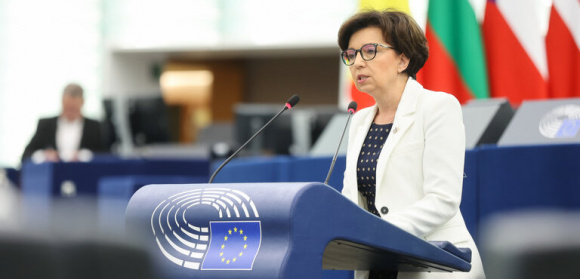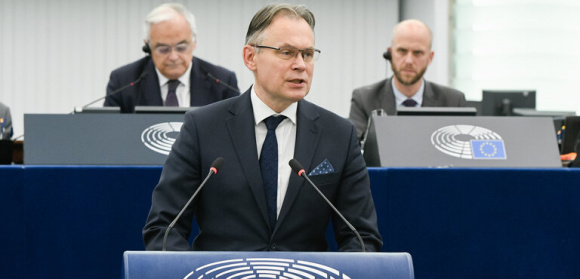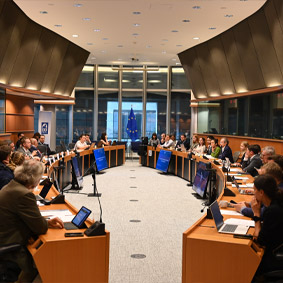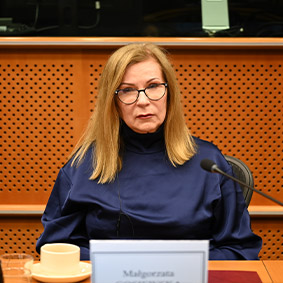
During the European Parliament’s plenary session in Strasbourg, in the debate on the own-initiative report by the Committee on Employment and Social Affairs (EMPL), on subcontracting chains and the role of intermediaries in protecting workers’ rights, Marlena Maląg, a Law and Justice MEP, emphasized the need to strike a balance between effective protection of workers and maintaining the economic flexibility of member states.
The MEP pointed out that the abuses associated with subcontracting are well known. “Long subcontracting chains, evading responsibility by creating ‘shell companies,’ unclear employment rules, and the exploitation of workers—we are all familiar with these practices. Workers, honest companies, and investors all suffer as a result,” she noted.
At the same time, Marlena Maląg emphasized that subcontracting in and of itself is not a negative phenomenon.
“It reduces costs, simplifies project implementation, and creates opportunities for smaller companies that are too small to handle large contracts on their own,” she noted.
In the MEP’s view, it is crucial to maintain a balance in the proposed regulations.
“As with many other issues, the point is not to ‘overdo it’ with regulations. The issue of subcontracting in the Single Market is cross-border in nature, but we cannot deprive Member States of the ability to shape their own rules—tailored to their economic strategies, specific circumstances, and needs,” she emphasized.
Marlena Maląg spoke positively about solutions that fall within the scope of existing law, especially those aimed at improving the flow of information and ensuring more effective enforcement of regulations. However, she was critical of proposals to create a new, extensive regulatory framework at the EU level.
“Instead of imposing top-down limits on the number of subcontracting tiers or expanding joint and several liability, we should give Member States the flexibility to create their own regulations, taking into account their economic interests and labor market realities. Piling on more regulations at the EU level will certainly not solve the problem,” concluded the PiS MEP.
In her view, effective protection of workers’ rights should go hand in hand with respect for Member States’ competences and the competitiveness of the European economy.