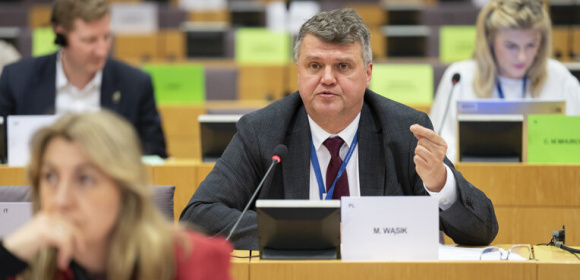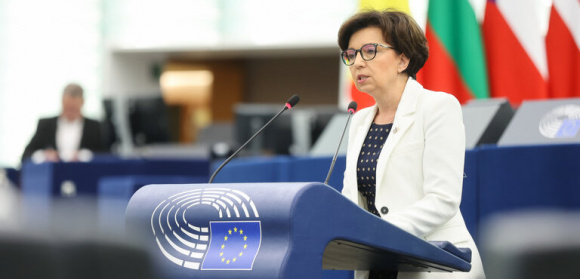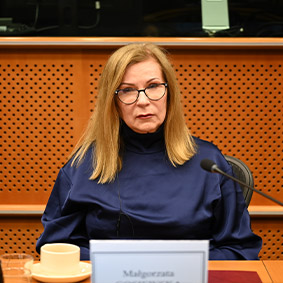
During an extraordinary plenary session of the European Parliament marking the fourth anniversary of Russia’s full-scale invasion of Ukraine, PiS MEPs, Adam Bielan and Beata Szydło, called for an immediate end to imports of Russian energy resources. They emphasized that continued purchases of oil and gas from Russia undermine the European Union’s credibility, contradict its declared support for Ukraine, and effectively strengthen the Kremlin’s war machine.
Adam Bielan reminded listeners that Russia’s aggression did not begin in 2022. “Russia’s war against Ukraine did not begin four years ago, but twelve years ago, with the illegal annexation of Crimea and the occupation of the Donbas—which constituted a flagrant violation of international law,” he said.
The MEP pointed out that for years, economic interests had taken precedence over security. “Greed and the desire to benefit from cheap Russian gas prevailed. This inaction allowed Russia to prepare a full-scale invasion of Ukraine. At the same time, Germany was building Nord Stream 2. Angela Merkel and her supporters have blood on their hands today.”
Bielan emphasized that Europe must draw honest conclusions from past mistakes. He warned that maintaining economic flows to Russia contradicts political declarations of support for Ukraine and risks undermining the EU’s credibility at a critical moment.
“It is a scandal that, despite Russia’s crimes, the massive import of Russian oil and gas continues,” the PiS politician emphasized, adding that every euro spent on Russian energy strengthens the Kremlin’s war machine. “The current support for Ukraine is nothing but propaganda and empty words. According to the Swedish Ministry of Foreign Affairs, the EU has a negative balance in its support for Ukraine — it has provided 187 billion euros, while imports of goods from Russia amounted to 311 billion euros, including as much as 201 billion euros for oil and gas,” he pointed out.
The MEP emphasized that if the European Union truly wants to support Ukraine and defend European security, it must act decisively and consistently.
“How many more victims will it take before Europe finally stops importing Russian energy?” he concluded.
Beata Szydło recalled the words of the late Lech Kaczyński from August 12, 2008, when, during Russia’s aggression against Georgia, he sent a message to the world and to Europe in which he warned: “Today Georgia, tomorrow Ukraine, the day after tomorrow the Baltic states, and later it may be my country’s turn—Poland.” “And that time has come. For years, EU leaders preferred to line the Kremlin’s pockets with billions for oil and gas, to cultivate the illusion of a ‘reset,’ and to believe that trade could replace security,” she said.
As she emphasized, the Minsk and Normandy formats have become symbols of half-measures and naivety, giving Russia time to rearm before its next attack. “When that attack came, a toothless Europe was counting down the days until Kyiv’s expected fall. But Ukraine survived because it fought,” she noted.
Szydło recalled that Poland had warned from the very beginning about the threat from Russia and was the first to provide shelter to millions of war refugees from Ukraine, becoming a real source of support for the country at war.
“We must learn from our mistakes. A just peace is not born of illusions; it is born of consequences. Europe must prove that it has learned from its own mistakes,” she concluded.