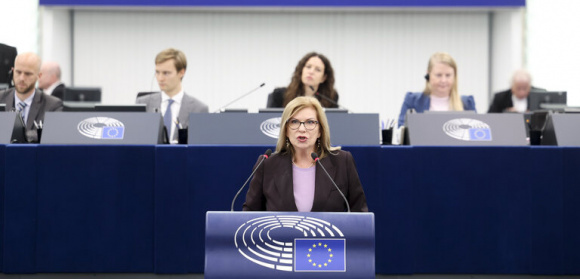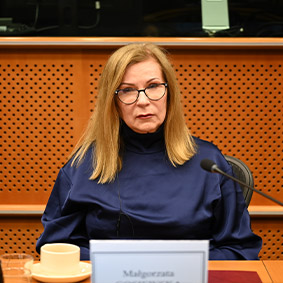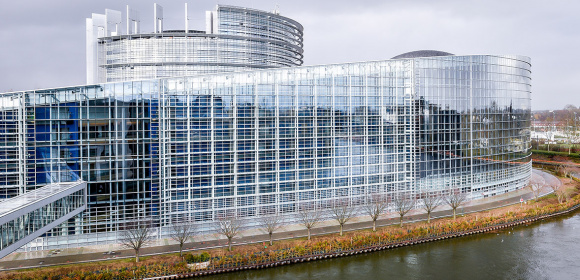
On the second day of the European Parliament’s October plenary session in Strasbourg, a debate was held on changes to the current Common Agricultural Policy (CAP) regulations, which aim to “relieve farmers of unnecessary and time-consuming administrative burdens.” Speaking on behalf of the ECR Group were PiS MEPs Waldemar Buda, Jadwiga Wiśniewska, Maciej Wąsik, and Piotr Müller.
Waldemar Buda noted that for the past three years, Brazil has imported $11 billion worth of goods from Russia annually. “Did you know that?” the Polish politician asked Commissioner Hansen. “Brazil is the world’s largest importer of fertilizers from Russia,” he noted, highlighting the scale of trade between Brazil and Russia. “It was only after the outbreak of the war in Ukraine that Brazil began importing oil—something it had not done before—and increased its imports in this area by 4,600 percent,” he said.
The MEP noted that trade with Brazil effectively amounts to supporting a situation in which the EU would be financing drones, aircraft, and tanks for Putin. “Western European countries may not feel the effects of these decisions directly, because those drones, aircraft, and tanks may not reach Luxembourg, but in Poland, we understand perfectly well the dangers of supporting the Russian economy and buying new equipment for Putin,” he noted.
“Today we should be discussing how to impose sanctions on Brazil, yet the European Union is holding talks on increasing support for and intensifying trade with Brazil, which is importing more and more Russian fertilizers and passing them on — thereby supporting the Russian economy,” he noted, referring to the EU’s current policy. The MEP emphasized that while Europeans are making various sacrifices and restricting imports, the EU is considering intensifying trade with a country that cooperates closely with Russia. “Do you really agree with this course of action?” asked Agriculture Commissioner Waldemar Buda.
Jadwiga Wiśniewska recalled that a year ago, the Commission had promised a “reset” of the Green Deal and a dialogue with farmers. “Unfortunately, these were empty promises. And the situation for farmers today is dire. The Polish countryside is on the brink of disaster,” emphasized the MEP, noting that farmers are giving away their harvests for free so they won’t rot in the fields. “And they’re crying because they love Polish soil, because they want to produce safe, top-quality food. They’re crying because they won’t have the money to pay off their loans,” Wiśniewska said, describing the farmers’ extremely difficult situation.
The PiS MEP also pointed out that, in this dramatic situation, the European Commission wants to deal a further blow to European agriculture by proposing the finalization of the EU–Mercosur agreement and a new agreement with Ukraine. “If this happens, you will become the gravediggers of European agriculture,” the MEP warned, explaining that not only will short supply chains be destroyed, but above all, food security will be compromised.
“That is why I am calling on Polish patriots today to join a massive protest march to Warsaw. Let’s meet on Saturday, October 11, at 2:00 p.m. at Zamkowy Square. STOP the Green Deal. STOP the EU–Mercosur agreement. STOP the destruction of the Polish countryside!” she appealed.
“The green policy promoted by the European Commission has put agriculture in a catastrophic situation!” Maciej Wąsik criticized the EU’s agricultural policy. The Polish politician drew attention to the dramatically low purchase prices for agricultural products in Poland, which do not even cover the costs of harvesting. “Today, Polish farmers are inviting people to their fields to harvest crops because the prices don’t cover the costs of harvesting,” he said. The MEP emphasized that agricultural production simply becomes unprofitable in the face of such low purchase prices, and on top of that, the European Commission is cutting funding for agriculture. “Contrary to common sense, she’s pushing the Mercosur agreement, the Green Deal, and other ideological follies on us,” he said. “Ursula von der Leyen is the root of all these problems,” the politician stated, adding that it is the President of the European Commission who is responsible for the current, catastrophic state of agriculture in the European Union. “This climate madness must come to an end,” he urged, calling for decisive action.
The Polish politician emphasized that food security is just as important as military or energy security, and that people working hard on the land deserve respect and real support. “Polish farmers, European farmers, expect very little: normality. They want to do their work freely, without having ideological nonsense imposed on them, without experiments on agriculture,” he said. “The European Commission led by Ursula von der Leyen is undermining food security in Poland and Europe, which is why it should be dismissed!” he urged.
Piotr Müller stated: “I have the impression that, when it comes to agricultural policy, we are beginning to make the same mistakes we once made in energy policy.” He explained that the future of agriculture currently being shaped will make the EU dependent on external producers. As he pointed out, one such example is the agreement with Mercosur, which will threaten the profitability of agricultural production in Europe in the future. Another scandalous issue is the decision—unfortunately made by the Polish commissioner—to cut agricultural spending by 22 percent in the next budget framework. “These are two massive blows that will hit European agriculture,” he emphasized. He added: “Let’s hope that in 10 to 15 years we won’t have to say, ‘We told you so,’ just as we did in the case of gas imports from Russia.”