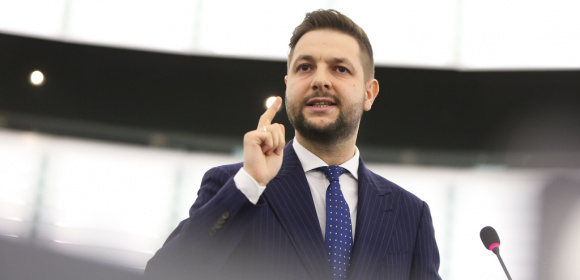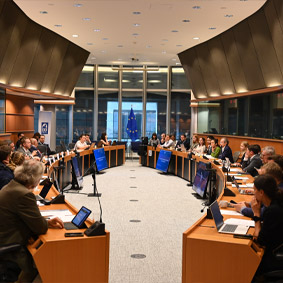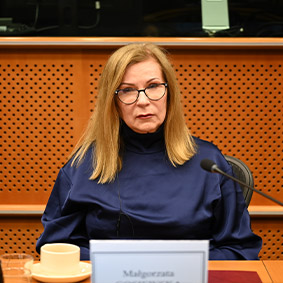
In Strasbourg, during a plenary session of the European Parliament, a debate was held on the devastating floods in Central and Eastern Europe, which claimed many lives, and on the EU’s preparedness to respond to such disasters, which are exacerbated by climate change. PiS MEPs Waldemar Buda, Michał Dworczyk, Anna Zalewska, and Beata Szydło spoke during the discussion. At the request of the ECR Group, the European Parliament will vote on a resolution on this matter during Thursday’s session.
Waldemar Buda stated that nothing had come of the impassioned speeches by those who spoke before him. “The European Parliament should call on the Commission to present a concrete plan,” the PiS MEP urged, calling for immediate action. He noted that those affected by the flood are expecting concrete details—information on what measures will be taken, how much funding will be allocated, who will receive it, and by when. The MEP pointed out that the EU’s response has been delayed. “Tomorrow we will be debating the drought, even though concrete action is needed today,” he pointed out.
The Polish politician addressed Commissioner Janez Lenarčič, who was present in the plenary chamber, urging him to take concrete action. He asked the Commissioner for Crisis Management what funds would be allocated from the Solidarity Fund, to which countries, in what order, and, above all, by when.
Waldemar Buda also addressed the issue of European countries building polders and retention reservoirs. He noted that EU regulations prolong and hinder the construction of such facilities, while environmentalists and Greens are physically blocking these types of projects. “Let’s stop being hypocrites,” the politician urged, referring to the fact that Green Deal policies have, as a rule, blocked investments that would be helpful today. “Climate change is inevitable, but we must build infrastructure rather than hinder its construction, because that is the direction current policy is heading,” stated the ECR MEP.
Michał Dworczyk described the situation in Poland, which is the latest country in Europe to be hit by extreme flooding. He reported that residents of the Lower Silesian, Opole, and Silesian provinces have been hardest hit by the disaster. He noted that many of them had lost their homes and their life’s work. The politician recalled that several thousand people had been evacuated and, unfortunately, there had also been fatalities. He also provided information on the situation in his region. “In Lądek-Zdrój, Stronie Śląskie, Kłodzko, Trzebieszowice, and a number of other towns, it’s truly hard to believe what we’re seeing—it’s hard to believe these are the same places we saw just a few days ago,” he reported.
The PiS MEP expressed his deep appreciation and gratitude for the selfless work and immediate response of everyone involved in the flood response and rescue efforts. He noted that local authorities, emergency services, the fire department, the Territorial Defense Forces, and above all, ordinary citizens, have been working tirelessly to evacuate people, provide assistance, and reinforce the flood barriers. He stated that this is an example of true solidarity and cooperation. “The return to normal life will take months, and perhaps years,” noted Michał Dworczyk. He reported that, in addition to flooded and destroyed homes, the receding waters are also revealing damaged bridges and roads, and that among the destroyed sites are priceless historical monuments—testaments to culture, religion, and history.
“Long-term aid, analyses, and the establishment of joint institutions are important, but urgent action is needed today,” the MEP pointed out, and in this regard, he presented two very specific proposals. The Polish politician called for the immediate release of funds from the European Union Solidarity Fund. He also appealed for the suspension of the European Parliament’s plenary sessions in Strasbourg for a period of one year: “The decision to move plenary sessions to Brussels for one year would save hundreds of millions of euros, which are urgently needed right now to address the tragic consequences of this disaster.” The MEP explained that funds from the Justice Fund could be used to repair what has been destroyed, as well as to prevent similar events in the future. “It is extremely important, in addition to helping those affected, to invest in new infrastructure as soon as possible,” he stated.
“We strongly appeal for help—not only through gestures and words of solidarity, but through the immediate transfer of funds to those affected by the disaster,” — urged Michał Dworczyk, adding that the ECR Group supports the resolution’s text and has announced it will introduce its own amendments.
“To call it a ‘tragedy’ is an understatement. It is an all-encompassing trauma,” said Anna Zalewska, a Member of the European Parliament representing Lower Silesia and the Opole region, regarding the effects of the flood. She reported that people are worried about what will happen today, tomorrow, next week, and in five years. She added that they have no money, yet they need tens of billions of zlotys, while the European Union’s 2025 budget allocates only one billion euros to the Solidarity Fund. “We must change this urgently, and we must also change climate policy,” Anna Zalewska urged. She explained that in the areas hardest hit by the floods, this is “precisely the result of the efforts of environmentalists, who have caused chaos there with every reservoir and polder”. She pointed out that climate policy and adaptation to climate change also involve the Nature Restoration Regulation, which prohibits such investments and mandates the demolition of most of those already built. “This is not how we will adapt to climate change, and this is not how we will ensure people’s safety,” the politician concluded.
Beata Szydło reported that Central Europe is in need, with many towns flooded and people suffering. She specifically pointed to Poland, the Czech Republic, Slovakia, and Romania. “This tragedy requires swift and decisive action,” she urged. She noted that this debate was supposed to be about how to help flood victims, not about the Green Deal. “What is needed today are concrete, swift actions: the immediate mobilization of aid from the European Commission, the streamlining of procedures, and support from governments and member states,” the Polish politician listed. The MEP argued that governments must act effectively and pragmatically, and that what is needed is good communication and accurate information, not “political grandstanding.” “Right now, we need to help save people’s lives and property. Then we need to help rebuild their towns and homes,” said Beata Szydło, adding that this support must be real and concrete. “We cannot just debate and make promises. Today, we must make decisive decisions,” she urged. She also emphasized that funds should be disbursed immediately and procedures should be simple.