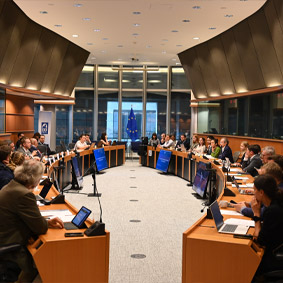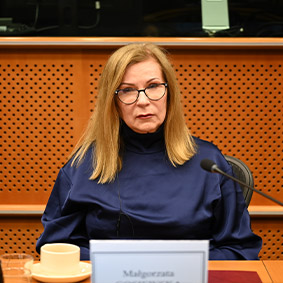
In Strasbourg, during a plenary session of the European Parliament, a debate took place on plants produced using certain new genomic techniques and on food and feed derived from those plants. PiS MEPs Anna Zalewska and Krzysztof Jurgiel spoke during the discussion.
Anna Zalewska stated that in a few months, “we will be investigating who is behind these solutions and which global companies are pursuing their own interests.” “I would like to remind you that the field of genomic techniques continues to be controversial, and unfortunately, for years we have been receiving conflicting legal interpretations and differing assessments from the perspectives of bioethics and food safety,” she noted. She added that the European Parliament is promoting a change in terminology from “genomic techniques” to “breeding techniques” to avoid associations with first-generation GMOs. “But this euphemism is a misrepresentation,” Zalewska emphasized, noting that targeted mutagenesis and cisgenesis also constitute genetic modification of an organism. “So please do not mislead people or suggest that a dozen or so years of using these techniques in the United States proves the safety of these crops for the human body,” she added. The PiS MEP stressed that such studies, especially those examining potential carcinogenicity, require a perspective spanning several decades, and we should exercise extreme caution. “I suggest we consult scientists and experts rather than succumbing to the lobbying of global corporations that simply want to make a profit,” she urged.
Krzysztof Jurgiel, referring to the draft regulation on new genomic techniques (NGT), stated that Poland has maintained a balanced position from the outset—that is, it recognizes the need to develop and utilize innovations in crop production, but at the same time takes into account public concerns regarding genetic modification.
The Polish politician outlined the main objections to this draft. He pointed out that the EC’s draft regulation does not sufficiently ensure the purity of organic production or so-called coexistence with conventional production, and grants the EC overly broad powers to issue delegated acts. He also noted that the competent authorities of the member states still lack effective tools for detecting and tracking NGTs. The PiS MEP argued that it is necessary to provide an opt-out clause for Member States regarding NGT2. The former Minister of Agriculture emphasized that Poland prefers the labeling of final products derived from NGT1. “The availability of these plants and the protection of the interests of small and medium-sized breeding companies are absolutely key issues. Therefore, it is absolutely unacceptable for NGT1 plants to be subject to patenting, as this threatens to create and reinforce an oligopoly of a few multinational corporations,” the MEP stated, adding that he would vote against the adoption of this report.