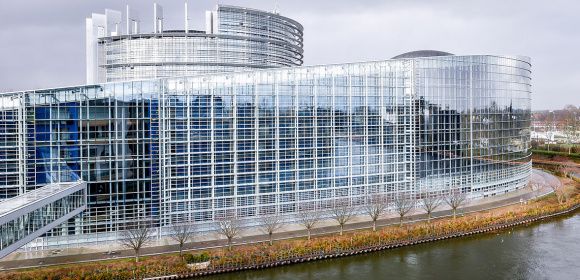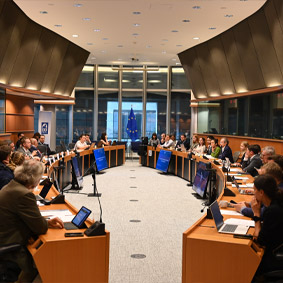
Today in Strasbourg, the European Parliament approved an interim agreement on nature restoration measures. Among other things, the regulation sets binding targets for member states, which include a commitment to restore a range of terrestrial, coastal, and freshwater ecosystems, including wetlands, grasslands, forests, rivers, and lakes, as well as marine ecosystems. By 2030, Member States must restore at least 30 percent of habitat types that are in poor condition; by 2040, 60 percent; and by 2050, 90 percent. The new regulation also sets ambitious targets for certain biodiversity indicators in the agricultural sector, as well as for the restoration of organic soils in drained peatlands used for agriculture. PiS MEPs voted against these measures, arguing that the targets are unrealistic in terms of timing, ill-suited to national conditions, extremely costly, and particularly harmful to agricultural areas.
The Regulation on the Restoration of Natural Resources is an important component of the Green Deal, grounded in the “Biodiversity Strategy for 2030” and the “Farm to Fork” strategy, which introduces binding targets at the Member State level to restore a portion of managed or degraded terrestrial and marine areas to their original state.
The proposed nature restoration targets require each Member State to survey and map its entire territory to assess the condition of natural ecosystems, and then to restore at least 30 percent of degraded areas by 2030.
"These targets are unrealistic in terms of timing, ill-suited to national conditions, and extremely costly—with no indication of funding sources. No separate funding has been allocated for the planned measures, and currently available national and European funds will be insufficient. The “no deterioration of habitats” principle contained in the regulation—which applies even outside Natura 2000 sites—impacts the economy and investments primarily in agricultural and forested areas, but also in urban areas—in fact, across the entire country. Restoration targets may be particularly problematic in agricultural areas: Article 9 sets out detailed and ambitious biodiversity targets for agricultural ecosystems (including the restoration and maintenance of pollinator insect populations or bird habitats) and requirements for the re-wetting of areas that were previously drained peatlands.
Furthermore, the new regulations overlook social considerations, including interference with private property rights. The regulation’s objectives also conflict with priorities regarding food and energy security.
Furthermore, achieving the goals of restoring natural river connectivity may be economically unjustified and lead to the loss of important economic functions of river systems, such as inland navigation, water supply, and renewable energy generation.
The regulation will impose enormous and unworkable obligations in terms of planning, management, monitoring, and reporting. In particular, Member States will have to conduct nationwide surveys to map existing habitats and assess their condition, which entails enormous costs, and the removal of certain identified barriers will involve encroachment on private property,” argue the PiS MEPs.