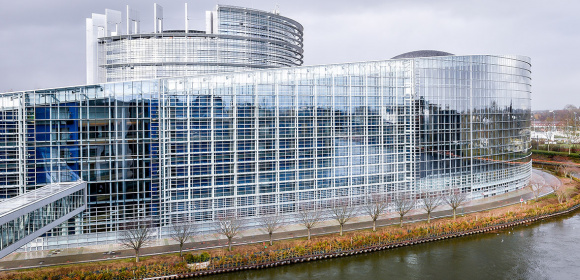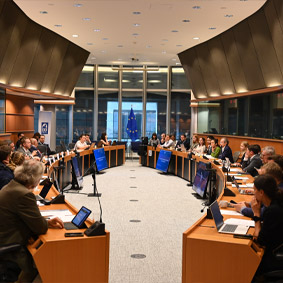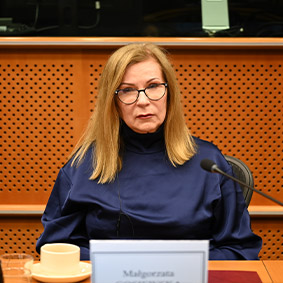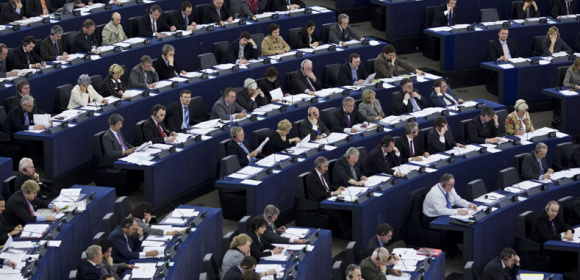
During the plenary session in Strasbourg, a discussion took place on the situation in Cuba and the arrest of José Daniel Ferrer García, leader of the Cuban Patriotic Union. Among those who spoke during the discussion were one of the resolution’s co-authors, PiS MEP Mariusz Kamiński, and PiS MEP Małgorzata Gosiewska.
Mariusz Kamiński recalled that when the “Iron Curtain” fell at the turn of the 1980s and 1990s and the Soviet Union began to collapse, “we had hoped for the definitive collapse of the communist system worldwide.” He added, however, that this did not happen, and that post-communist dictatorships remain firmly in place. He pointed to Russia, Belarus, China, North Korea, and Cuba, where members of the Castro dynasty continue to rule. The MEP said he belongs to the “Solidarity” generation and knows what the struggle for freedom entails. He noted that although thousands of kilometers separate him from José Daniel Ferrer, Ferrer’s legacy is extremely close to his heart. “We, the Poles, defeated communism, just as the Cubans will defeat it. We must do everything we can to make that happen,” he urged.
The PiS MEP stated that the situation regarding human rights violations in Cuba is alarming. He explained that if we truly want to improve it, we must speak to the regime in clear, firm terms. “As long as the repression of the opposition continues, as long as there are political prisoners—there can be no question of cooperation between Cuba and the European Union,” he pointed out. The Polish politician called for the agreement on political dialogue and cooperation with Cuba to be suspended immediately. He explained that continuing the agreement amounts to indirectly financing a brutal regime. Mariusz Kamiński assured Cubans that they are not alone. “Despite the repression, you are free in spirit, and that spirit of freedom will triumph,” he emphasized.
Małgorzata Gosiewska expressed deep concern about the human rights situation in Cuba, particularly the fate of José Daniel Ferrer, who was arrested on July 11, 2021, while attempting to join protests in Santiago de Cuba. She also reported that since then, he has been held in prison under appalling conditions, without access to medical care, and has been cut off from contact with the outside world since August 2021. The MEP drew attention to the March 2022 protests, sparked by the economic and humanitarian crisis, which were met with brutal repression. She reported that the number of arbitrary arrests has risen dramatically, and by August 2024, more than 830 cases of persecution had already been recorded. She added that despite repeated attempts at cooperation, the European Union still has not been granted access to reliable information on the situation.
“Cuba is not just about prisons and the suppression of civil liberties,” the Polish politician stated. In this context, she referred to her recent conversation with a priest, a Missionary of the Holy Family, who serves in Cuba. She reported that his work involves not only spiritual support but also daily assistance to families with humanitarian needs. “There is a shortage of medicines, medical supplies, electricity, milk for children, and even bread,” she listed. She explained that this situation is the result of communist rule, dictatorship, and dependence on Russia. “It is precisely this poverty and hopelessness that enable Russia to recruit mercenaries from Cuba to fight in the war against Ukraine,” she stated. She added that young Cubans “are making a pact with the devil” and becoming “Russian cannon fodder.” She argued that, for this reason, “we must resolutely stand with ordinary people—those whom the system brutally deprives of dignity, freedom, and hope,” because remaining silent in the face of this tyranny means we are complicit. “The dictatorship in Cuba must fall, and we have a duty to support this struggle without compromise, until victory is achieved,” she appealed.