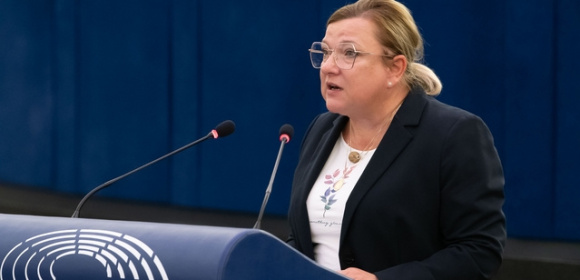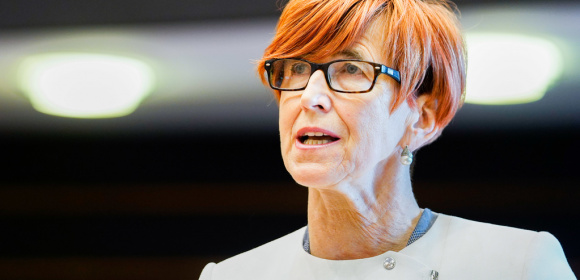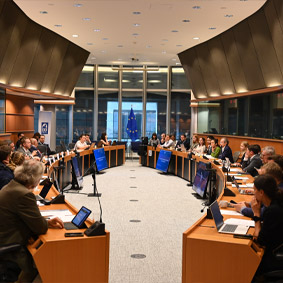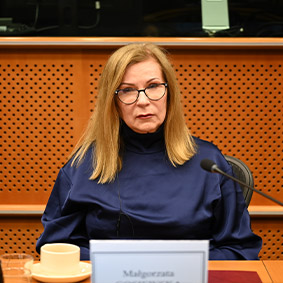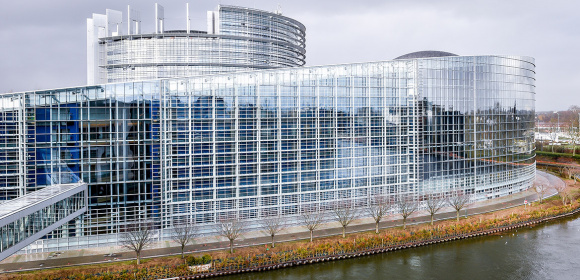
A debate was held at the European Parliament in Strasbourg on the use of frozen Russian assets to support Ukraine’s victory and reconstruction. PiS MEPs Ryszard Czarnecki and Zdzisław Krasnodębski spoke during the debate.
Ryszard Czarnecki stated that this debate is certainly being closely followed in Moscow, because Russia is not afraid of words of condemnation, verbal sanctions, but rather economic blows, as this is an instrument that can truly harm Moscow and Russian imperialism.
The former vice president of the European Parliament, referring to allegations that the seizure of frozen Russian assets violates the “sacred right to property,” clearly pointed out that the Russians did not care about property rights when they plundered Ukrainian lands, seized part of Georgia’s territory, or, de facto, part of Moldova.
“We must apply adequate measures that will inflict real harm on those who, in the 21st century, seek to gain advantages through war,” the MEP urged, noting that this is the largest conflict since World War II. The Polish politician also noted that it is necessary to define very precisely what these frozen funds will be used for and to reach an agreement on whether these funds will be used for Ukraine’s reconstruction after a ceasefire—the timing of which remains unknown— or whether they will instead support the EU’s war effort, including that of Poland, which is Ukraine’s neighbor. “Russian assets must certainly be frozen. There is no other alternative,” the Polish politician emphasized.
Professor Zdzisław Krasnodębski noted with outrage that it was only after 2.5 years of brutal war waged by “plundering and destructive Russia” is the European Parliament debating whether it can accept profits from Russian funds frozen in Europe.
The MEP stated that although the EU is not stingy with words of support for Ukraine and is sending weapons, it did so too late and is sending too little. He added that when it comes to money and gas—especially liquefied natural gas—“there is a surprising degree of restraint and helplessness.” “We should hurry up with decisions regarding the use of frozen Russian assets, because judging by media reports, the war may be put on hold at any moment and negotiations with Putin will begin,” —argued Professor Krasnodębski. He noted that this issue demonstrates just how strong Russian influence still is in Europe, even at the very heart of power. As an example, he cited the actions of politicians such as Manuela Schwesig, President of the German Bundesrat. “As long as such politicians remain in the centers of power, nothing will change,” he noted, and appealed to German MEPs to take this into consideration.
PiS MEP Witold Waszczykowski also addressed the issue: “After Russia launched its full-scale invasion of Ukraine in February 2022, nearly half of Moscow’s foreign reserves were frozen. 200 out of 300 billion are located within the European Union. The funds obtained from the confiscation of the assets of Russian oligarchs and representatives of Putin’s regime should finance Ukraine’s reconstruction.
The European Union has frozen Russian assets within its borders, which are projected to generate between 15 and 20 billion euros in after-tax profits by 2027. We must use these assets to punish Russia for its criminal policies.
Russia’s aggression against Ukraine constitutes a flagrant violation of its international obligations as enshrined in the United Nations Charter. Russia has a duty to provide reparations for the damage inflicted on Ukraine and its people.
In the face of Russia’s ongoing aggression, assessing the full extent of the reparations owed to Ukraine remains a challenge. The latest estimates from the World Bank indicate that the amount is in the range of $411 billion.
I hope that discussions with our G7 partners will lead to the development of a legally sound mechanism that will make it possible to mobilize the majority of assets located in the European Union, not just capital gains.
The Russian elite feel a sense of security and impunity. They do not care about the massive losses suffered by hordes of their soldiers. Until this sense is shaken, Russia will not shy away from further attempts at expansion. “To shake Russia to its core, we must strike directly at the financial interests of its elites in the West.”